Sunscreen stains on swimwear are almost always sunscreen plus something else: chlorine, iron in pool water or the minerals in hard tap water. The combination oxidises in the fibres and leaves a yellow or pale orange patch that looks like a bleach mark. The fix is a cool rinse straight away, an oxygen soak within 24 hours and no chlorine bleach at any point.
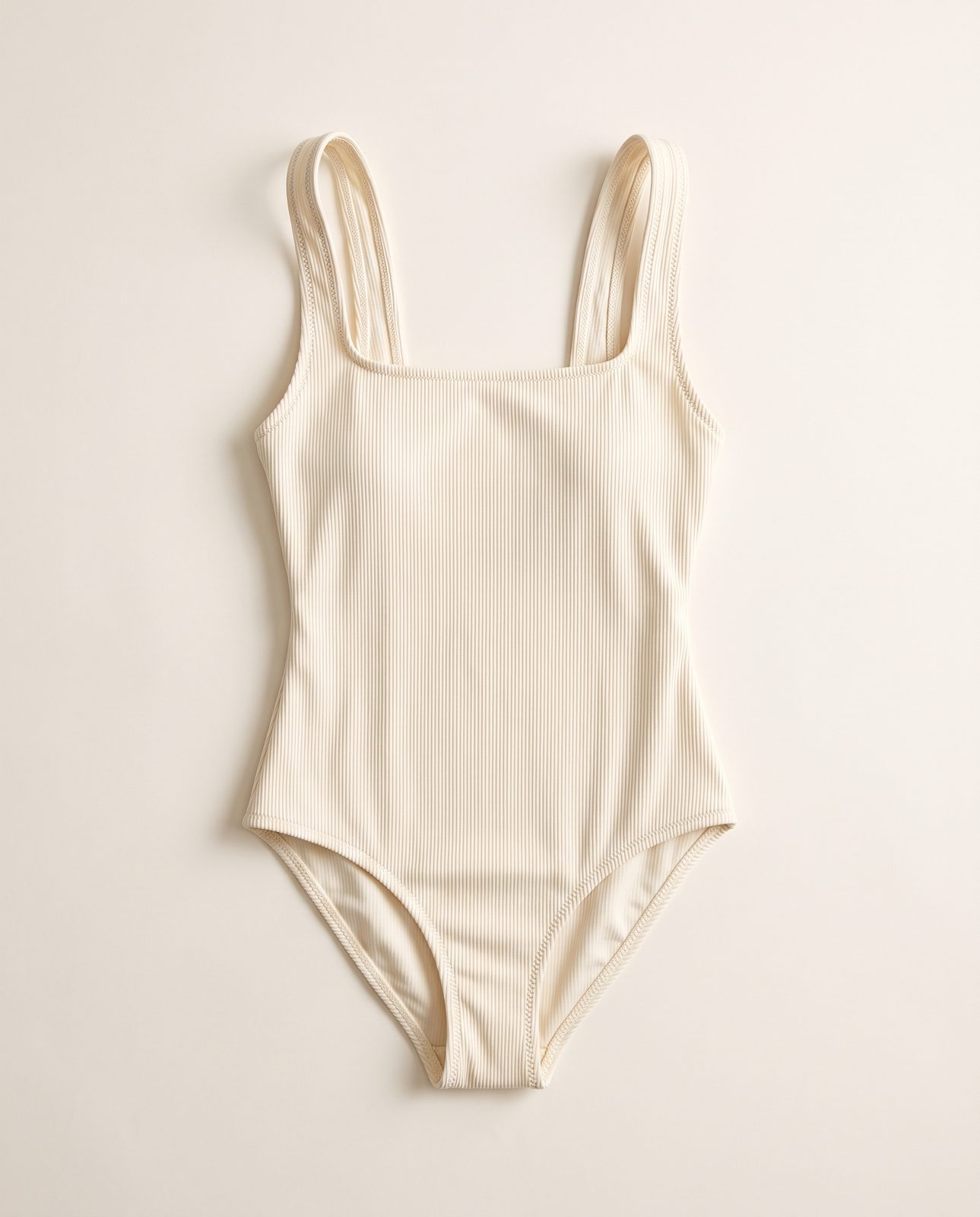
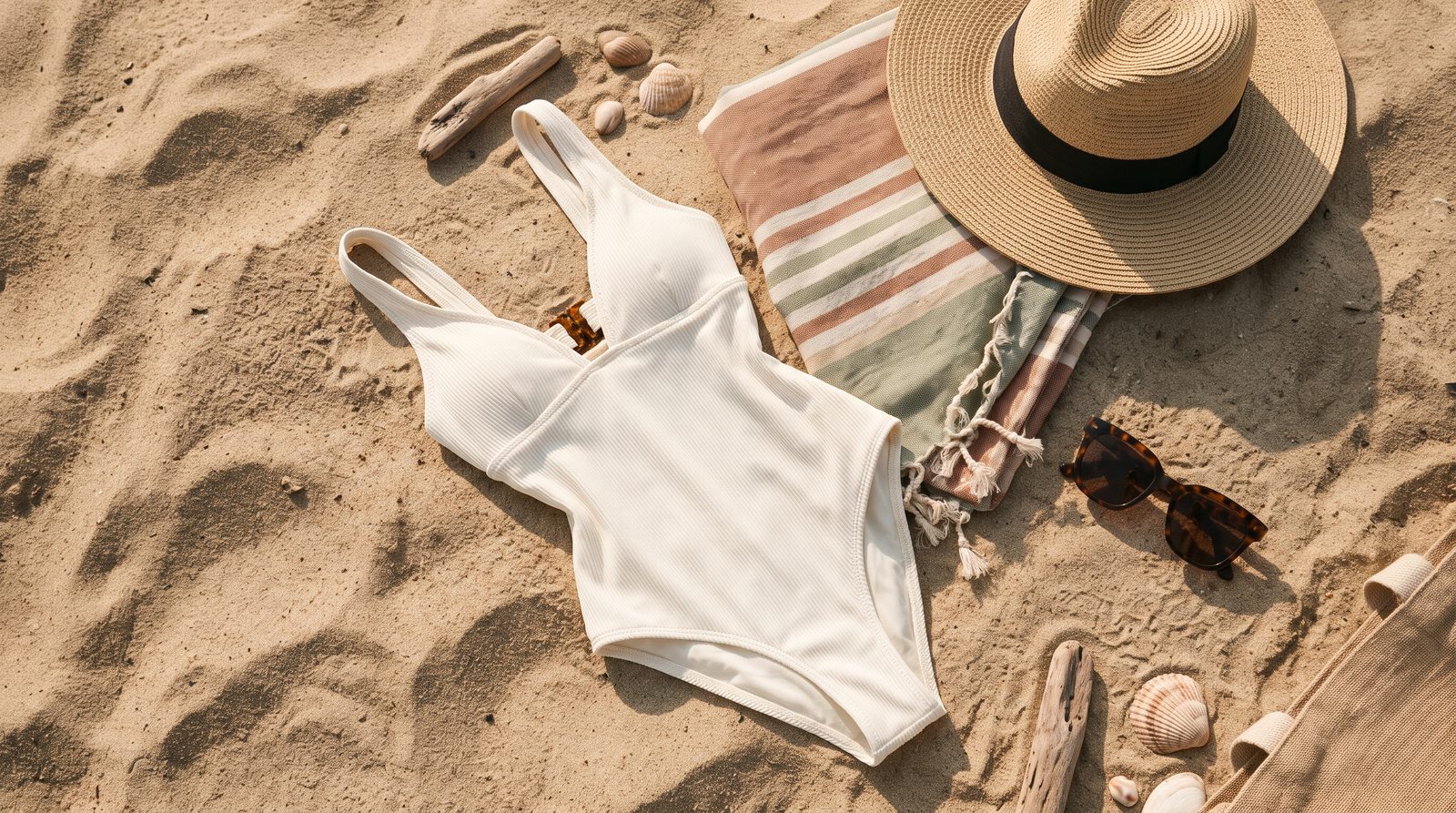
There are two kinds of mark, and they need different treatment. Yellow-brown patches are a chemical stain and respond to oxygen bleach; grey smudges are grease and need absorbing before washing. Our ivory ribbed one-piece is the hardest colour to keep clean, so it is also the best test case for both.
Why sunscreen stains on swimwear turn yellow
Chemical UV filters such as avobenzone are designed to absorb UV and convert it into heat. In a swimsuit they can react with chlorine and with iron or copper traces in pool water, and the resulting compound binds to polyamide. White fabric shows it immediately because there is no dye to hide it.
White swimwear also relies on optical brighteners, which are degraded by sun and chlorine and can yellow on their own. A patch that appears only at the neckline and straps is usually sunscreen transfer; a general creaminess across the whole suit is more likely to be brightener loss.
Act within the first hour
Rinse the suit in cool running water as soon as you can, before the sunscreen has a chance to set. Cool water lifts the oils and dilutes the chlorine; hot water opens the knit and fixes the stain in place, which is why a 40°C wash on the day of the swim is the worst thing you can do.
Do not rub the patch with hand soap at the pool. Bar soap is alkaline, leaves a film on the lining and makes the mark harder to remove later. A plain water rinse and a blot with a towel is enough until you get home.
The oxygen soak that lifts most marks
Oxygen bleach based on sodium percarbonate is the only bleach that belongs near swimwear. It works at 40°C, which is safe for elastane for a short soak, and it breaks down into oxygen and soda ash rather than attacking the fibre. Chlorine bleach does the opposite: it yellows polyamide and destroys stretch.
Mix 15 g (one tablespoon) in 2 litres of water at 40°C, submerge the suit for two to four hours and stir every 30 minutes. Rinse twice, then wash by hand with 5 ml of mild detergent. If the mark is still visible when damp, repeat once; if it has gone, do not soak again for the sake of it.
- 15 g sodium percarbonate per 2 litres of water at 40°C
- Two to four hours, stirred every 30 minutes
- White fabric only, never on colour or print
- Rinse twice, then a five-minute hand wash
- Never mix with chlorine bleach or vinegar

Greasy marks: absorb before you wash
A grey or translucent smudge is oil, not oxidised sunscreen, and water alone will spread it. Cover the mark with cornflour or bicarbonate of soda for 20 minutes, brush it off, then put one drop of washing-up liquid on the spot and work it in with a fingertip for 15 minutes before rinsing.
Do not scrub with a brush. Nylon and polyester both pill when abraded, and a scrubbed patch shows as a dull, fuzzy area even after the oil has gone. If the mark is on a double lining, treat both layers separately or the oil will wick back through.
Chemical and mineral formulas behave differently
Mineral sunscreens with zinc oxide or titanium dioxide sit on the surface and rinse off relatively easily, though they can leave a white cast on a white suit that looks like chalk. Chemical filters are absorbed into the upper layers of the skin but also form a film on fabric, and water-resistant formulas use polymers that cling to the knit.
That is why a sports sunscreen with a high water resistance rating is more likely to stain than a light lotion. If you wear a white suit, choose a lotion or milk over a spray, and avoid oil-based tanning products entirely: they are the single most common cause of a suit that never comes clean.
Prevention on holiday
Apply sunscreen 15–20 minutes before you put the suit on, so the skin has absorbed it and less transfers to the fabric. Do not spray directly onto the suit or over the neckline, and wash your hands before you adjust a strap.
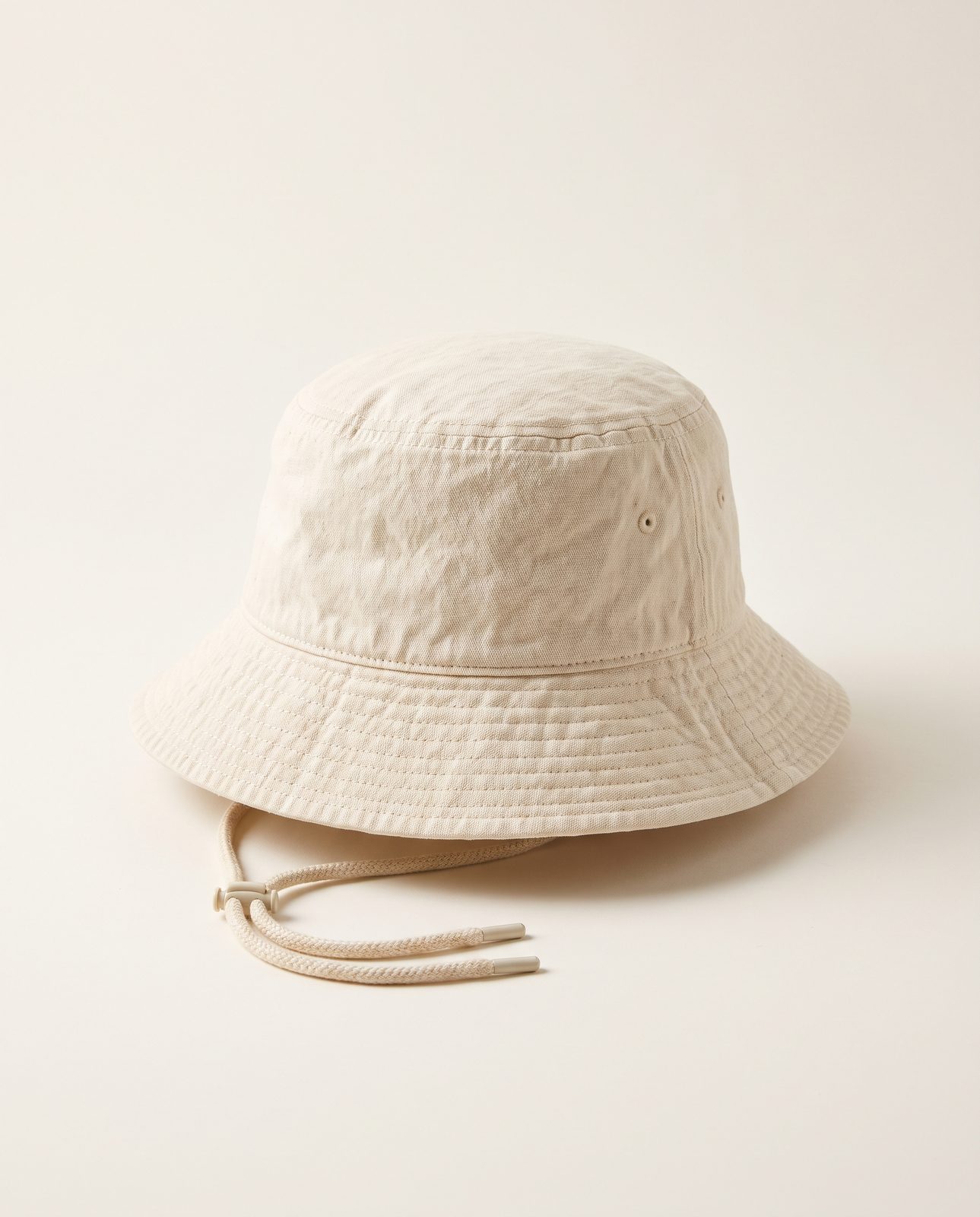
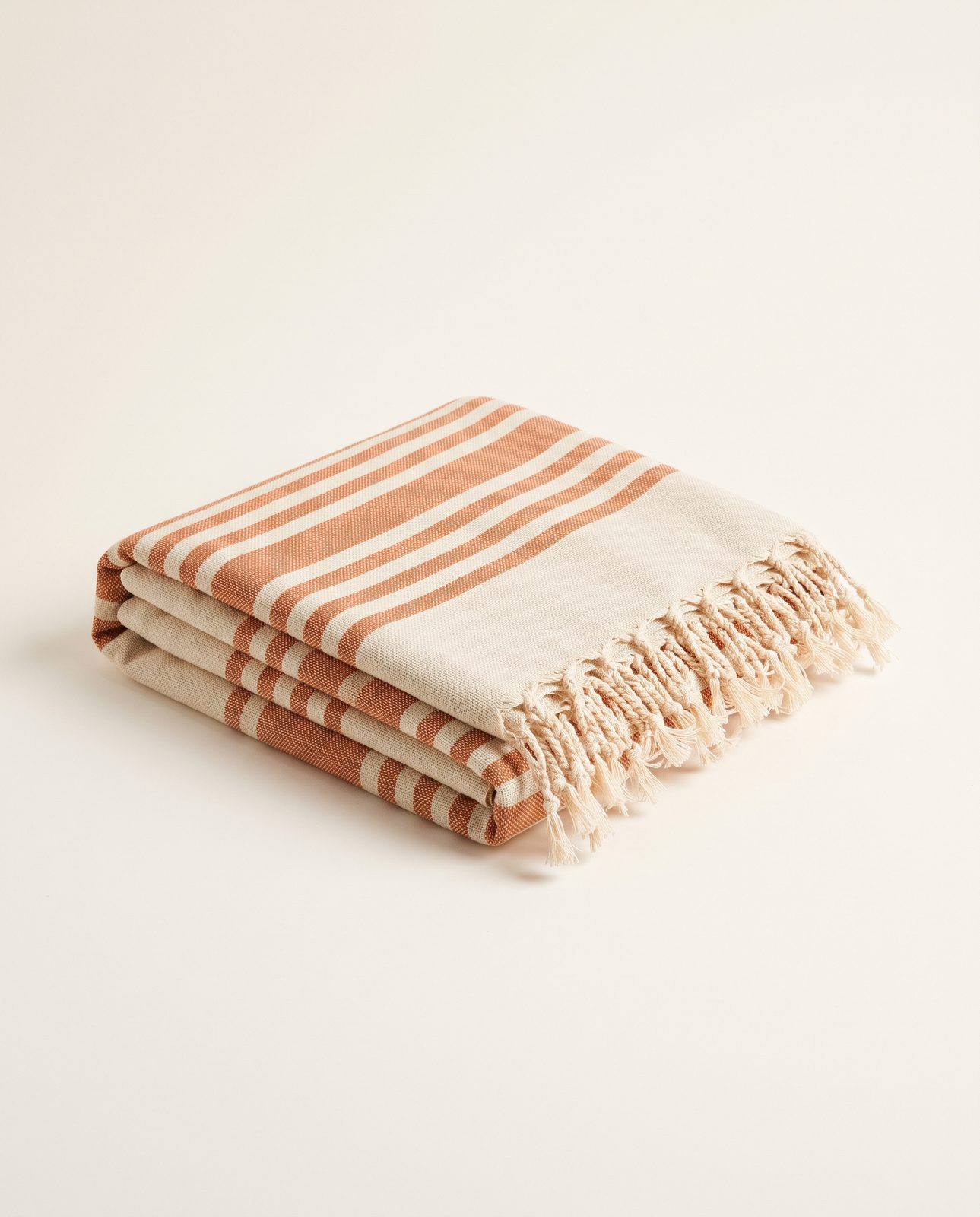
Rinse after every swim, even a short one, and keep a 100 ml bottle of water in the beach bag for the walk back. Our cotton bucket hat and striped beach towel take the brunt of the sunscreen on a beach day, and both wash far more easily than a lined swimsuit.
- Apply 15–20 minutes before dressing
- Choose lotion over spray for white swimwear
- Rinse the neckline and straps first
- Never reapply sunscreen over a worn suit
- Pack a small rinse bottle for beach days
When a stain will not come out
Two oxygen soaks are the sensible limit. After that, the mark is either old oxidised pigment or fibre damage, and neither will lift with more product. A dry cleaner can sometimes improve a white polyamide suit, but ask before handing it over, because heat presses are as bad for elastane as a tumble dryer.
Do not iron the area, do not use lemon juice and do not leave the suit in direct sun for a day to bleach it. Sun fades the stain slightly and yellows the surrounding nylon, so you end up with a clean patch inside a cream suit. If the fabric has gone thin and shiny under the mark, the fibre is finished and it is time to replace the suit.
Frequently asked questions
Does lemon juice remove sunscreen stains?
Lemon juice is acidic and can lighten a fresh mark, but it also attacks elastane and makes yellowing worse in sunlight. Use oxygen bleach instead.
Can I use bleach on a white swimsuit?
No. Chlorine bleach yellows nylon and destroys elastane within a few washes, and it reacts with sunscreen residue to create orange patches. Oxygen bleach is the only one to use.
How do I remove sunscreen from a swimsuit without bleach?
Rinse in cool water, soak in oxygen bleach at 40°C for two hours, then hand wash with mild detergent and dry flat in shade. Repeat the soak once if a faint mark remains.
Why do the straps and neckline stain first?
Those areas get the most sunscreen from hands, hair and reapplication, and they dry slowest because of the double layer. Rinse them first and treat the seam gently with a fingertip.
Does sunscreen damage swimwear fabric?
Oil-based and water-resistant formulas can weaken elastane over time and trap chlorine in the knit. They do not dissolve the fibre, but they shorten its life, especially on white suits.