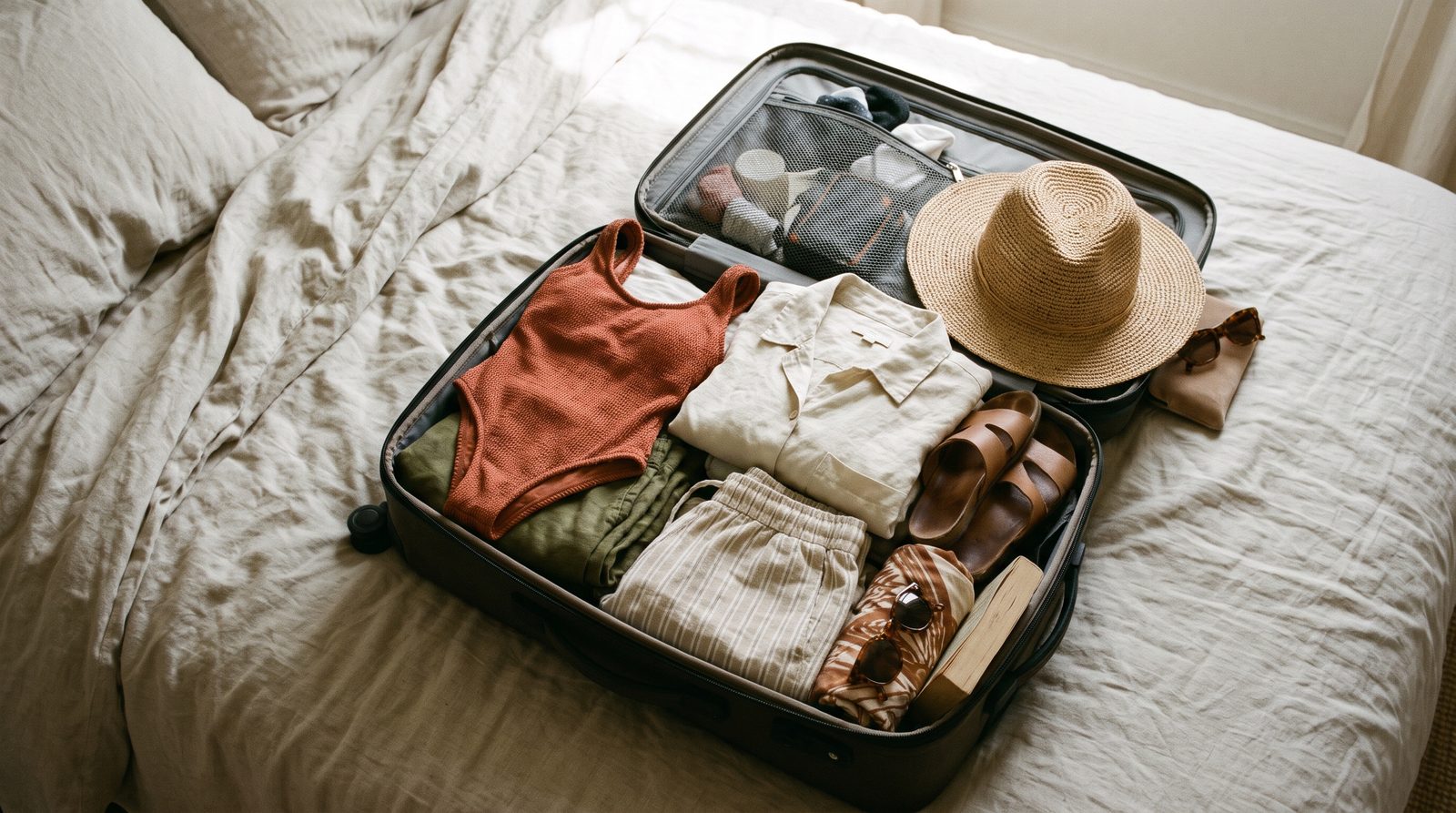
How to care for swimwear comes down to about four minutes a day. Rinse the suit in cool water within 30 minutes of swimming, wash it by hand with a teaspoon of mild detergent, press the water out in a towel and dry it flat in the shade. Those four habits protect the elastane that gives the suit its fit.
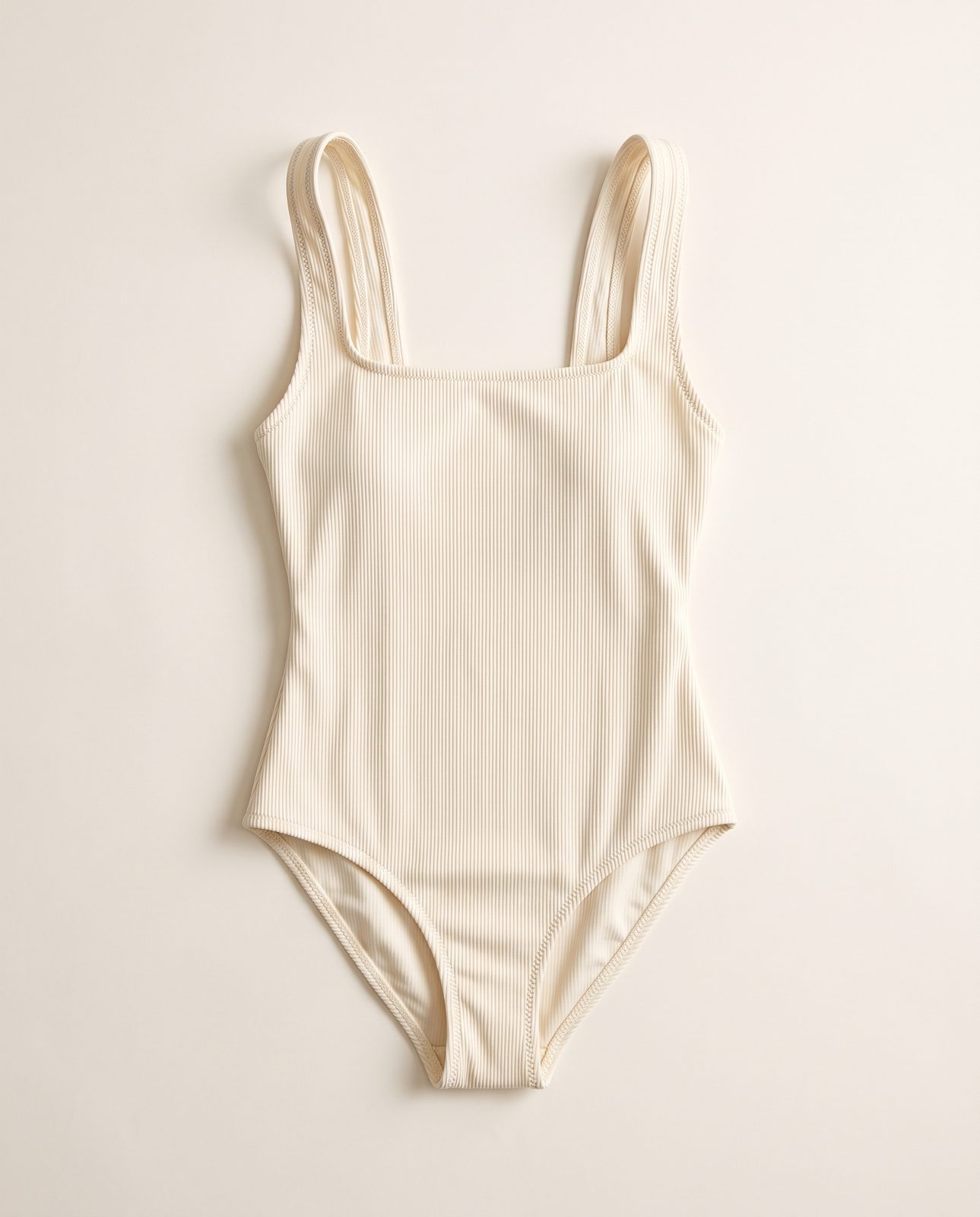
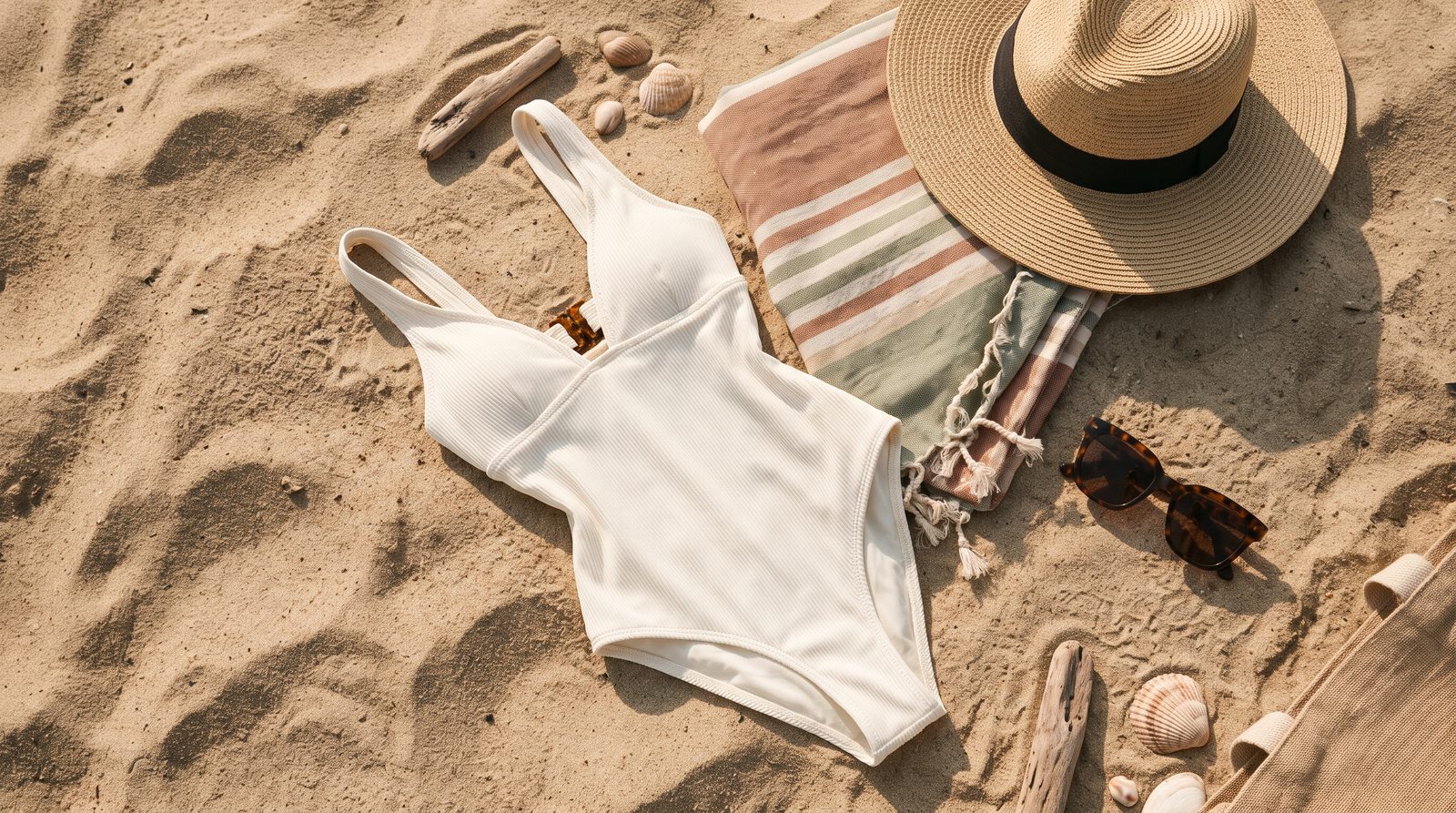
Most swimsuits are not worn out by swimming. They are worn out by chlorine left to dry in the fibres, by 40°C machine washes, by a tumble dryer and by a night hanging from one strap on a hot balcony. A standard 78% nylon, 22% elastane one-piece like our ivory ribbed style (€95) lives or dies on how those four pressures are handled.
How to care for swimwear: the 30-minute rinse
Chlorine, salt and sunscreen all sit on the surface when you step out of the water. As the suit dries, they concentrate in the fibres and begin reacting with the elastane. A 30 to 60-second rinse in cool running water, inside and out, removes most of them before that happens.
Pay attention to the lining, the leg openings and the straps, which hold water longest. If there is no shower at the pool, wrap the suit in a damp towel rather than sealing it in a plastic bag, where trapped warmth speeds up the damage on the way home.
Wash by hand with 5 ml of detergent
A machine wash on a 30°C delicate cycle in a mesh bag is the second-best option. Hand washing is better because it takes five minutes, uses less detergent and never spins the suit at 1,200 rpm. Detergent residue stiffens the knit and attracts dirt, so measure rather than pour.
Work the suds through the fabric instead of scrubbing it against itself. Friction is what makes the seat and the underarm area go thin and slightly fuzzy after a season of good intentions.
- Fill a basin with 5 litres of water at 30°C or cooler and add 5 ml (one teaspoon) of mild liquid detergent.
- Turn the suit inside out, submerge it for five minutes and squeeze the suds through the fabric.
- Rinse twice in clean cool water until no suds remain.
- Press the water out between flat palms, then roll the suit in a towel. Never wring or twist it.
Heat does more damage than chlorine
Elastane starts to lose recovery above 40°C. A tumble dryer runs at 60–70°C, a radiator is hotter still, and the dashboard of a car in July can reach 70°C within an hour. A hot tub at 39°C for 40 minutes is a similar insult, which is why spa suits age faster than pool suits.
Heat damage shows up first as a shine on the seat and straps, then as a thin, slightly slick hand feel, then as sag. Once the shine appears, the fibre has changed and no wash or soak will bring it back.
Dry flat in shade, not on a hanger
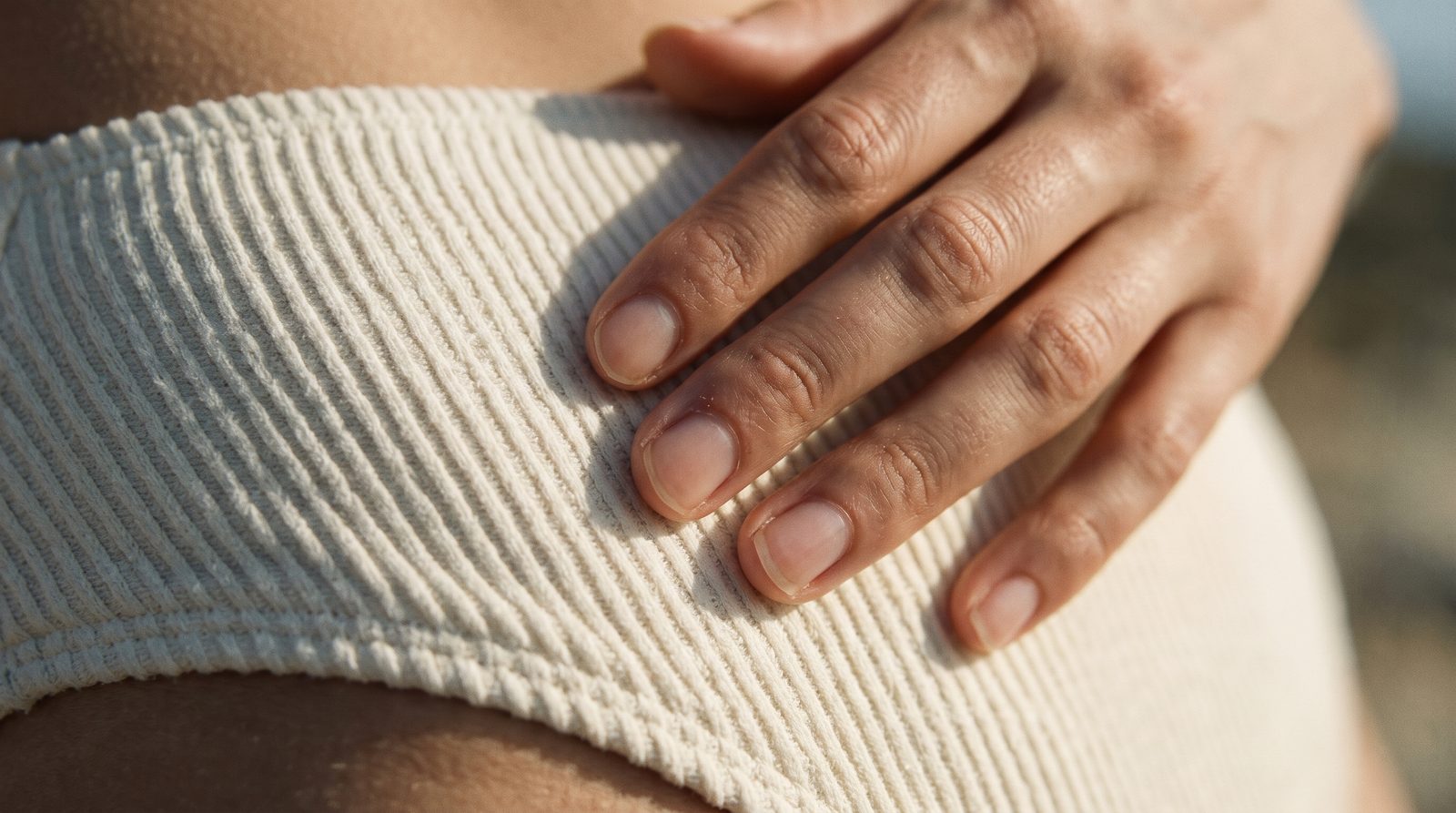
Roll the suit in a towel and press it to remove most of the water. A wet one-piece can weigh 500 g, and that weight pulls the straps and stretches the seat when the suit hangs. Lay it flat on a rack, shaped with your hands, and turn it once after an hour.
A short spell in direct sun is fine and helps white fabric, but hours of UV fades colour and weakens elastane. Shade at 22°C dries a 220 g/m² knit in about 45 minutes. Never finish the job on a radiator or with a hairdryer.
Store it dry, and rotate two suits
A swimsuit put away damp develops a mildew smell within 48 hours, and the fibres weaken as moisture sits in the lining. Let it dry completely, then fold it loosely or roll it, with nothing heavy on top and never a sealed plastic bag in a hot car boot.
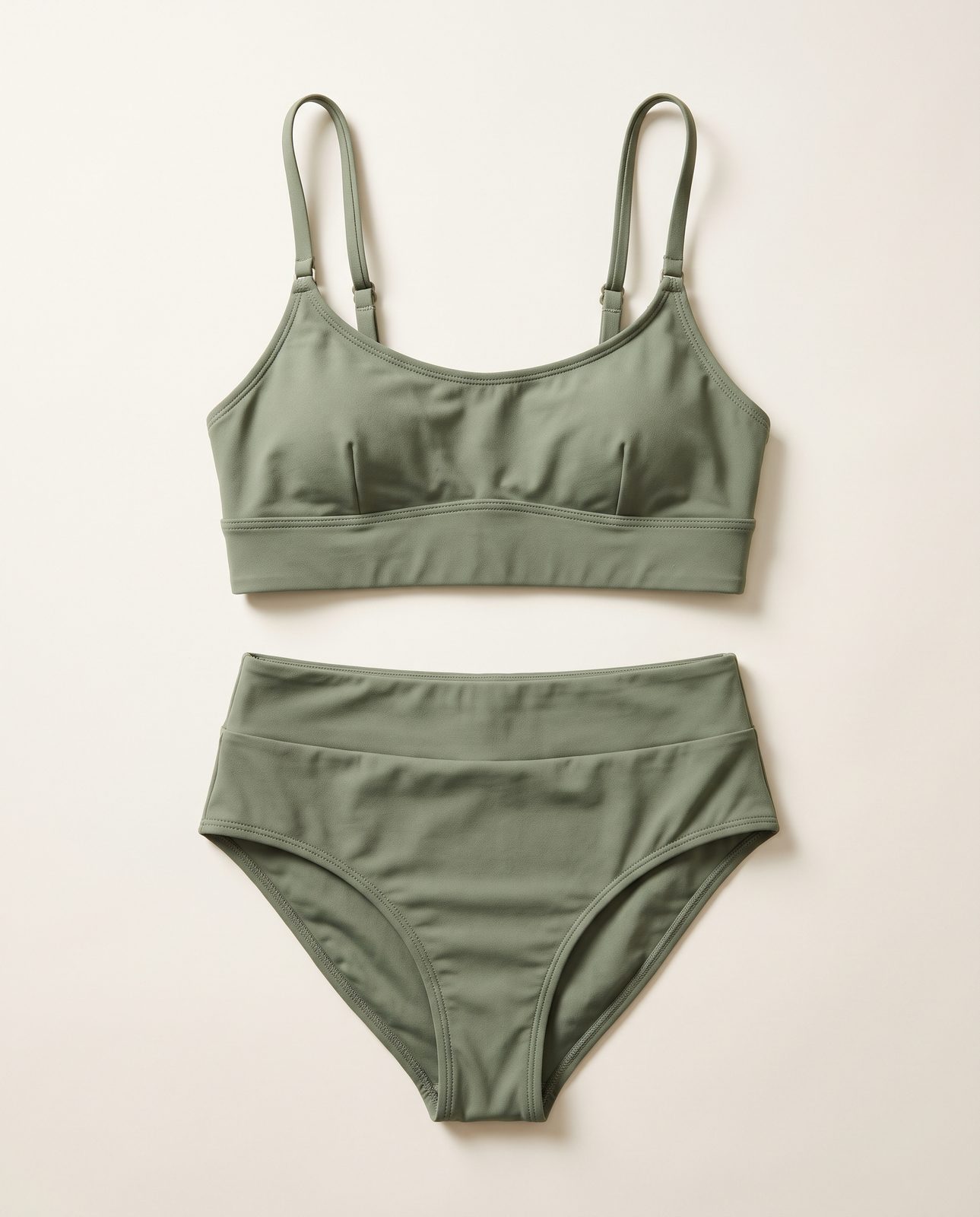
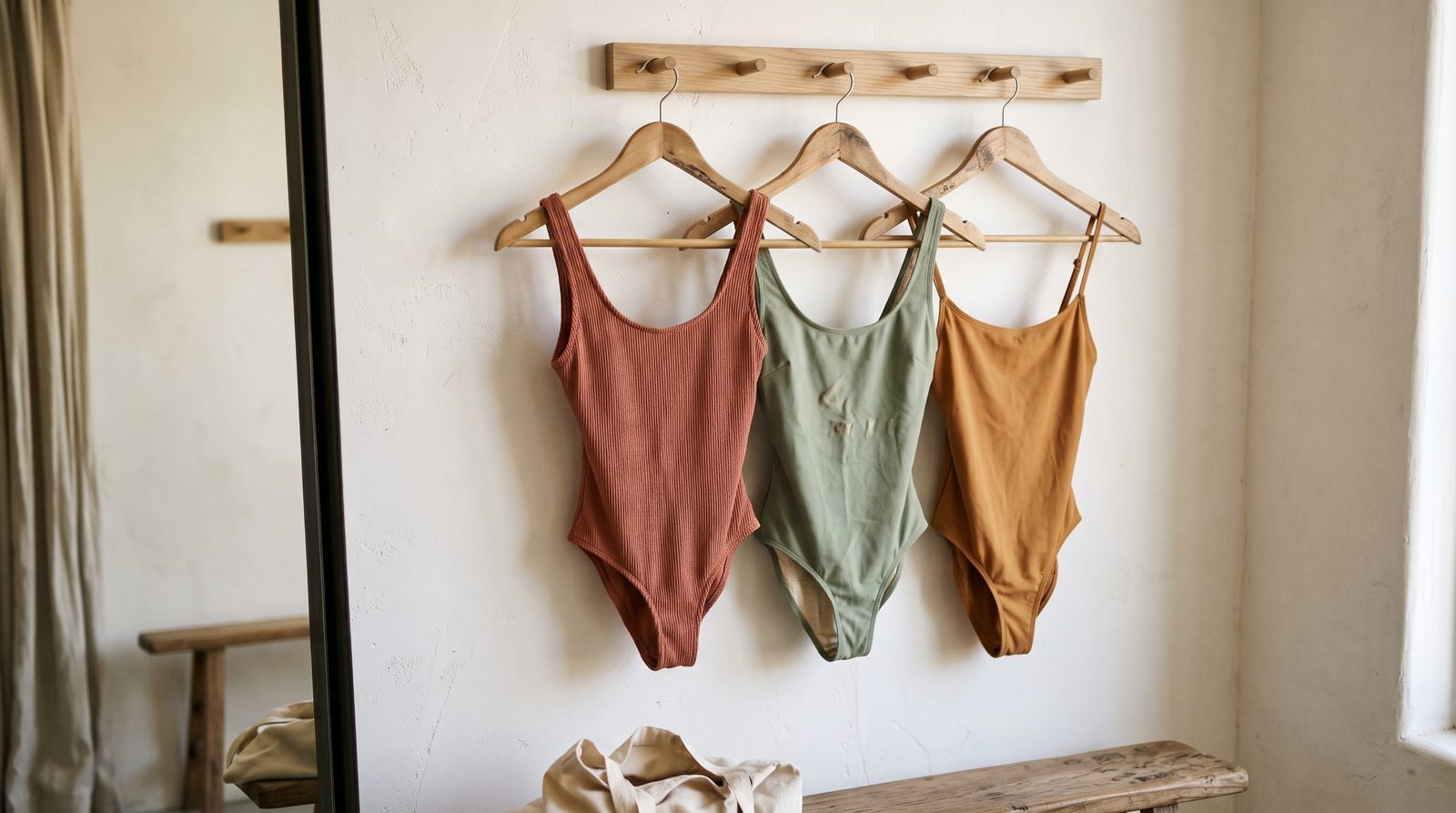
Two suits worn alternately outlast one worn daily, because elastane needs roughly 24 hours to recover its shape. Our sage high-waist bikini dries in under an hour in shade, which makes that rotation easy even in a small hotel room.
Repair before you replace
A loose strap, a 3 mm pinhole or a tired clasp is a repair, not a replacement. A local tailor can shorten straps by 1–2 cm or take in the side seams, usually for less than €20, and that buys another season from a suit you already like.
Replace it when the fabric stays baggy after washing, when the lining shows through the outer layer, or when the seat has lost its shape entirely. With regular care, expect 12–18 months from a suit worn three times a week, and four or five seasons from a holiday-only suit.
- Keep a 100 ml bottle of mild detergent in your wash bag for ten hand washes.
- Pack a mesh bag that doubles as a wet bag for the trip home.
- Use a microfibre towel to roll water out before drying flat.
- Skip hotel hand soap: it is alkaline and leaves a film on the lining.
Frequently asked questions
Can I put a swimsuit in the washing machine?
Yes, on a 30°C delicate cycle in a mesh bag with 5 ml of detergent and a spin no higher than 600 rpm. Hand washing is gentler and takes about five minutes, so save the machine for busy weeks.
How often should I wash swimwear?
After every pool or sea swim, because chlorine and salt keep working while the fabric is damp. A plain cool rinse is enough after a short dip in fresh water, as long as the suit then dries flat.
Why has my white swimsuit turned yellow?
Usually chlorine, sunscreen and hard-water minerals oxidising in the fibres, often helped along by hot water. A two-hour soak in oxygen bleach at 40°C lifts most of it, while chlorine bleach makes the yellowing permanent.
Does fabric softener make swimwear softer?
No. Softener coats the fibres, reduces stretch recovery and traps odour in the lining. Skip it and use a teaspoon of mild detergent instead.