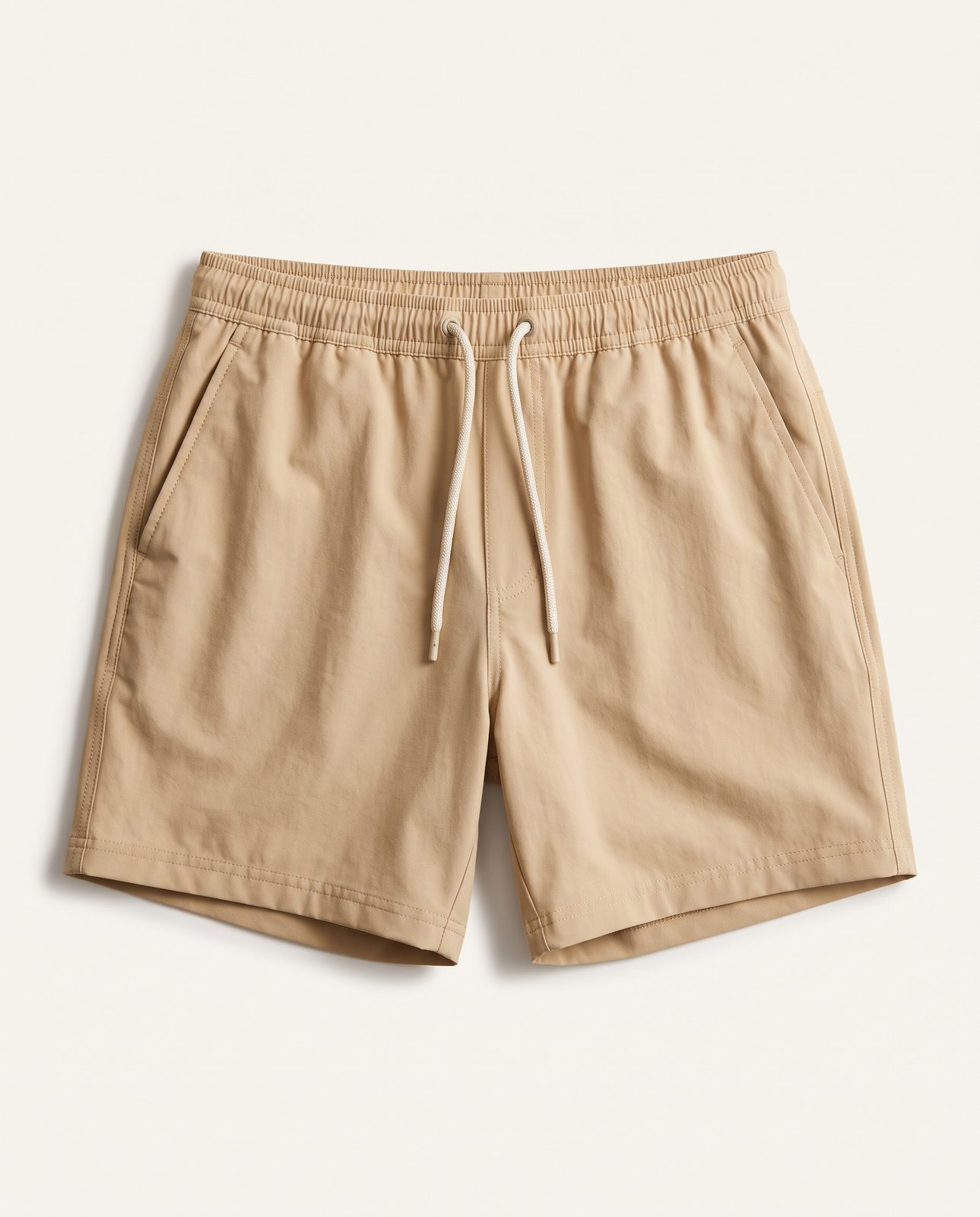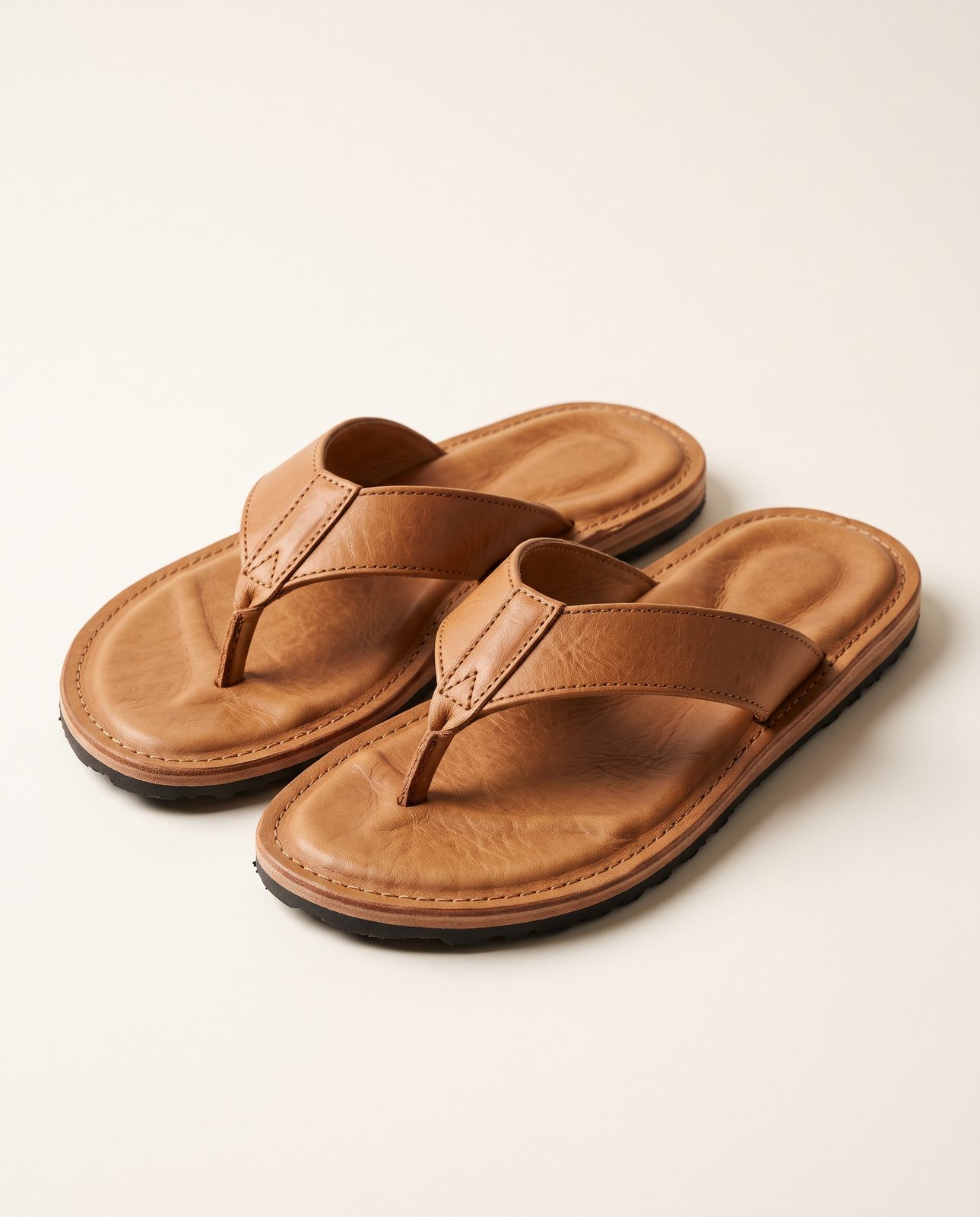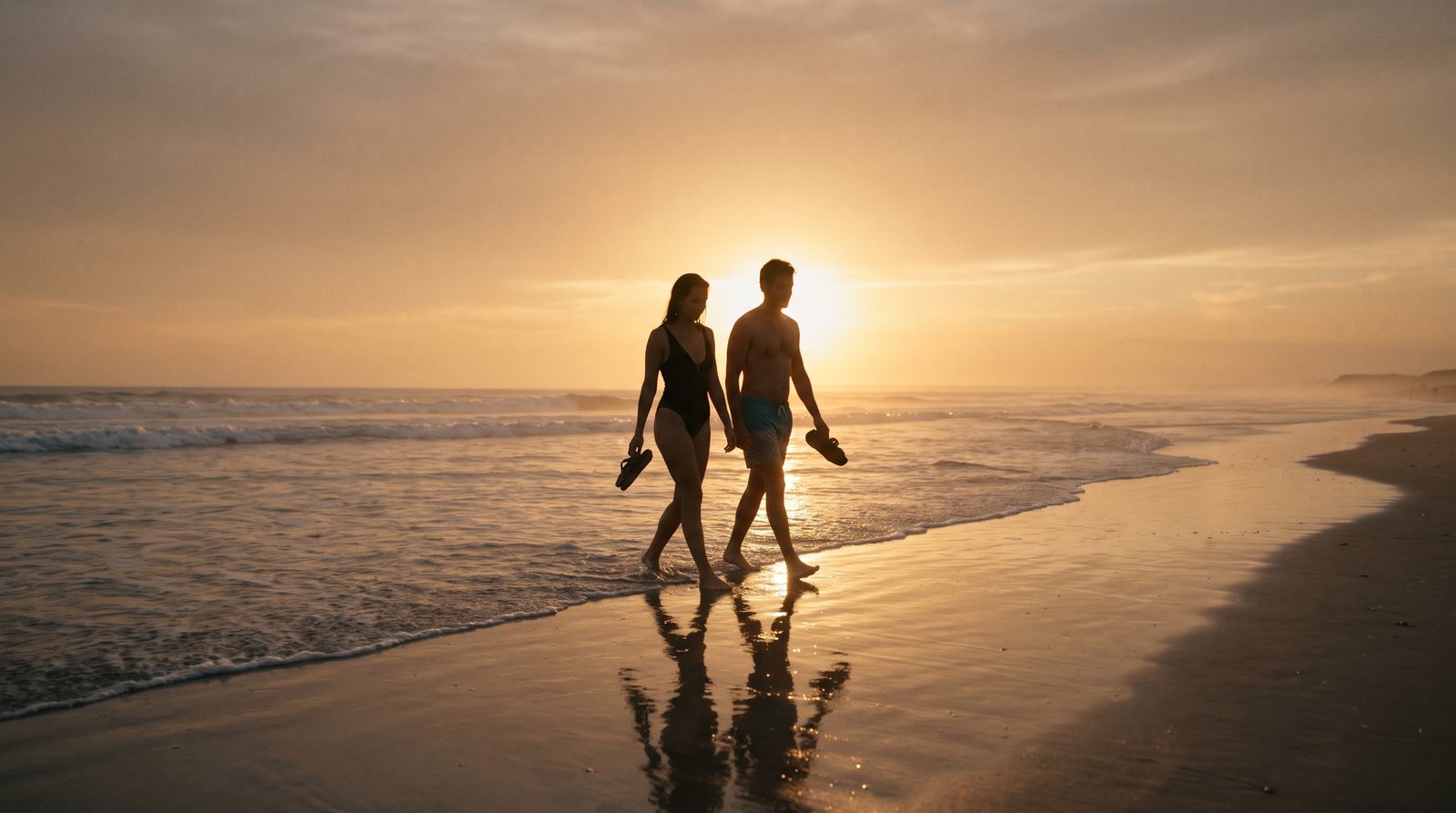
Resort wear is the small set of clothes that works from the pool to lunch to dinner without a change of room key: loose linen, a cover-up, one pair of sandals. It is not a dress code and it is not resort-specific — it is what you pack when the day runs at 30°C and you will be in and out of water three times before sunset.
We build it from five pieces per person, which covers a week and packs into about 1.4 kg. Everything below is chosen for how it behaves when damp, creased and worn twice in a day.
What resort wear actually means
The term covers relaxed clothing designed to be worn over swimwear and in warm, semi-outdoor settings: linen shirts, cotton voile dresses, wide shorts, sandals. It differs from beachwear because it has to pass at a table with cutlery, and from city summer clothing because it has to survive chlorine, salt and a wet sunbed.
Practically, that means three tests. Does it dry in under an hour on a chair? Does it look deliberate without ironing? And can it be worn over a wet swimsuit without going transparent? Linen and 180 gsm cotton voile pass all three; jersey and thin viscose usually fail the last.
Outfit one: swim and cover-up
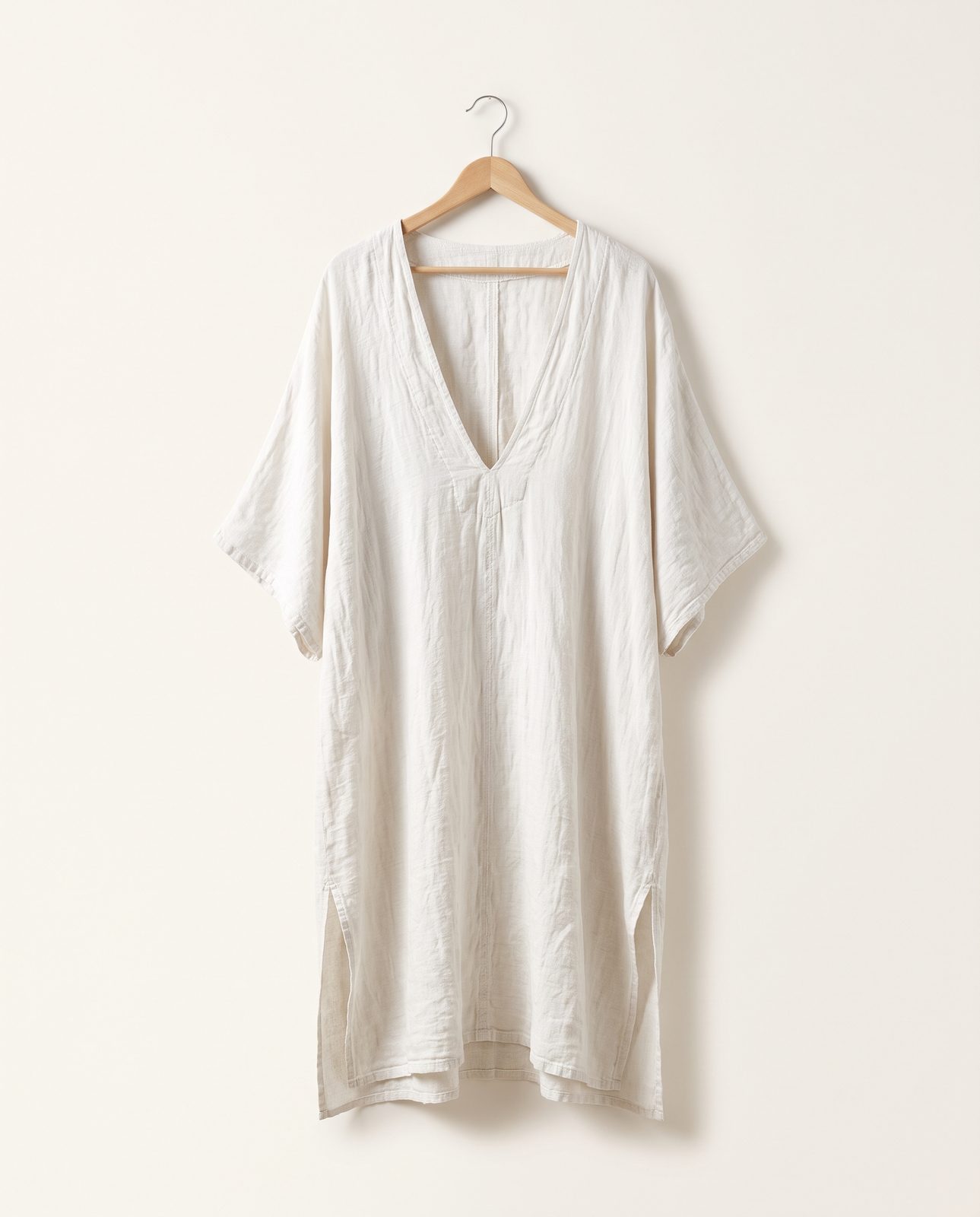
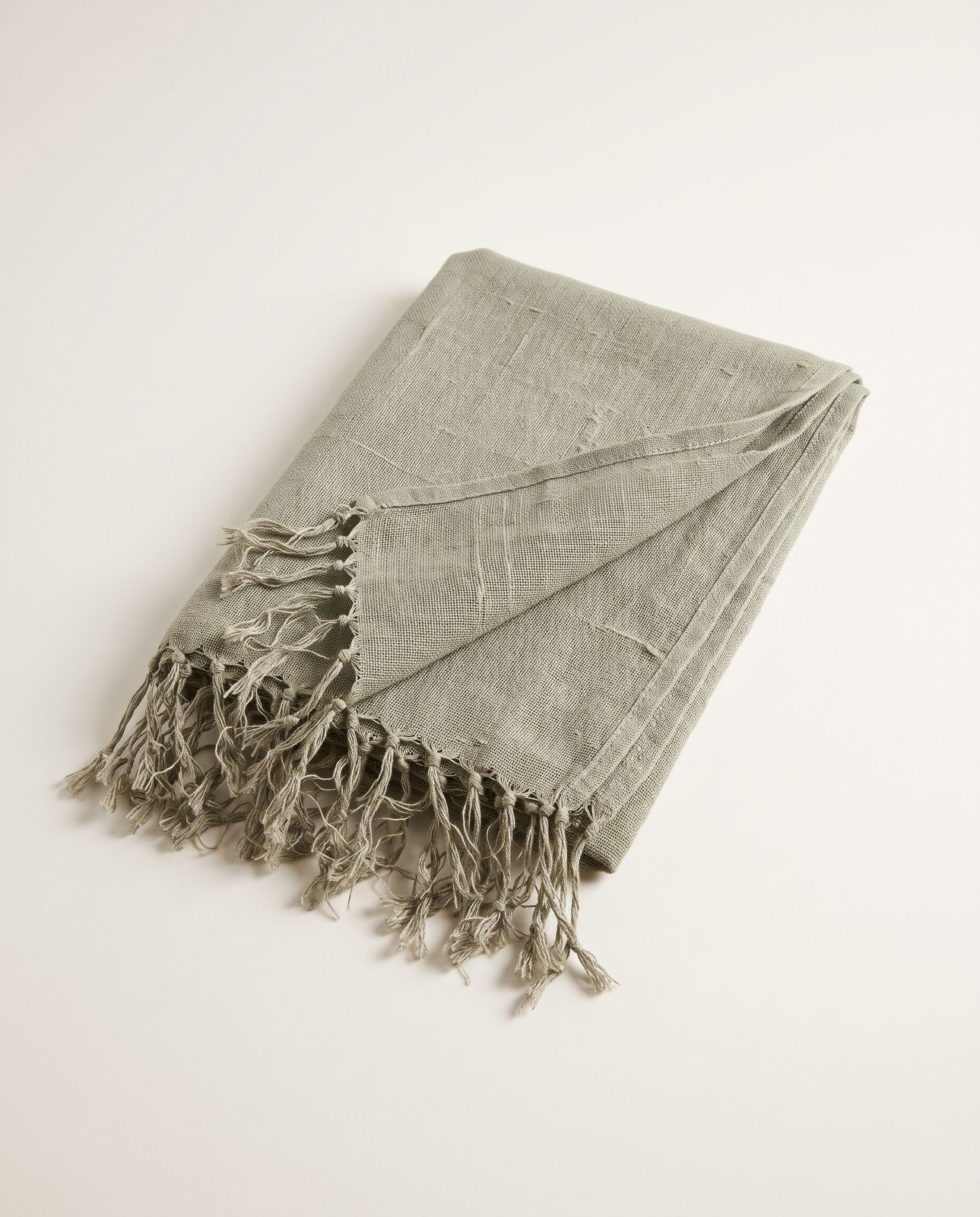
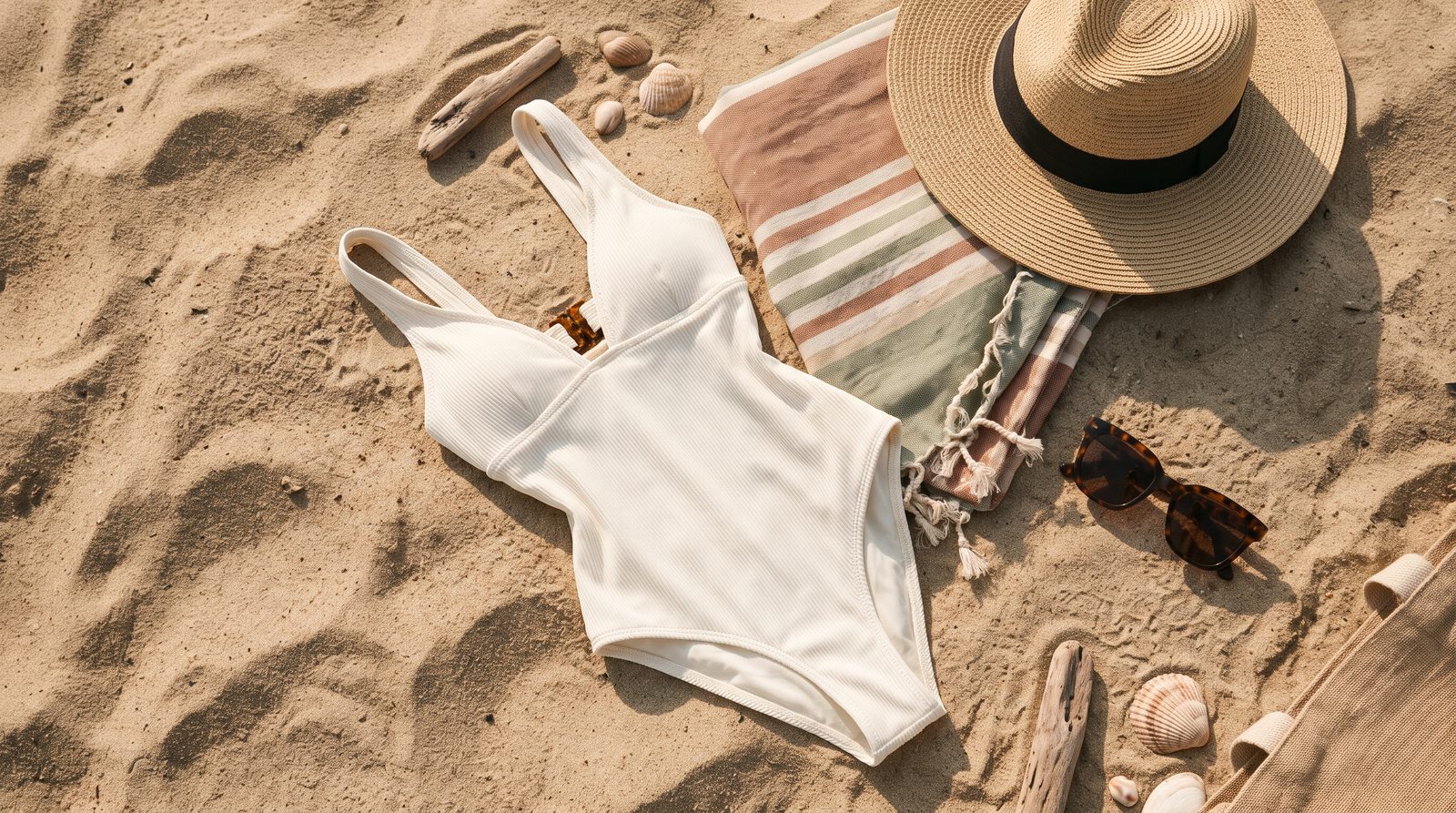
The base layer is the swimsuit you actually swim in, plus a cover-up that goes on wet. A linen cover-up dress (€65–79) or a 100 × 180 cm sarong (€45–59) does the job because both hang away from the body and dry without a mark. Cotton T-shirts are the wrong choice here: they hold water, cling, and stay damp for two hours in shade.
Add a straw tote (€49–69) for sunscreen, a towel and a room key, and leather flip-flops (€49–69) that survive wet sand without slipping. This is the outfit for breakfast, the pool and the 90-second walk back to the room.
Outfit two: lunch and the pool bar
Lunch is where resort wear earns its name. Swap the wet cover-up for a dry linen shirt or a cotton voile dress, keep the swimsuit underneath, and add the one accessory that makes the whole thing look intentional — a shell necklace, a woven belt, a hat with a 10 cm brim.
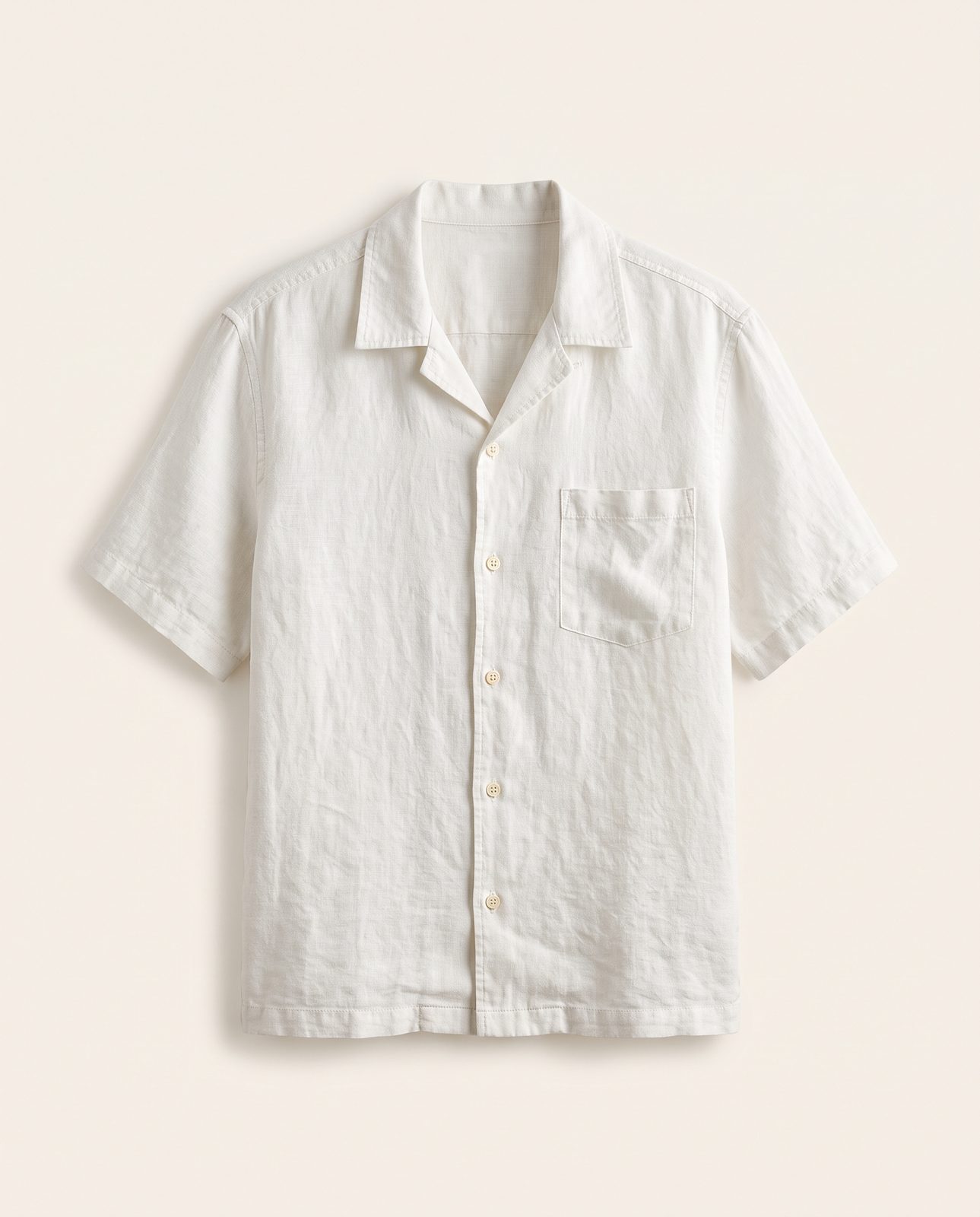
For men, a linen camp shirt (€75–85) over swim shorts is cooler than a polo because the open weave moves air, and it covers the shoulders during the middle of the day when sunburn is most likely. Leave the shirt unbuttoned over a dry swim short and you have a pool-bar outfit that also works for a beach walk.
Outfit three: dinner at 22°C indoors
Restaurant terraces stay at 27°C, but indoor air conditioning runs to 22°C, which is where a single long layer matters. Women can take the same linen dress from lunch to dinner with a change of sandals and the cowrie shell necklace (€39–49). Men need long trousers or a clean pair of swim shorts, a fresh linen shirt and closed sandals or loafers.
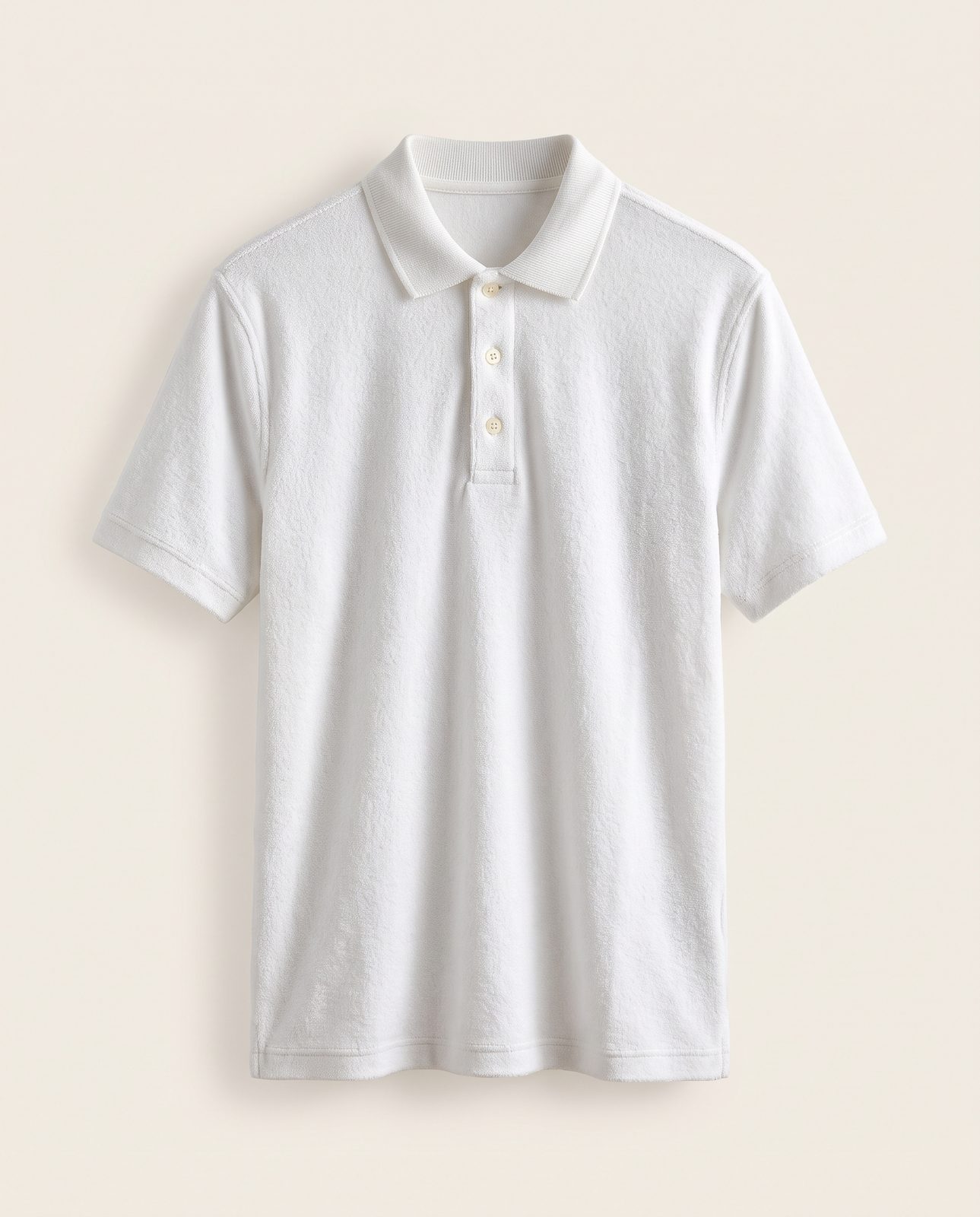
The rule we use: if the venue has a wine list, the flip-flops stay in the room. A terry polo (€75–85) is the useful middle piece — smart enough for dinner, absorbent enough for the walk back through the gardens.
Fabric weights for 30°C days
Weight is the difference between resort wear that works and resort wear that looks damp by 11am. Linen at 150–170 gsm is the sweet spot: opaque enough to wear alone, light enough to dry in 20 minutes. Cotton voile at 120–140 gsm is cooler still but creases hard; seersucker at 160 gsm holds a shape without ironing.
Terry cloth is the exception at 320–380 gsm. It is heavy and slow to dry, which is why it belongs in a polo or a beach towel rather than a dress, and why it should never go in the hold on the last day.
A five-piece palette that makes twelve outfits
Pick five pieces in sand, white, sage and one accent of coral, and the combinations stop being a decision. A white linen shirt, a sage cover-up, sand shorts, a striped bikini and one coral piece will cover a week of mornings, lunches and dinners without repeating an outfit in a photograph.
Dark navy and black are the practical exception for travel days, when a spill or a wet seat is more likely. Everything else should be able to be worn with everything else, which is the real reason resort wear packs small.
Shoes for the walk between venues
Two pairs is the maximum worth carrying: leather flip-flops for sand and pool decking, and a flat leather sandal for dinner. Both should be worn in before you fly, because a resort path can be 400 m of gravel and boardwalk, and a new strap will find the one blister spot on day one. Trainers are useful only if you plan to use the gym.
Frequently asked questions
What is resort wear, exactly?
It is relaxed warm-weather clothing designed to be worn over swimwear and in semi-outdoor settings, usually linen, cotton voile or seersucker. The defining test is that it works at the pool and at a lunch table without changing.
Can you wear resort wear outside a resort?
Yes, in any warm coastal town, beach club or summer city. Linen shirts, loose dresses and flat sandals read as normal holiday clothing rather than hotel uniform, which is why the pieces are worth buying once.
How many outfits do I need for a week at a resort?
Five pieces per person is enough: two cover-ups, two tops or shirts and one bottom that works with both. Add one dinner outfit if the hotel has a restaurant with a dress code.
Are flip-flops acceptable at dinner?
At beach restaurants and pool bars, usually yes; at indoor or à la carte venues, usually not. Leather rather than rubber, and a closed toe or a strap that holds the foot, is the safer choice after 7pm.