To avoid tan lines, work on contrast rather than sun exposure. Fabric blocks most UV, so the skin underneath stays pale while the skin around it darkens, and the sharper that difference, the more visible the line. You can reduce it in three ways: change where the fabric sits, build colour gradually, or accept the line and dress around it.
We sell swimwear in cuts from bandeau to high-neck, so we see which shapes leave which marks. Here is the practical version, including the timing and the one habit that makes lines worse.
Why the line lands where it does
A tan line is the edge of a shadow. Where a strap sits, the skin receives a fraction of the UV that reaches the shoulder beside it, so after 60–90 minutes of sun the difference is visible and after three days it is a clear stripe. Lines are sharpest in strong, direct sun and softest in hazy light or late afternoon.
Skin that is already tanned shows lines more, because the surrounding skin has more colour to contrast with. That is why the first beach day of a holiday produces the most obvious marks: you go from an even winter tone to a hard-edged strap line in one afternoon. Five or six short sessions give a softer edge than one long day.
How to avoid tan lines with the right straps
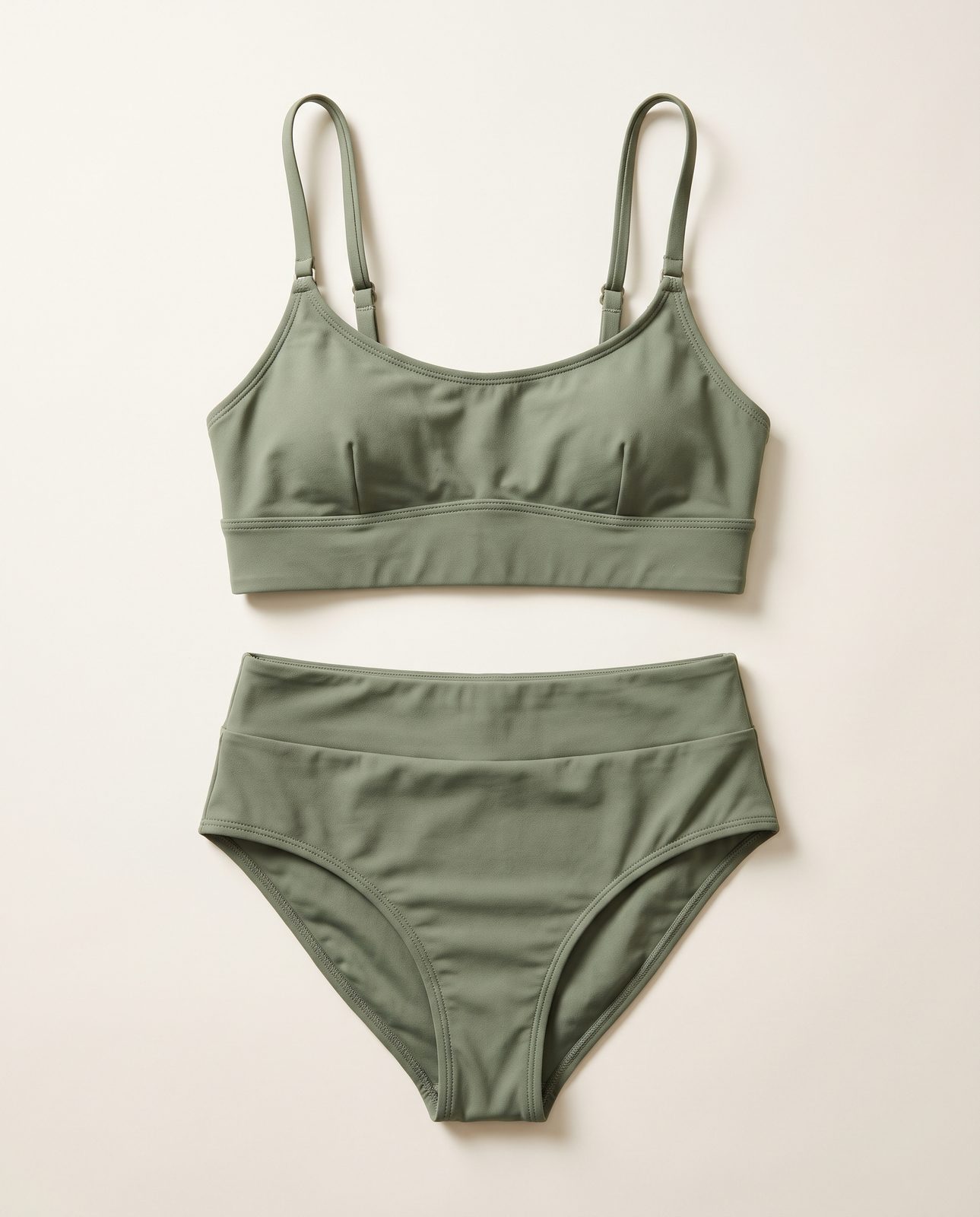
The most useful question is not which swimsuit looks best but which neckline you wear to dinner. If your summer wardrobe is mostly T-shirts and shirts, a classic 2 cm strap leaves a line that sits under a sleeve and is invisible in normal clothes. A halterneck leaves a V on the chest and a mark at the back of the neck, which shows in almost everything except a halter dress.
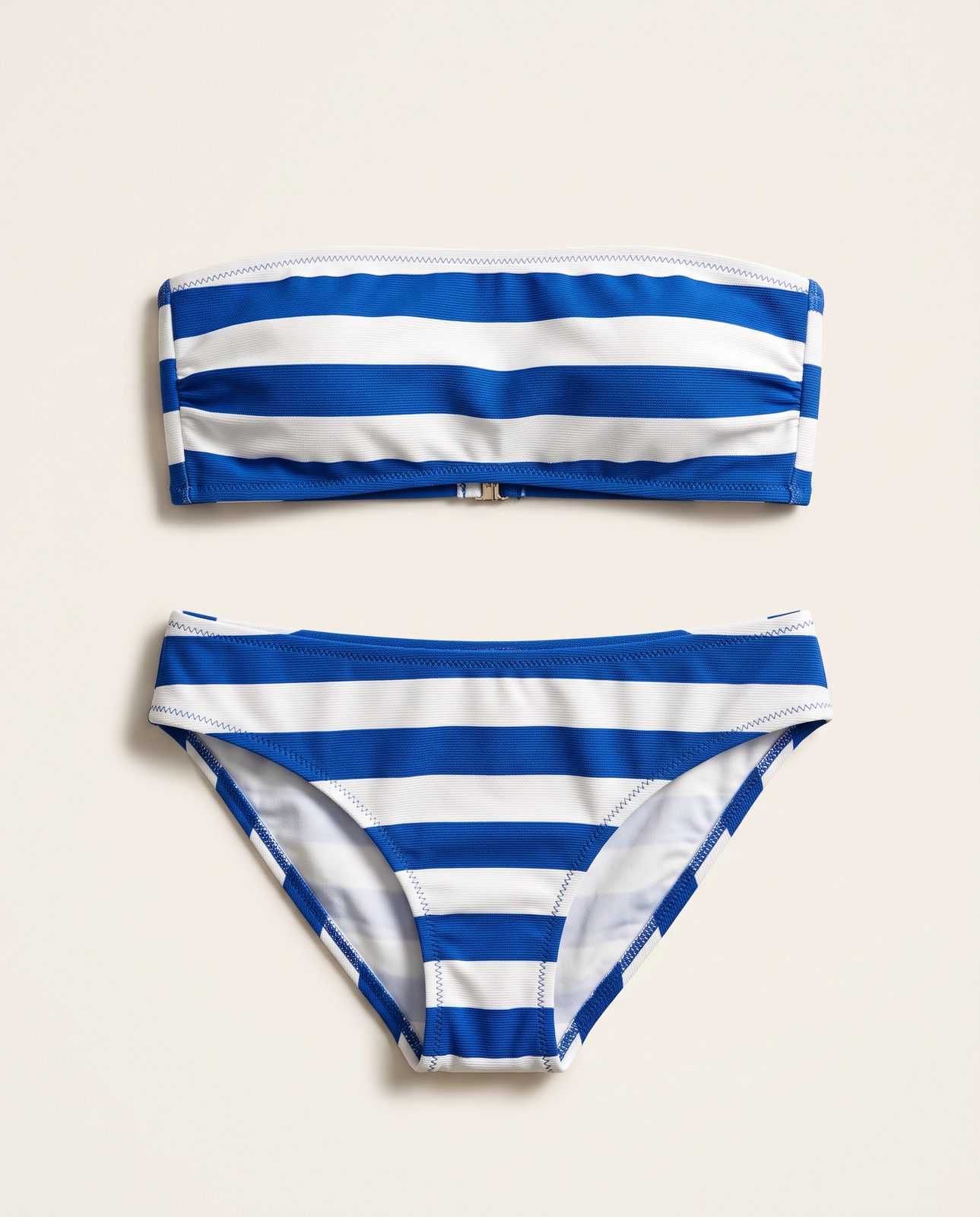
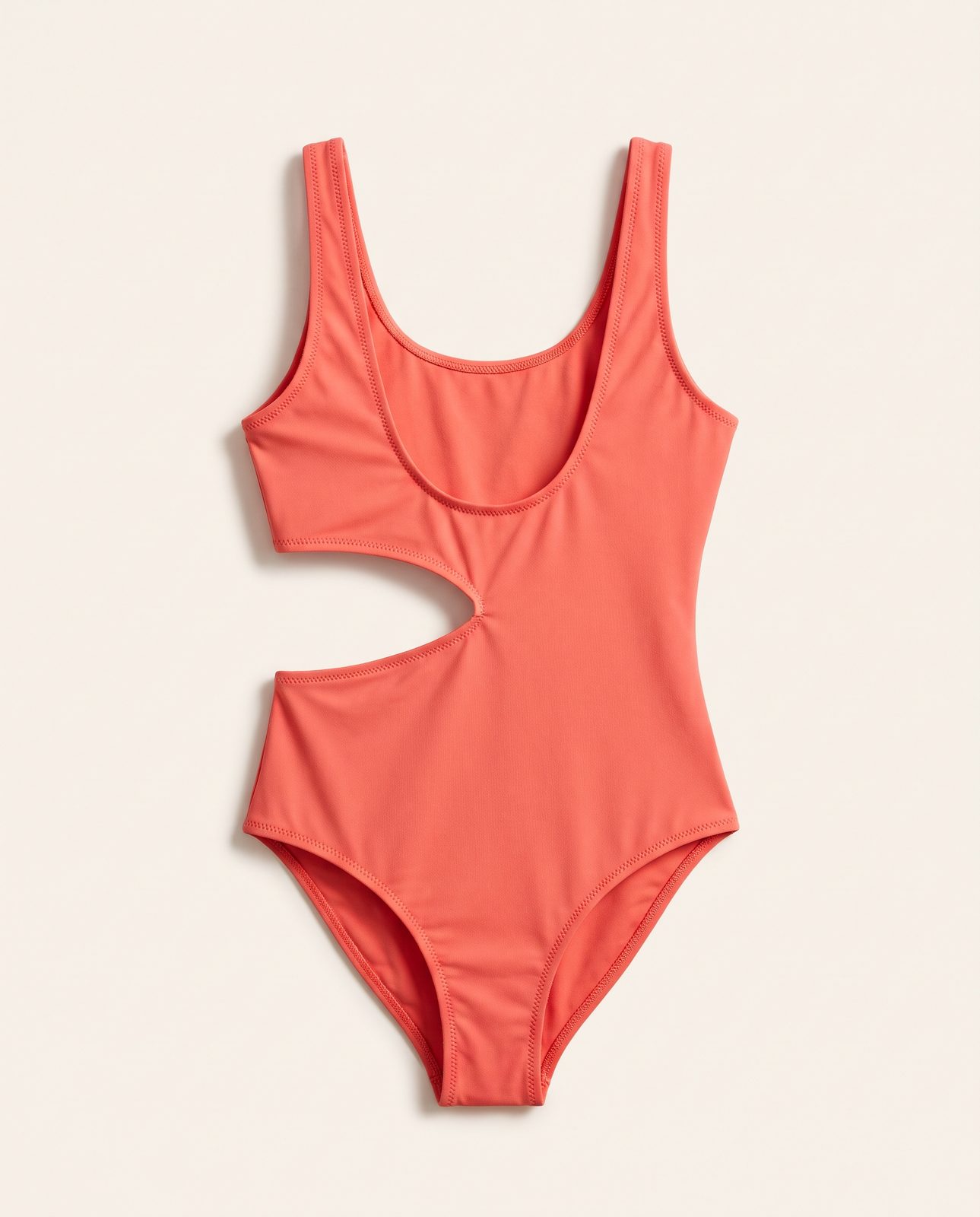
Bandeau tops push the line lower, across the upper arm and armpit, and suit off-shoulder dresses and strapless tops. A one-shoulder suit leaves an asymmetric line that is hard to hide but easy to style around if you wear asymmetric necklines. Racerback suits leave a Y shape between the shoulder blades, the least compatible line with ordinary clothing.
If you have an event in mind — a July wedding, a strapless dress — work backwards from the dress. Two weeks in a bandeau will do more than any cream.
- T-shirts and shirts: classic straps, line hidden under a 10 cm sleeve.
- Off-shoulder and strapless: bandeau, line low across the upper arm.
- Halter dresses: halterneck suit, line follows the same V.
- Backless dresses: low-back or bandeau, avoid racerback.
The 20-minute rule and the UV index
Short, repeated exposure builds colour more evenly than a single long session. Twenty minutes in UV index 6–7, then shade and a shirt, then another twenty later, gives the skin time to respond without burning. Burning does not speed up a tan; it removes the top layer of skin and takes the colour with it.
Timing matters because UV index peaks between 12:00 and 15:00 in southern Europe in July, when it can reach 9–10. At that level, 20 minutes is enough to colour pale skin and 60 minutes is a burn risk. Morning before 11:00 and late afternoon after 16:00 give a gentler angle and a softer line, simply because the contrast builds more slowly.

Rotate two suits with different cuts
One suit, worn every day for a week, produces one strong line in one place. Two suits with different strap positions spread the contrast: a bandeau on Monday and Wednesday, a classic strap on Tuesday and Thursday, and the marks overlap rather than deepen. This is the single most effective change you can make, and it costs nothing if you already own two suits.
It also helps the fabric. Alternating suits gives each one 24 hours to dry and recover its elastane, which extends its life by roughly a third compared with wearing the same suit daily.
SPF does not prevent lines, but it changes them
Sunscreen slows the tan everywhere it is applied, so the contrast between covered and uncovered skin depends on how evenly you use it. Most people apply a thin layer to the shoulders and a thicker one to the face, exaggerating the edge. A consistent layer of SPF 30 or 50 on both the covered-adjacent skin and the rest evens the result.
Reapply every two hours and after swimming, and use about 30 ml for a full body — roughly a shot glass. Cream on the shoulders and upper arms is the difference between a soft transition and a hard line. If you want the line to be minimal, use a higher SPF on the areas beside the strap rather than a lower one on the strap itself.
- Apply 15–20 minutes before sun, not on the beach.
- Use 30 ml for the body and reapply every two hours.
- Match the SPF on both sides of the fabric edge.
- Reapply after every swim, even water-resistant formulas.
If the lines are already there
Fresh lines fade in three to six weeks as the tanned skin turns over, and faster if you keep the area out of the sun and moisturised. Gentle exfoliation twice a week helps the surface look more even; scrubbing harder does not speed it up. A gradual self-tanner applied to the pale stripe can soften the contrast in a day without more UV exposure.
The longer-term answer is to treat lines as part of the outfit. A strap line under a shirt is invisible; a low back line is not. Once you know where your lines fall, you can choose suits that match your summer wardrobe instead of fighting the pattern after the fact. That is easier and cheaper than chasing an even tan.
Frequently asked questions
How long does it take for tan lines to fade?
Most lines soften within three to six weeks as the tanned skin renews itself, depending on how deep the contrast is. Keeping the area covered and moisturised helps; more sun on the pale stripe only sharpens the edge.
Which swimsuit leaves the fewest visible tan lines?
A bandeau or a classic-strap suit leaves lines that sit under most T-shirts and dresses. A racerback leaves a Y between the shoulder blades that is hard to hide. If you have an event, choose the suit that matches that neckline.
Does SPF 50 stop tan lines completely?
No. It slows tanning everywhere, so the contrast is lower but still there. Applied evenly on both covered-adjacent and open skin, a high SPF gives a softer edge than a low one used patchily.
Is a base tan protective?
A tan is evidence of UV damage, and it offers only modest protection — far less than SPF 30. It is not a substitute for shade, clothing or sunscreen, and building one deliberately increases cumulative exposure.
Can I tan through a white swimsuit?
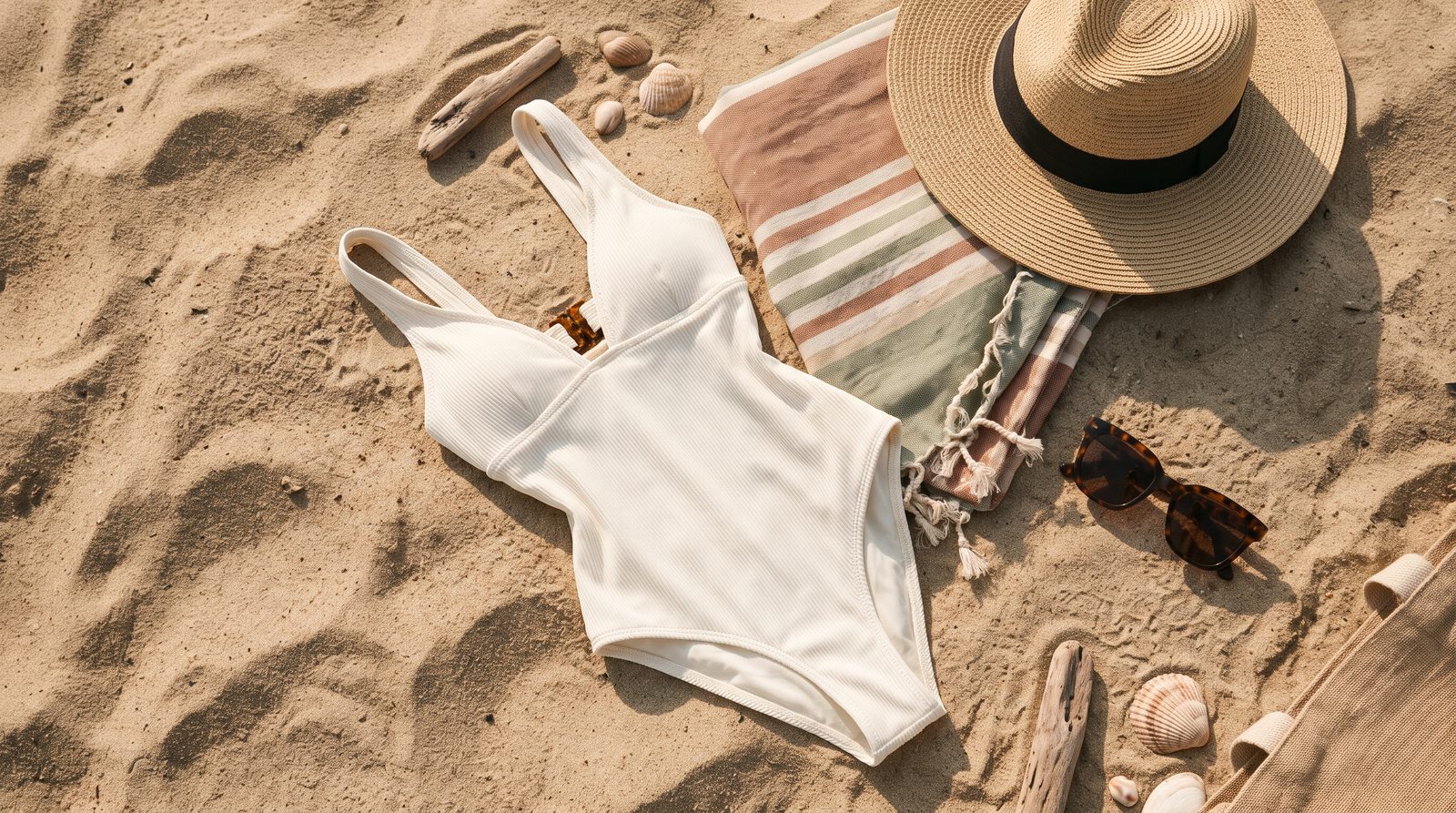
Thin pale fabric can let through more UV than a dense dark one, but a lined 230 gsm suit blocks most of it. If you can see light through the fabric held up to a lamp, some UV is getting through too.