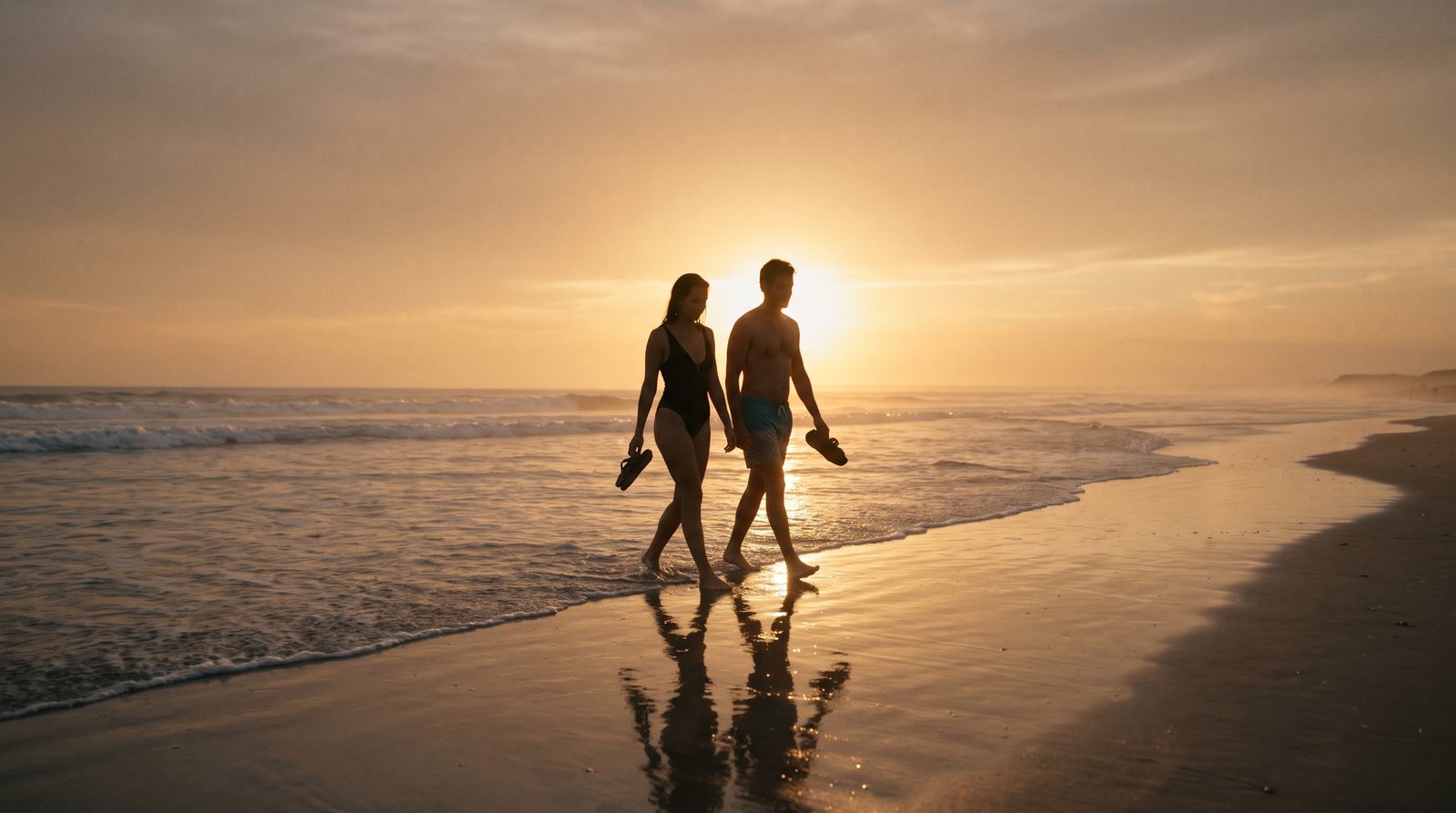
Honeymoon swimwear has an unusually specific job: it has to survive salt water, sunscreen, three changes a day and a camera in almost every frame. The shortcut is three suits per week of travel — one to wear, one drying, one for the evening — in cuts you already trust. Below is how we choose them, from strap width to the colours that hold up at golden hour.
Most honeymoons run 7 to 14 days across two or three hotels, which means hand washing in a bathroom sink more often than hotel laundry. Everything here assumes you will rinse by hand, dry on a rail and pack light enough to move between islands without paying excess baggage.
How many swimsuits does a honeymoon need?
Three per week is the number we give customers, and it holds whether you are in Santorini or the Maldives. Two people on a ten-day trip therefore travel with six suits, which weighs about 950 g in total — less than a pair of trainers. Any fewer and you spend the trip chasing dry fabric; any more and half of them come home unworn.
Build the three around different jobs rather than three versions of the same thing: one structured one-piece for swimming and boat days, one bikini for tanning, and one set you would be happy to be photographed in at 6pm. That way a single rinse cycle never leaves you with nothing dry.
One-piece or bikini for a honeymoon?
Pack both, and let the hour decide. A one-piece stays put through snorkelling, kayaking and the walk back from the water, and it is the piece you will reach for on the first morning when you are jet-lagged and unsure of the beach. A bikini is better for long lunches, for tan lines you actually want, and for the swim-up bar where a wet one-piece feels like a commitment.
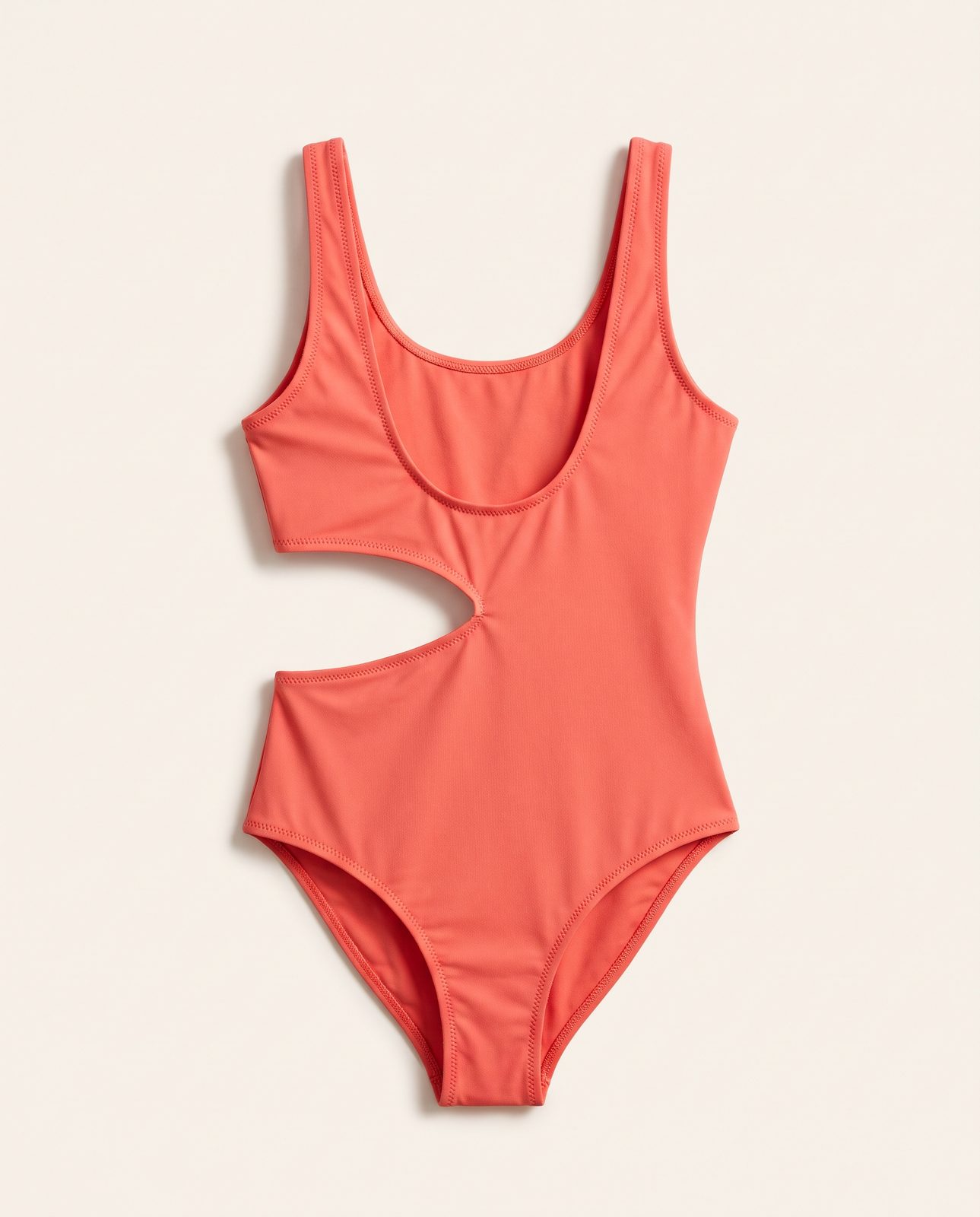
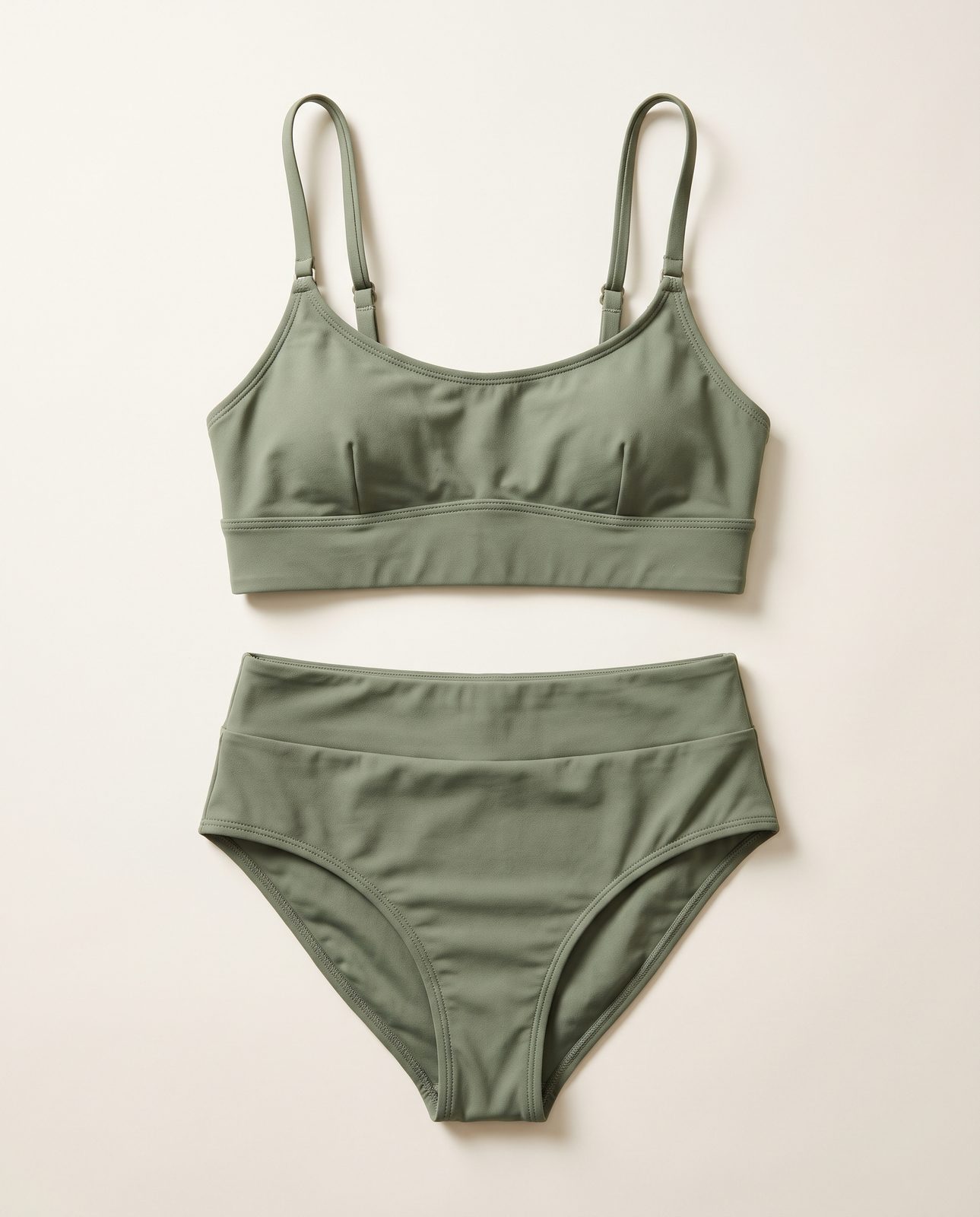
Our coral cutout onepiece (€89–99) covers the active half of the day without looking athletic, while the sage high-waist bikini (€92–95) handles the lounging half. If you only want to buy one new suit for the trip, buy the one-piece: it photographs better in wind and works under a sarong at lunch.
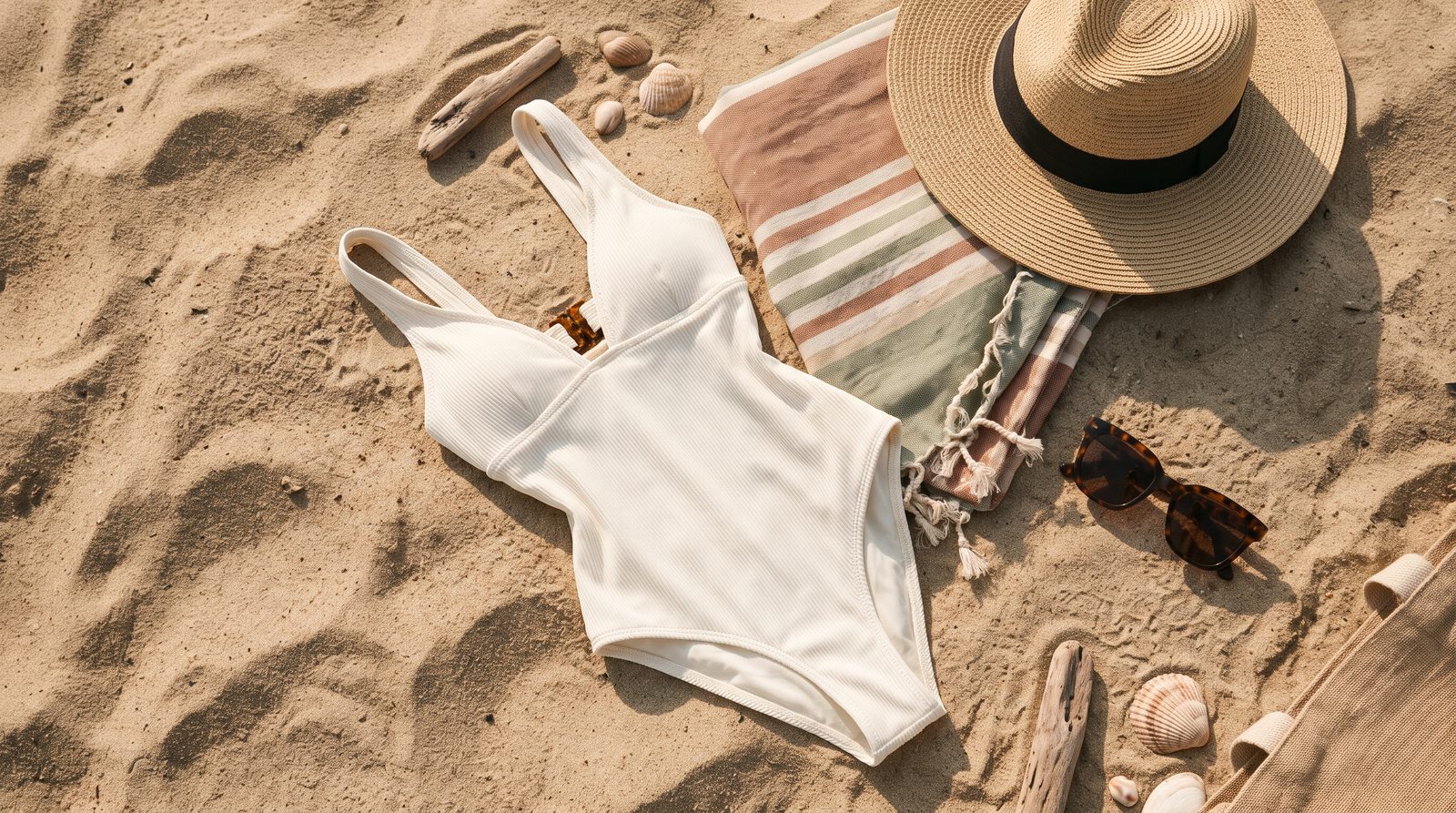
Honeymoon swimwear colours that work in photographs
White and coral read best against sand and late-afternoon light, which is why they dominate honeymoon photographs and why they are the hardest colours to keep clean. Sage and olive sit between skin and sea without competing with either. Black is flattering in shade but absorbs heat, and at 32°C in direct sun it is measurably warmer to wear than a pale suit.
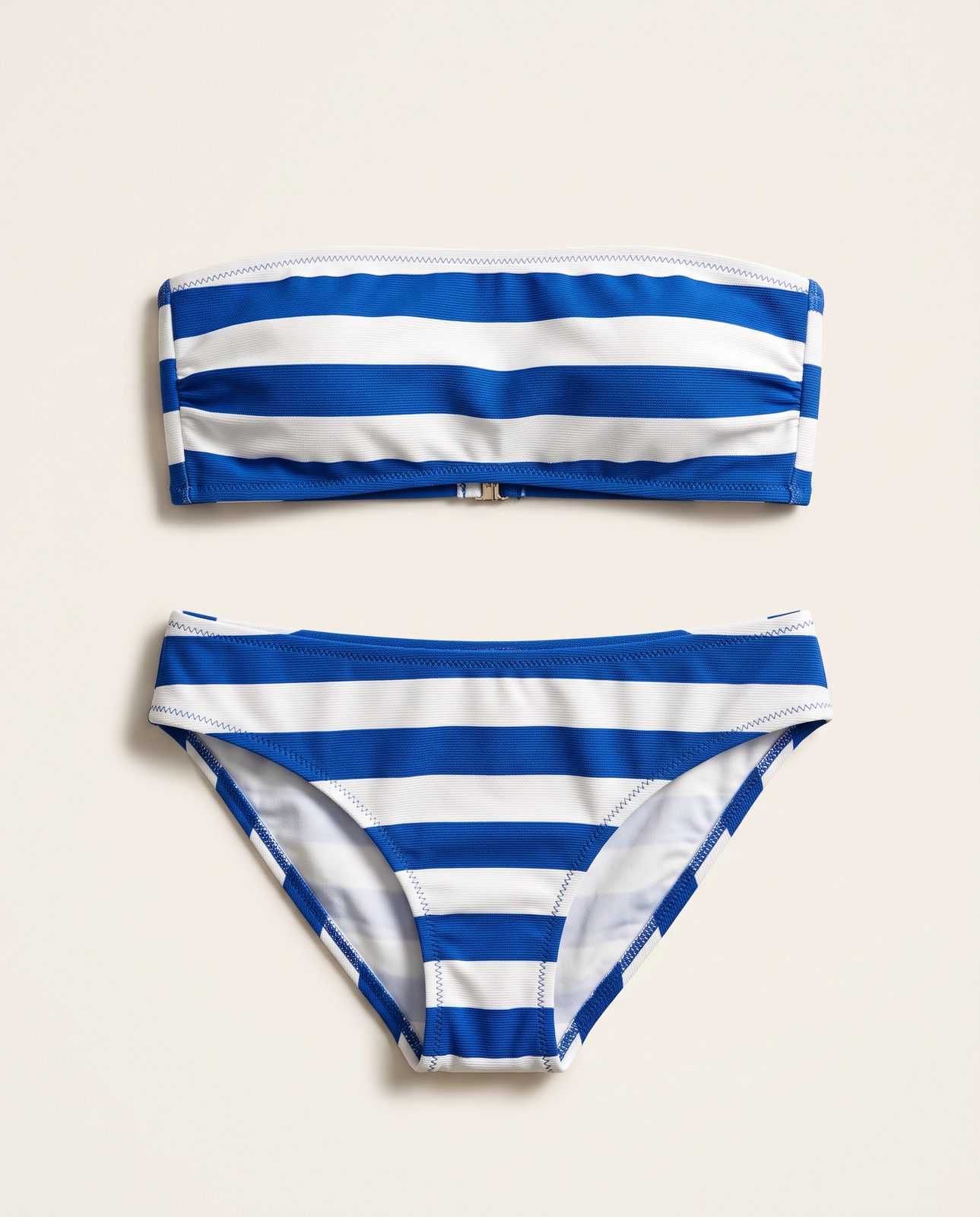
One coordinated set is worth packing even if you usually mix: a stripe bikini with a matching sarong gives you an outfit for the boat trip, and the same two pieces work separately for the rest of the week. Avoid neon, which casts colour onto skin in photographs and dates the album faster than any cut.
Fit details that matter after eight hours in the sun
Straps of 3–4 cm stay on the shoulder when wet; anything thinner rolls and cuts in after an hour of swimming. Check the underband on a bikini top — it should sit flat against the ribcage with room for two fingers, not lift away when you raise your arms. On a one-piece, a rise of 26–28 cm at the side seam gives coverage without pulling.
Two practical tests before you pack: swim a length in the suit, and sit down in it for ten minutes. Chlorine and salt make fabric heavier, and a suit that feels snug dry can become uncomfortable by the second swim. Metal clasps and rings are worth avoiding on boat days, where they heat up on deck and catch on towels.
Cover-ups and the 90-second walk from room to beach
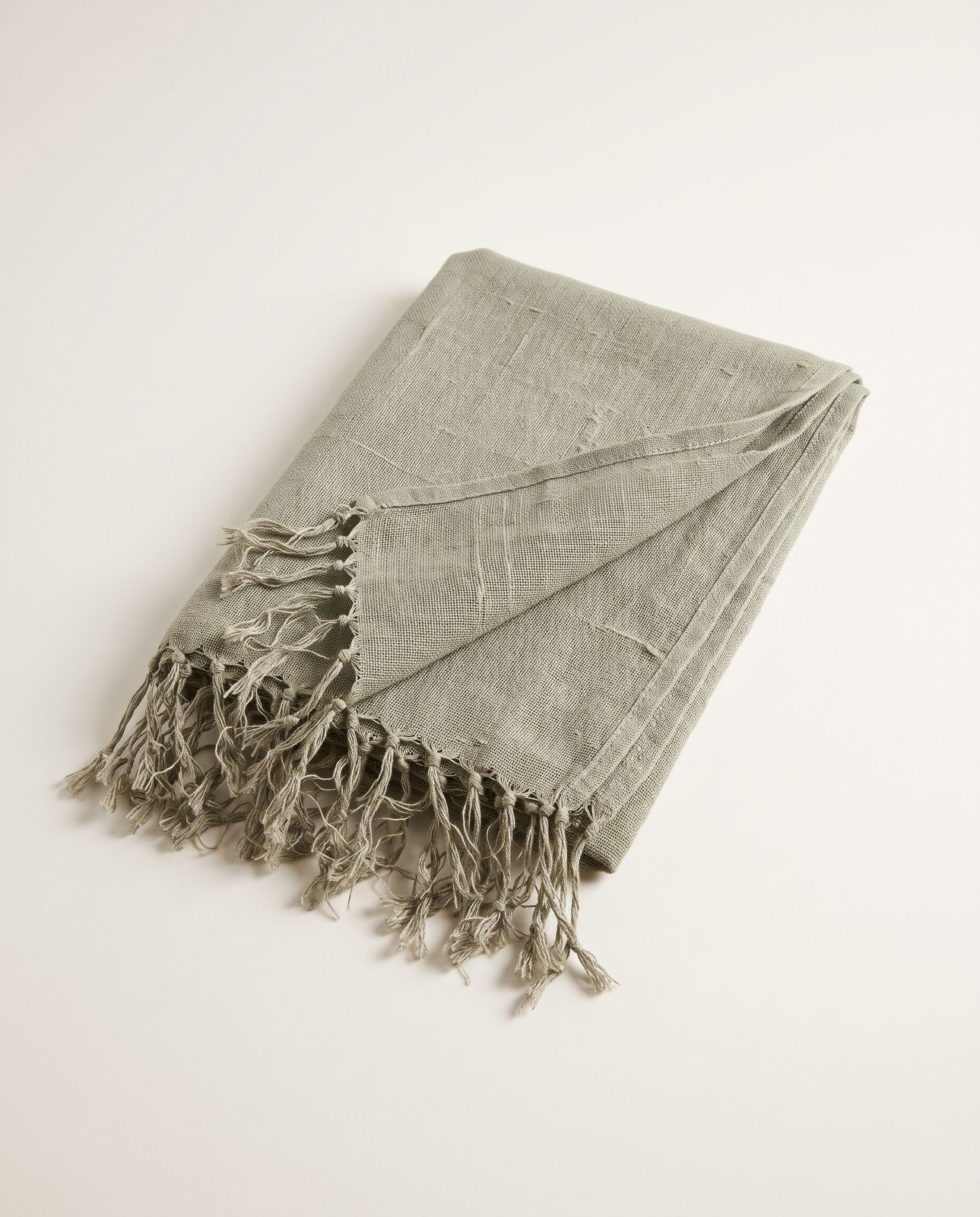
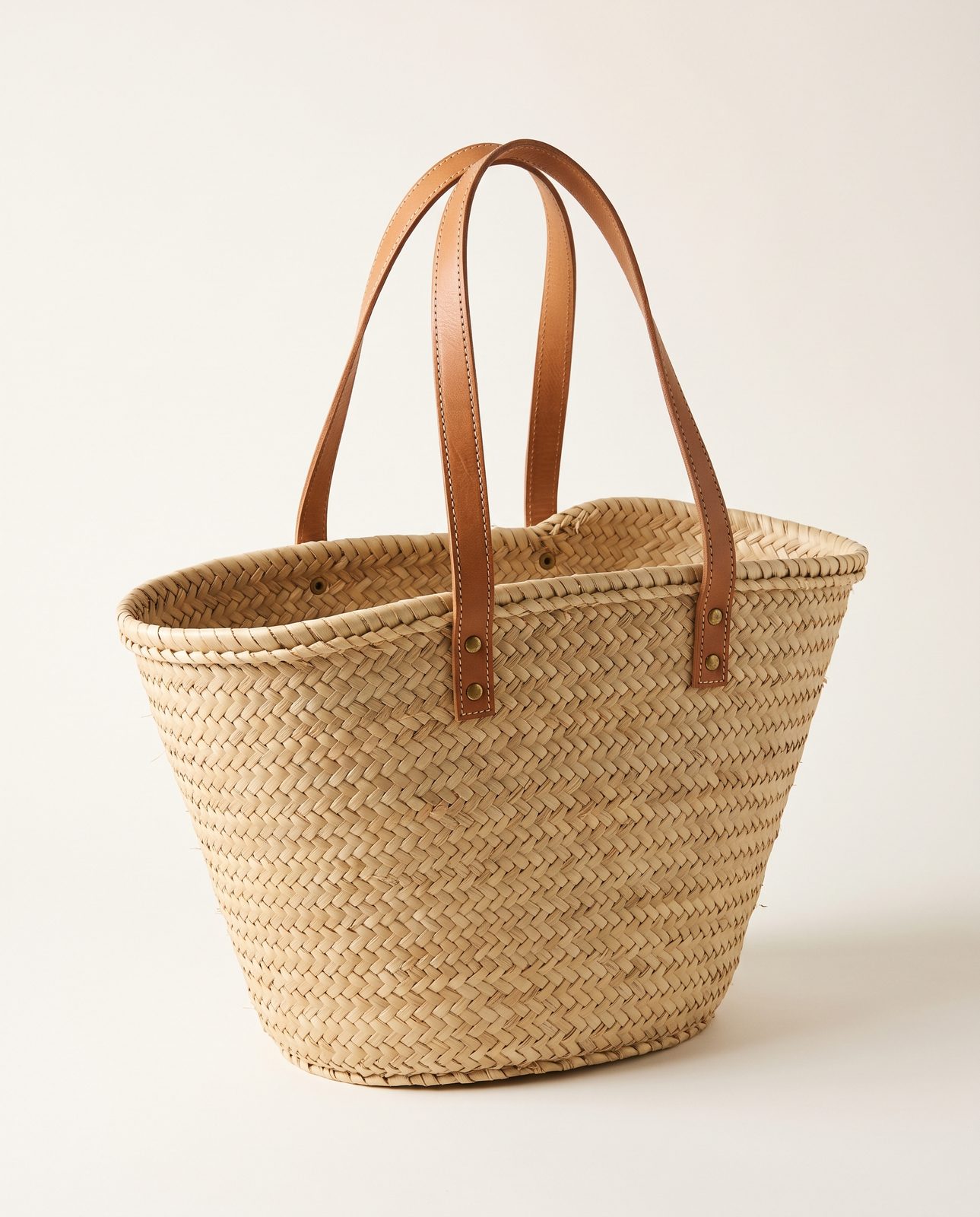
Most resort paths are 60–120 seconds of direct sun, which is exactly long enough to burn shoulders that are still wet. A sarong measuring 100 × 180 cm ties at the chest, covers the legs on a sunbed and doubles as a towel in a pinch; the seagrass sarong (€45–59) is light enough to live in the beach bag all week.
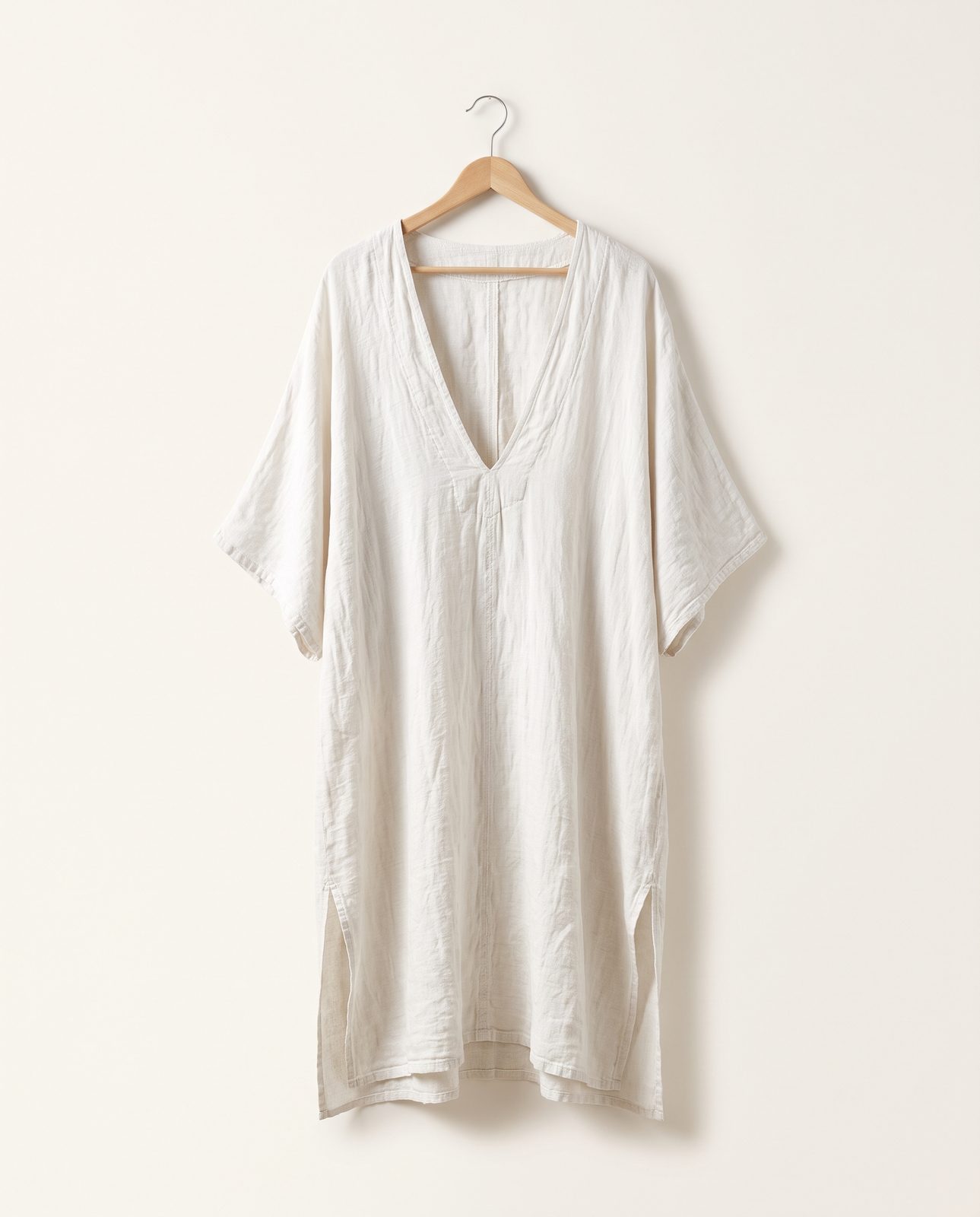
For breakfast and lunch, a linen cover-up dress (€65–79) is the piece that stops you changing twice before noon. Linen at 150–170 gsm creases honestly and dries in about 20 minutes on a chair, which matters when the dress is also your dinner reservation.
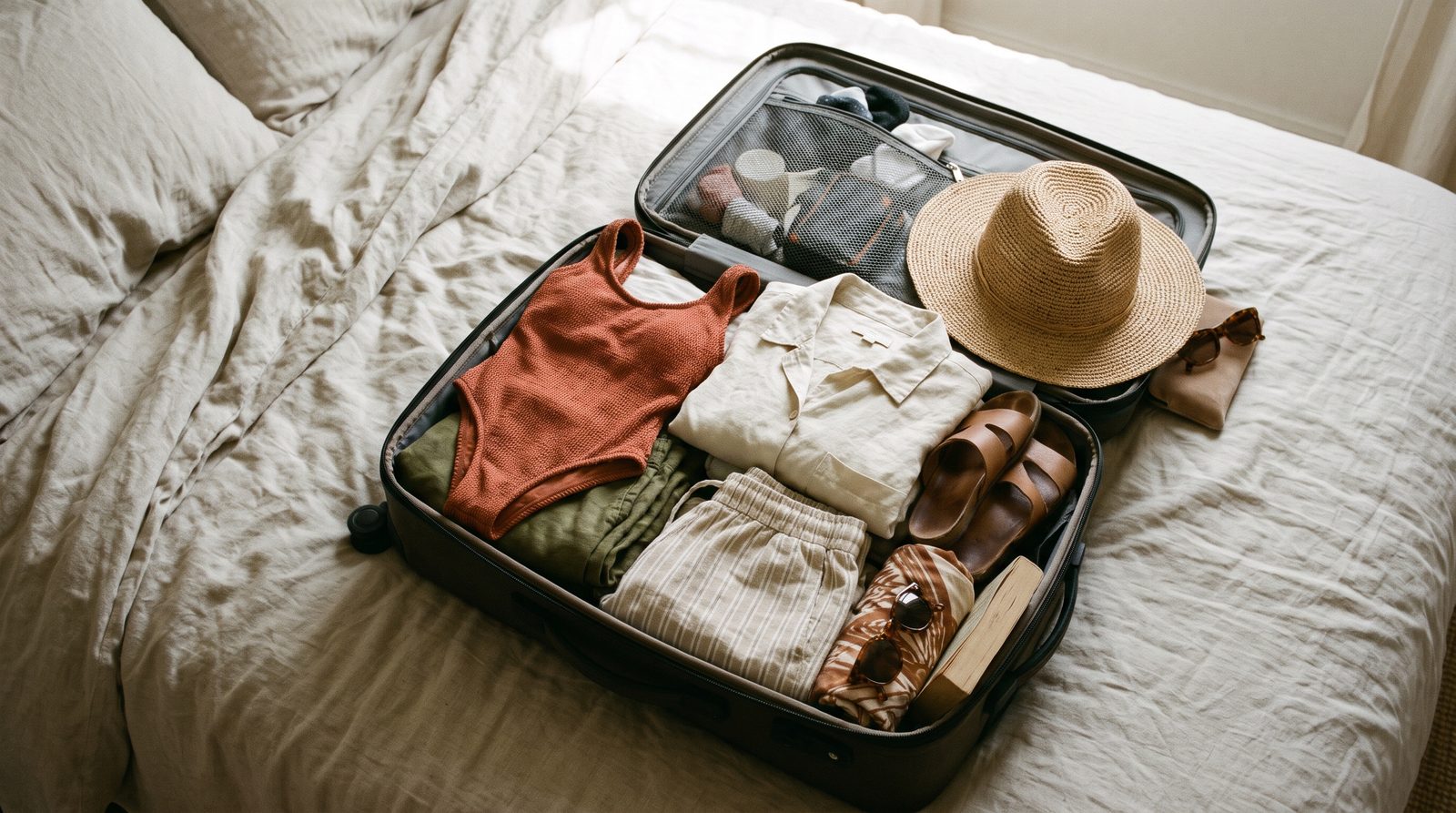
The two-person honeymoon swimwear packing list
This is the version we send to customers travelling for ten days with one carry-on each.
- One structured one-piece each, worn for swimming and transfers.
- One bikini or swim short each for tanning and the pool bar.
- One white or coral suit between you for photographs.
- Two cover-ups: a sarong and a linen dress, shared where possible.
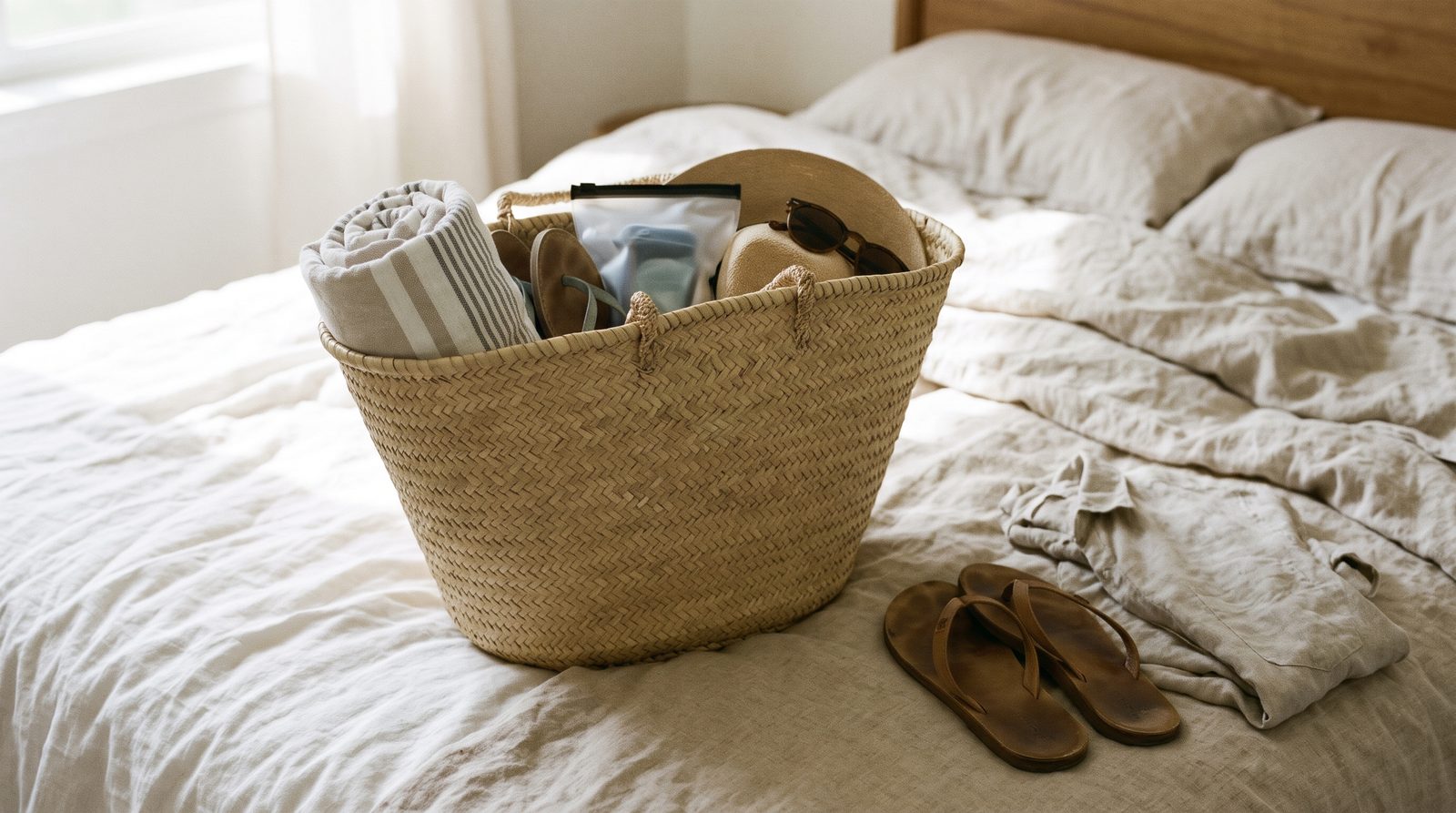
- One hat, one pair of flip-flops, one waterproof pouch for the phone.
- A 100 ml bottle of hand-wash detergent for the nightly rinse.
What to skip
Skip the brand-new suit you have never worn, the strapless bandeau if you plan to snorkel, and anything with a white lining that shows through when wet. Skip the second cover-up, too: two is plenty for ten days, and the beach bag has to hold sunscreen, a book and a dry shirt as well.
Frequently asked questions
How many swimsuits should a bride pack for a honeymoon?
Three per week of travel is enough, so six to nine for a two-week trip including one photographed suit. Rinse after each wear and you will never run out of dry options.
Is white swimwear a good choice for honeymoon photos?
Yes for late-afternoon light and resort settings, where it reads cleanly against sand and blue water. Keep it for an hour or two rather than a full beach day, since salt and sunscreen mark white faster than any other colour.
Do couples need matching swimwear?
No, but one shared colour family makes photographs look intentional. Sand, white and sage across both people is easier to coordinate than an exact match, and each person keeps their own preferred cut.
Should I pack a separate swimsuit for snorkelling?
A one-piece with 3–4 cm straps is the safest choice for mask, fins and boat ladders. Reserve the bikini for the beach and keep the one-piece for anything involving movement or equipment.