Bikini tops are not one shape with different trims. A triangle, a bandeau and a square-neck top distribute weight differently, sit at different heights on the ribs, and behave differently in water. Knowing which one you are looking at makes online shopping far less of a guess.
Start with two measurements — underband and full bust — then use the style notes below to narrow the field. We make four bikini tops across our sets, and this is how we explain them in the shop when someone is standing in front of the rail.
Take two measurements before you choose a bikini top style
Measure snugly around your ribs, under the bust, and then around the fullest part of the bust without a bra. The difference between the two numbers tells you more than the letter on a label. Under 5 cm of difference, triangle and bandeau styles tend to work; 15 cm or more, and you will want a top with a defined underband and wider straps.
Underband fit is the part people get wrong. You should be able to slide two fingers under the band at the side, no more. If it rides up when you raise your arms, the band is too loose, and no amount of strap tightening will fix it.
- Underband: snug, with room for two fingers at the side
- Bust: measure without a bra, tape level around the fullest part
- Difference under 5 cm: triangle or bandeau styles
- Difference over 15 cm: defined band and wide straps
Triangle tops: the adjustable classic
A triangle top is two fabric cups on sliding strings, tied at the neck and back. It suits A to C cups best because there is no underwire or moulded cup creating shape — the fabric simply follows yours. The sliding cups let you set coverage where you want it, and that adjustability is why it remains the most forgiving style to fit remotely.
It is not the top for surfing or a fast swim. In moving water the neck tie takes the load, and a thin string concentrates that pressure. For pool lounging and calm swimming it is comfortable, packs to nothing and dries in minutes.
Bandeau tops: strapless, with caveats
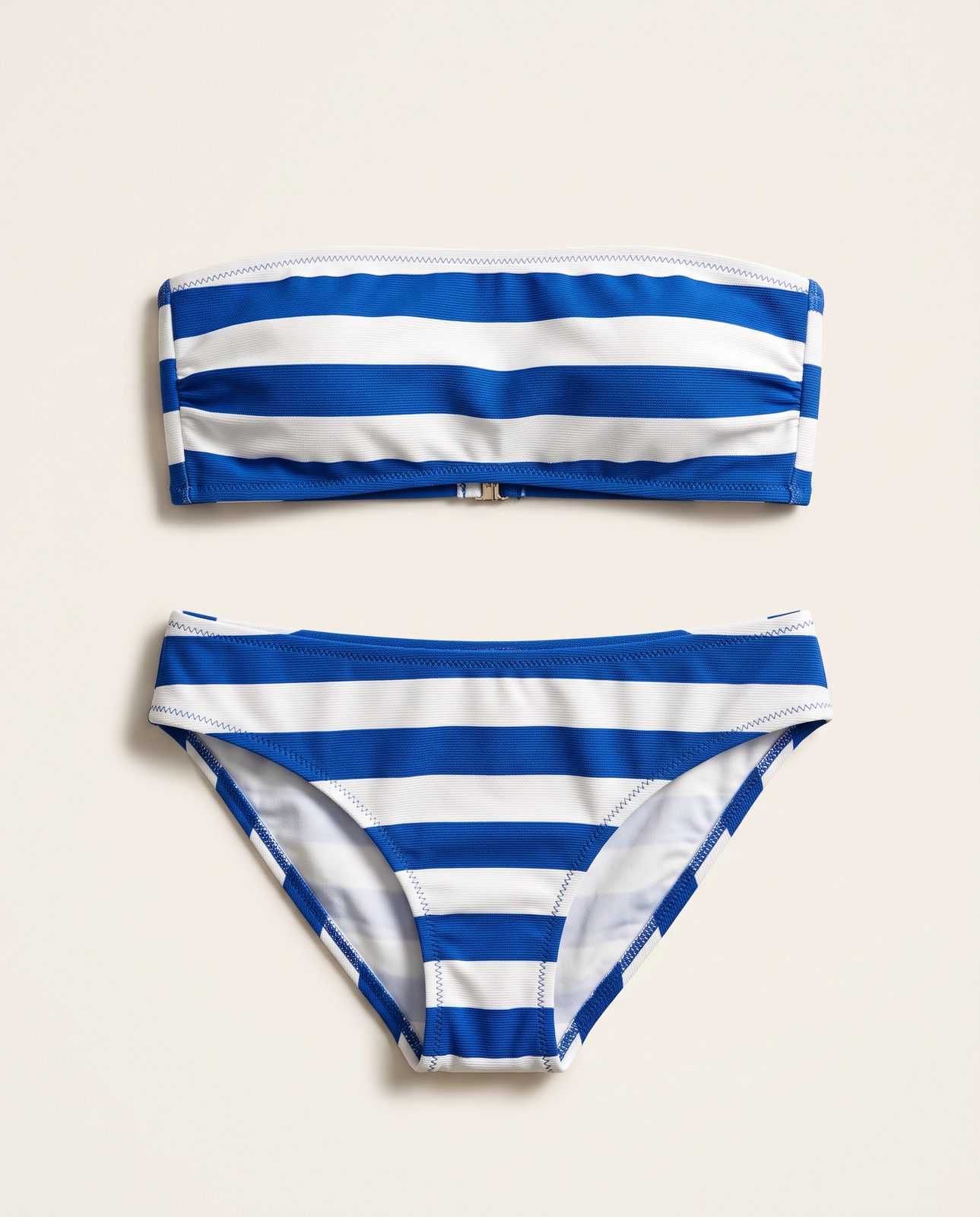
A bandeau is a straight band of fabric with no straps, usually with a silicone strip inside the top edge. The strip does real work: it grips dry skin and stops the band rolling down. It grips less well on wet, sunscreen-slicked skin, so re-adjust after you swim rather than assuming it has slipped out of shape.
The riviera stripe bandeau bikini (€92) is cut with a 6 cm band, which stays put better than a narrow 3 cm band on a larger bust. Bandeaus also give an even tan line across the shoulders, which is the reason many people choose them over anything with straps.
Square neck and halter: more support, more coverage
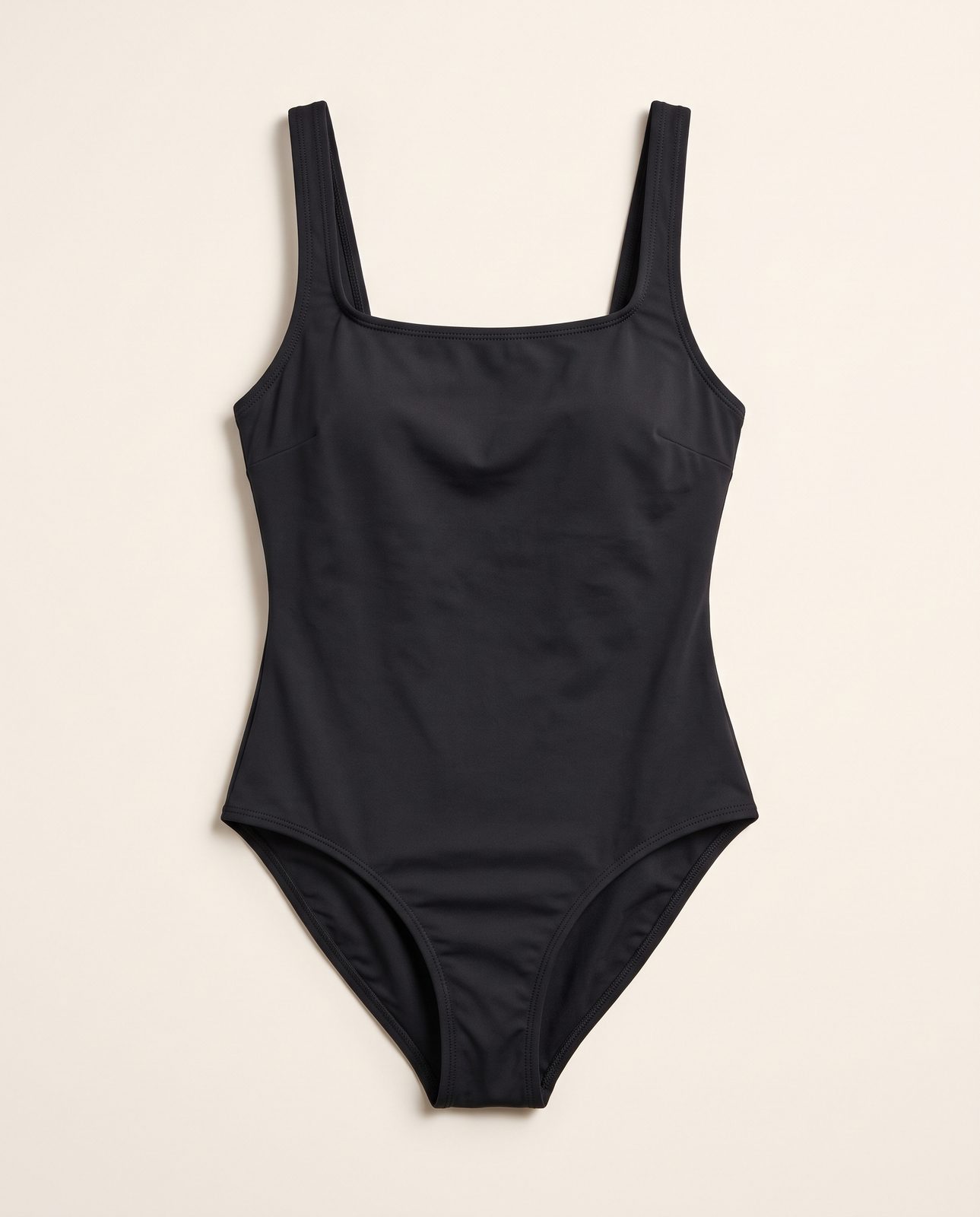
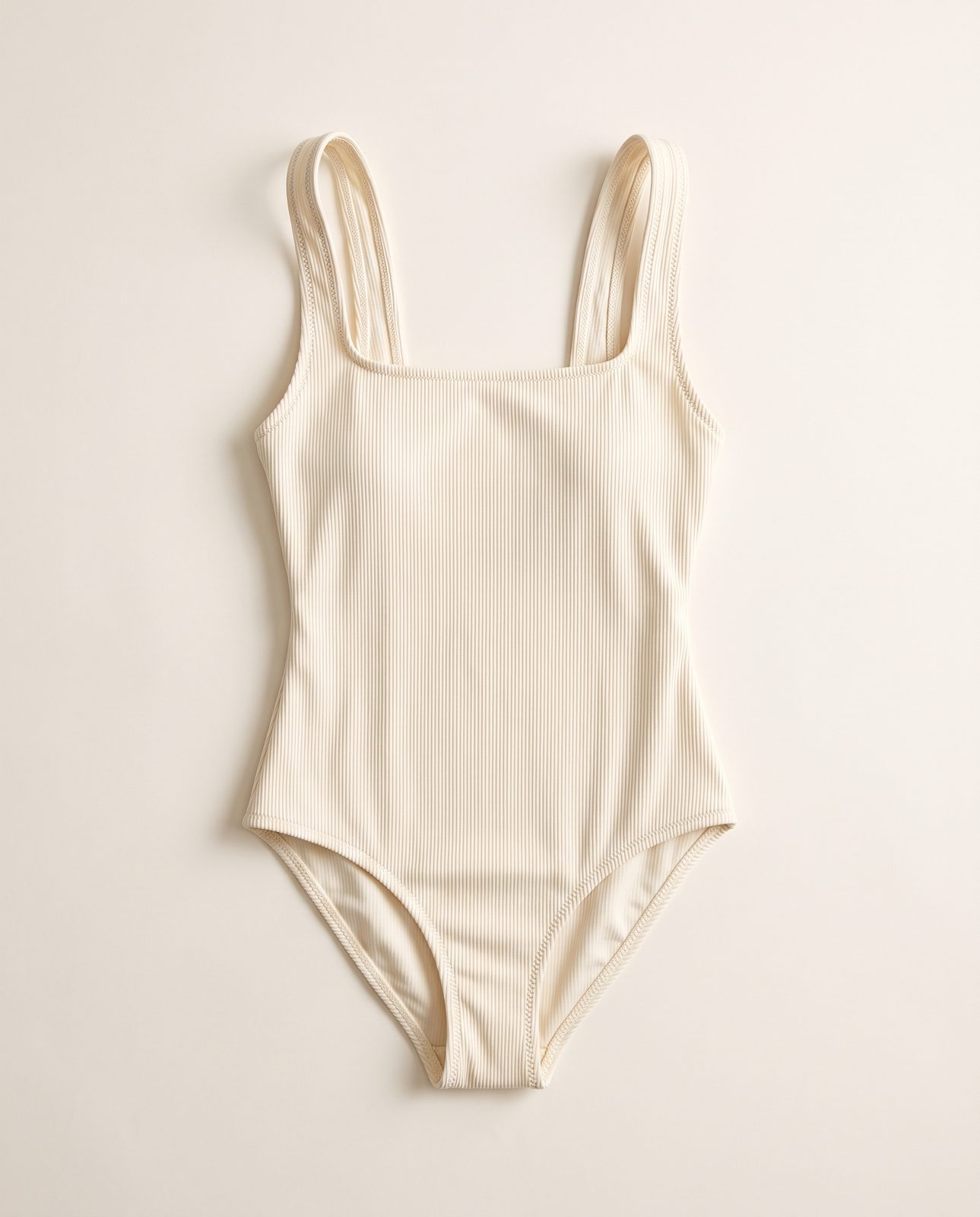
A square neck top has a straight horizontal edge and straps set closer to the shoulder. That geometry spreads the load over more fabric, so it holds a heavier bust with less pressure at the neck. Our black square neck onepiece uses the same neckline in a swimsuit, and the fit logic is identical.
Halters tie behind the neck and lift from above. They are flattering and easy to adjust, but a full day in a halter can leave the neck tender, especially in a light 90 g/m² fabric with no padding. If you swim a lot, look for a halter with a back clasp as well as a neck tie.

Mixing bikini tops and bottoms
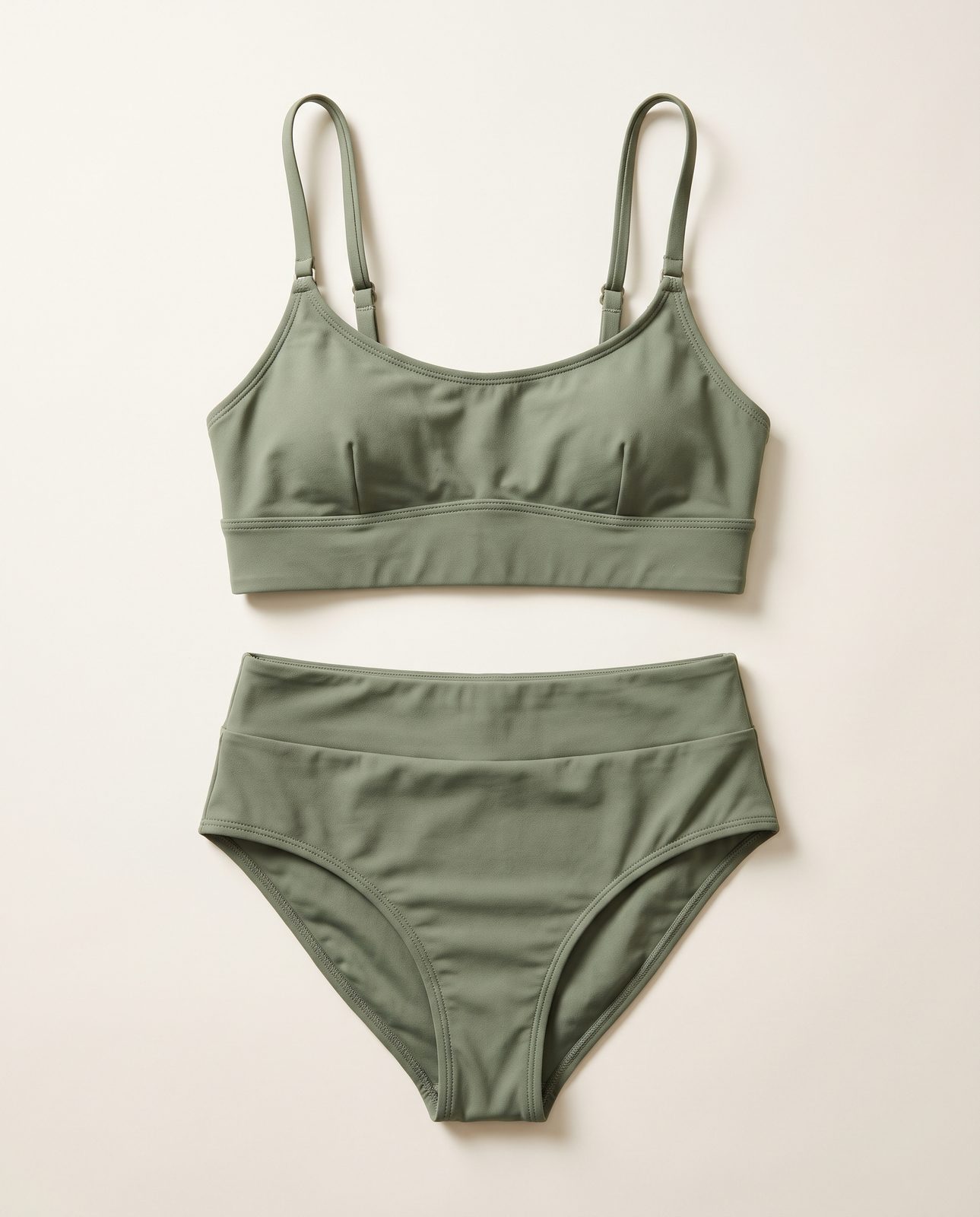
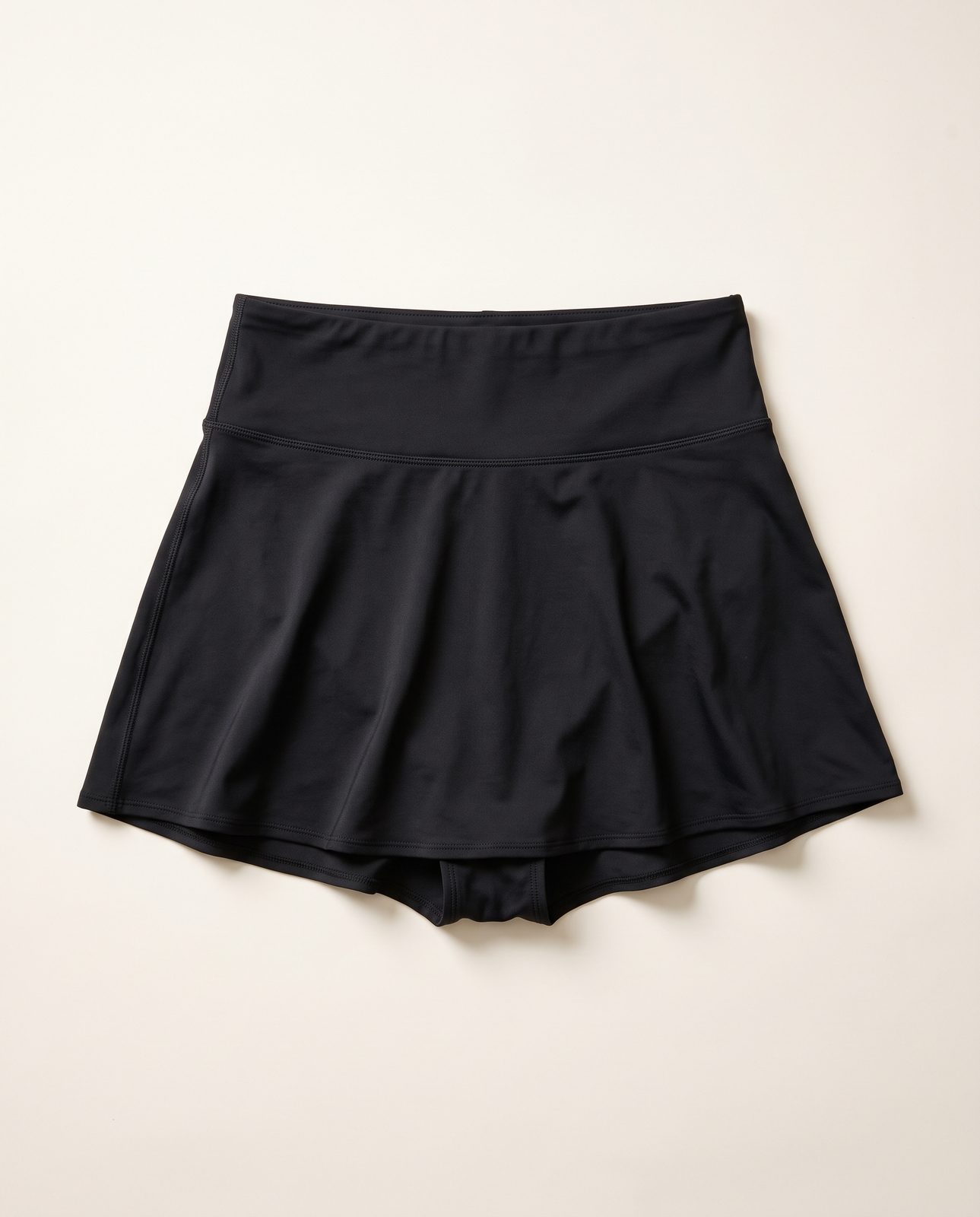
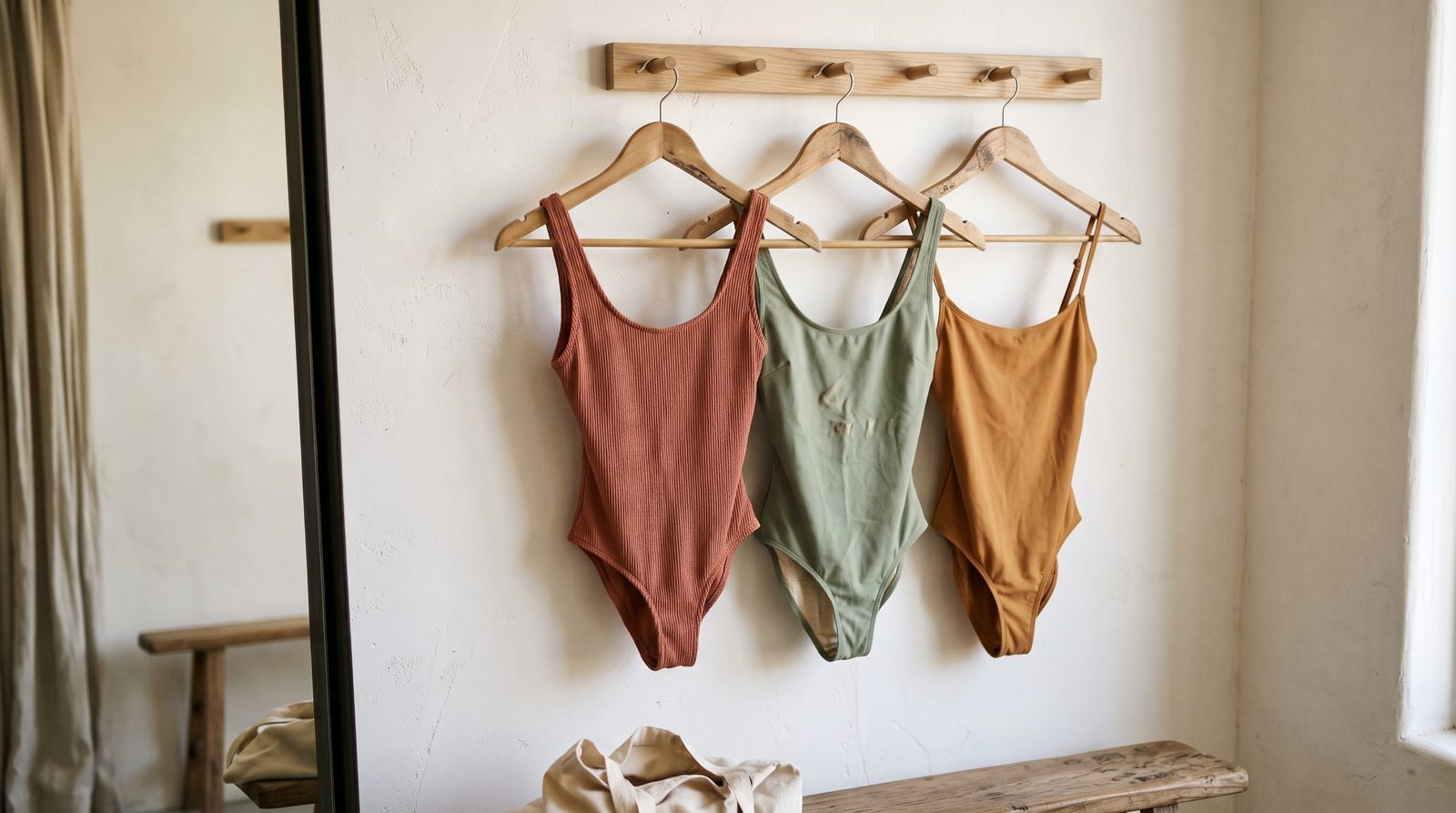
Tops and bottoms are sold as sets, but there is no rule that they have to stay together. A high-waist bottom such as the sage high waist bikini (€95) balances a small triangle top, and the swim skirt bottoms soften a square-neck top. Keep the colour family consistent — sage with sage, coral with sand — and the mismatch reads as deliberate.
If you are between sizes top and bottom, buy the top to your bust measurement and the bottom to your hip. It is much easier to take in a band than to add coverage to a cup.
A five-minute fit check before the tags come off
Wear the top for twenty minutes at home and do what you will do on holiday: raise your arms, bend forward, sit down, jump. Check three points — the band does not lift at the front, the cups do not gape at the top edge, and the straps do not dig in behind the shoulder.
If the band lifts, size down; if the cups cut in, size up or move to a style with more depth. A bikini top that passes those three tests will not need adjusting every ten minutes on the beach.
Frequently asked questions
What bikini top is best for a small bust?
Triangle and bandeau tops with sliding cups work well because you can set the coverage and there is no empty cup to fill. Ruffles and horizontal stripes add visual volume, but fit comes first.
How do I know my bikini top size without trying it on?
Use your underband and bust measurements and compare them with the size chart rather than a bra size. If you are between sizes, choose the band that matches your ribs, because the band carries the support.
Can you swim in a bandeau bikini?
Yes in calm water, and the silicone strip helps it stay put. For laps or surf, a top with straps and a defined band is more secure.
Should a bikini top be tight?
Snug at the band and smooth at the cup edge, not tight. If the fabric digs in or skin bulges over the band, go up a size rather than loosening the straps.