Swimwear for a large bust fails in one of two places: the band rides up, or the straps take all the weight. Both are fixable, and neither requires a different body. A bikini top in a 32FF and a one-piece with a hidden shelf can support equally well if the underband is firm and the cup has depth.
Here is what we check before recommending a suit to anyone above a DD, from the 12 cm of fabric under the arm to the way a cup behaves after 20 minutes in the water.
The underband does most of the work
Roughly 80% of a swim top's support comes from the band, so start there. Measure snugly around the ribcage under the bust and breathe out. If that number is 78 cm, a top labelled 80 should feel firm on the loosest hook; if you can pull the band 3 cm away from your back, it is too loose to hold anything.
Most women wear a band 4–6 cm too wide and a cup one or two sizes too small. A 38D that rides up is often a 34F that stays put. Before you change cup size, try the same cup on a tighter band using sister sizing: down one band, up one cup, so 36DD becomes 34E.
Fitting a large bust: cup sizes DD to G
Above a DD, cup depth matters more than cup width. A moulded foam cup that is 1 cm deep will collapse under weight, while a seamed cup with a 3 cm projection keeps its shape. Look for a cup that is cut in at least two pieces, or a hidden support panel behind a clean outer shell.
Underwires are not mandatory but they are effective. A plastic-coated wire, 4–6 cm longer than the cup base, spreads pressure along the rib instead of concentrating it at the centre. Non-wired suits can work if they have a firm shelf and a wide underband, but they will not lift as much, and that is a design choice rather than a fault.
Straps, halters and shoulder strain
A strap narrower than 1.5 cm will leave a mark on anyone above a D cup after 30 minutes. Look for 2–2.5 cm straps, or a halter that is wide at the neck and adjustable at the back. Halter necks look flattering but put load on the neck, so keep them for shorter swims and choose a cross-back or wide-shoulder style for laps.
Check adjusters too. Metal sliders hold better than plastic when wet, and a strap that shortens by 8 cm gives you room to compensate after the elastane relaxes. If a strap is fixed and the suit pulls at the shoulder, the torso is too short for you, not the cup.
Necklines that keep their shape
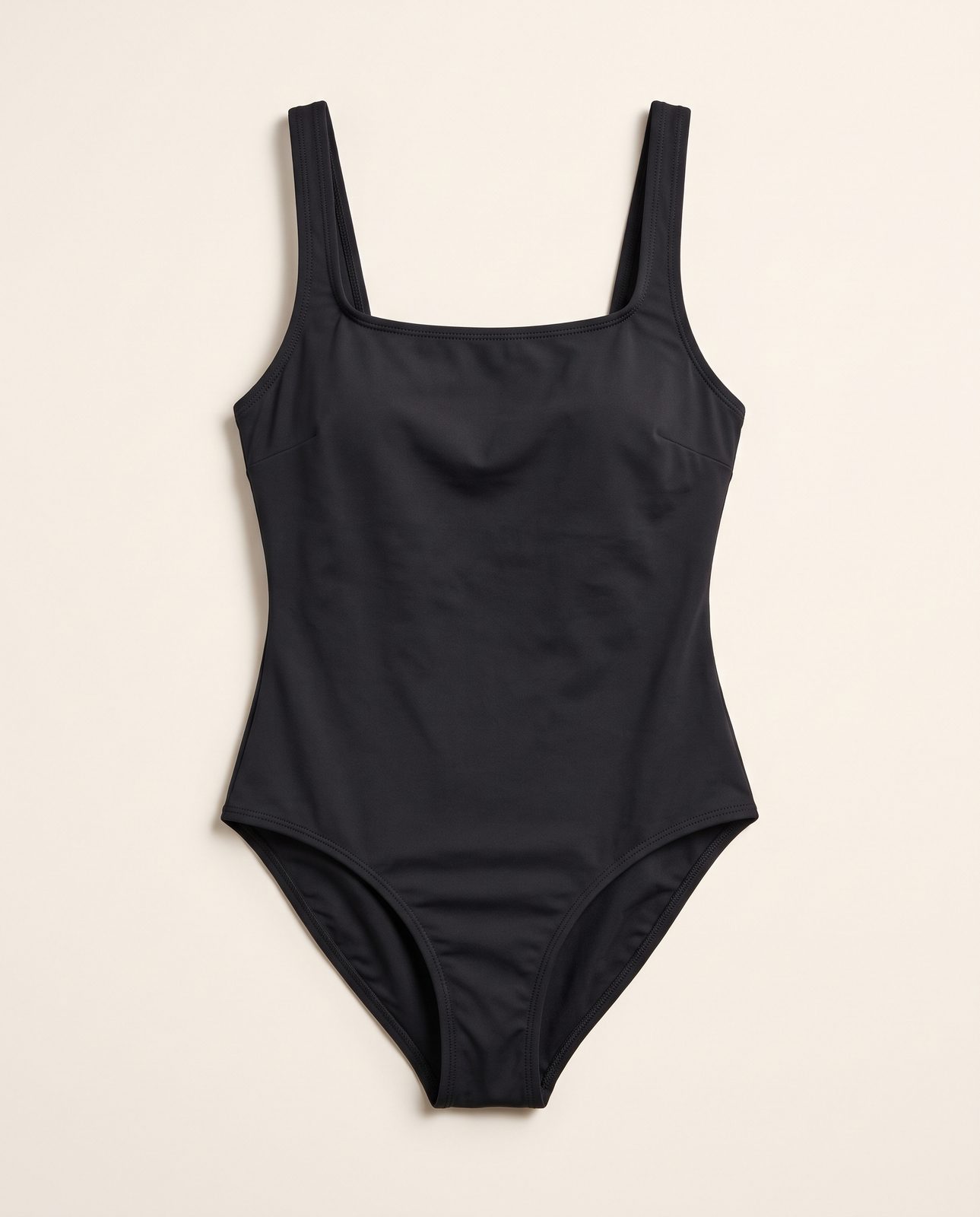
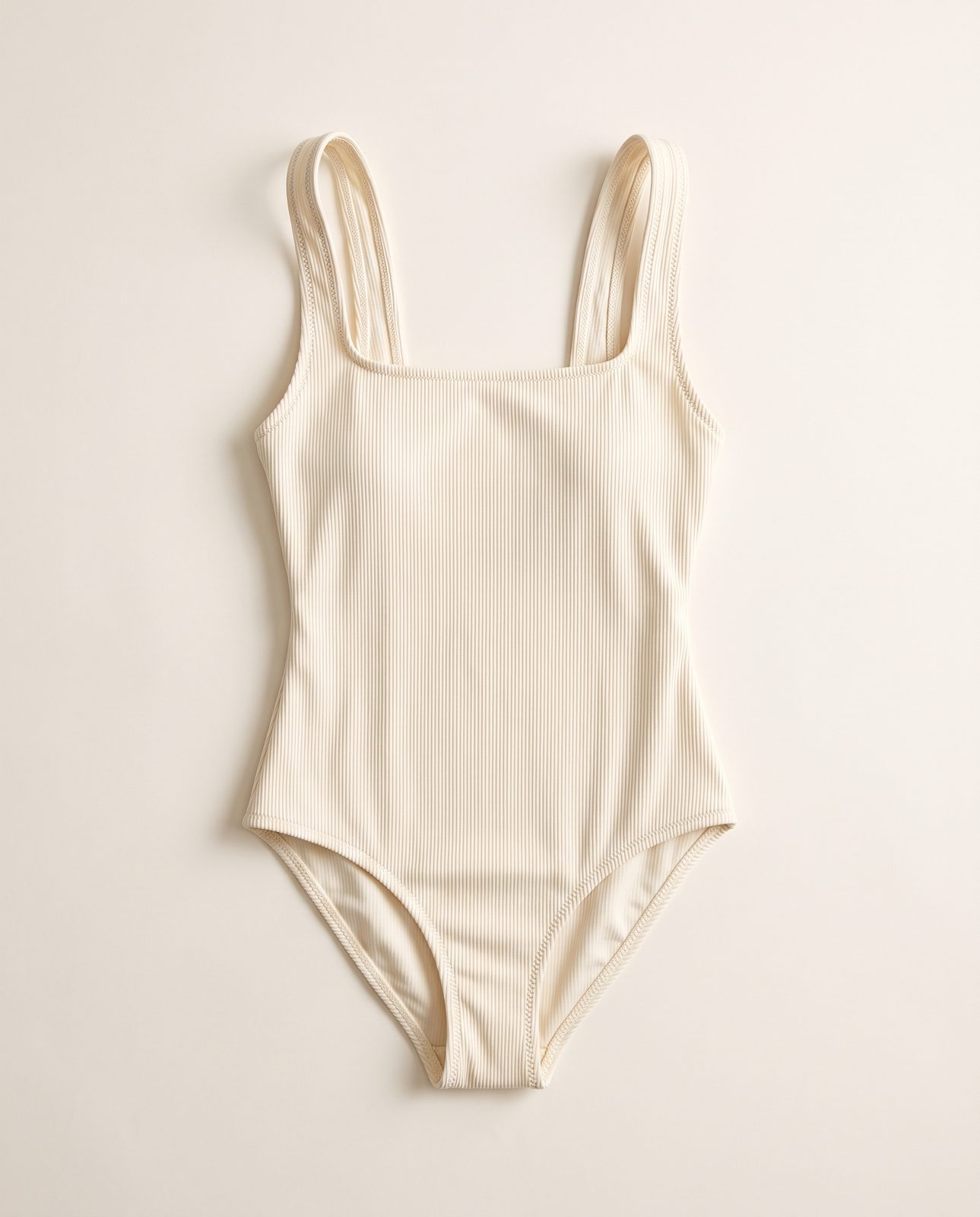
A high neck with a built-in shelf is the safest option for swimming, because the fabric above the bust stops bounce. A square neck with a 4 cm underband works well for sunbathing and holds a straighter line in photographs. Deep plunges are fine if the band is firm, but a soft triangle with a thin string will not stay in place once you move.
Wrap fronts and twist fronts are worth trying: the diagonal seam crosses the fullest part of the bust instead of cutting under it, which distributes tension. Avoid a straight horizontal seam directly across the apex, which is where gaping starts.
Fabric weight, lining and recovery
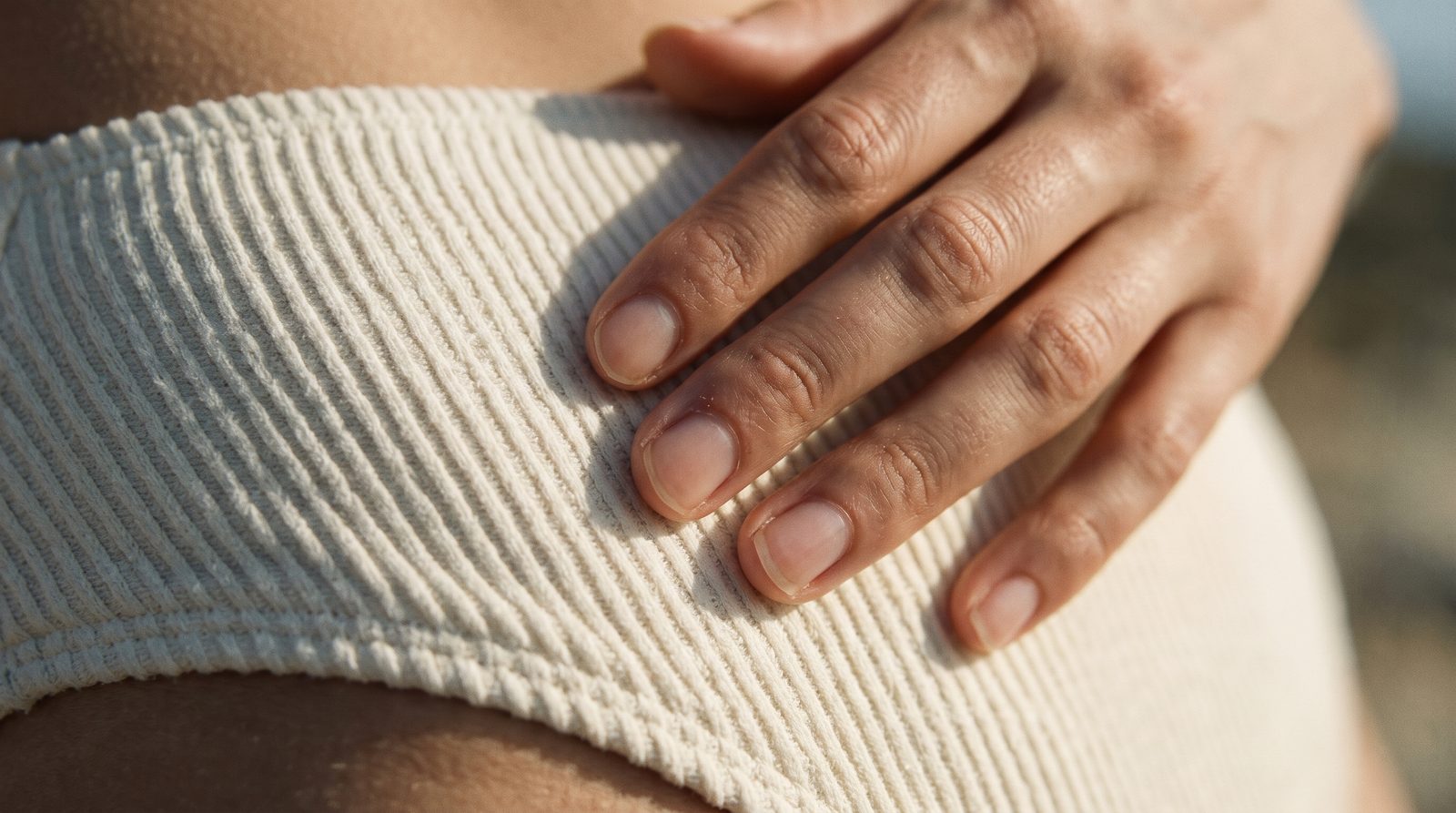
Weight is a reliable proxy for support. A 220–240 gsm knit with 20–22% elastane holds a cup far better than a 170 gsm fashion fabric, and it will not turn transparent when stretched. Double lining across the bust adds about 40 g to a suit and is worth every gram.
Recovery is the number nobody prints on the label. Good swim fabric returns to within 5% of its original length after being stretched to 80%, which is why a heavier suit still fits in October. Rinse in cool water within 30 minutes of swimming and dry flat in shade; a radiator at 60 °C will kill the elastane in one afternoon.
A three-minute fit test
Put the top on, fasten it on the middle hook, and jump five times. If the band stays level and the cups stay against the ribcage, the basics are right. Then lean forward and check that the centre of the cup sits flat against your chest rather than 2 cm away.
Finally, raise both arms and look at the underband in a mirror. It should not lift more than 1 cm. If it does, go down a band size and up a cup, and try again before you decide the style is wrong for you.
Frequently asked questions
Can I wear a bikini with a large bust?
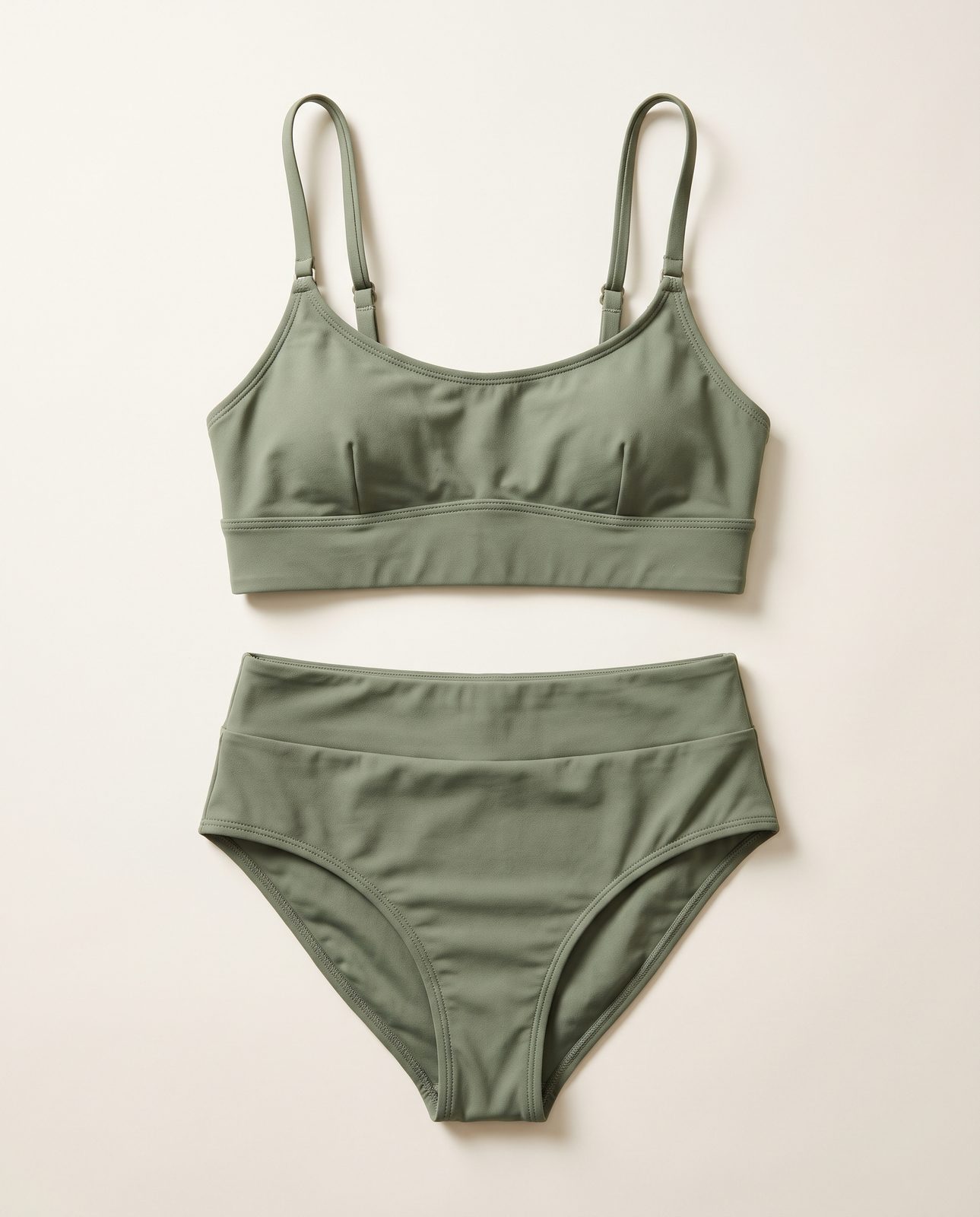
Yes, if the top is built like a bra: firm band, seamed or wired cup and straps at least 2 cm wide. Triangle bikinis with string ties rarely hold above a DD, but an underwired or high-neck bikini top can.
How do I know if my swimsuit band is too loose?
If you can slide two fingers under the band at the back, or the band lifts when you raise your arms, it is too loose. It should sit level and stay put on the middle hook.
What is sister sizing in swimwear?
It means going down one band size and up one cup, or the reverse, to keep the same cup volume. A 36DD becomes a 34E, which gives firmer support around the ribcage.
Do halter necks work for a large bust?
They can, but they carry weight on the neck rather than the shoulders. Choose a halter with a wide neck strap and a firm underband, and save it for shorter swims rather than long ones.