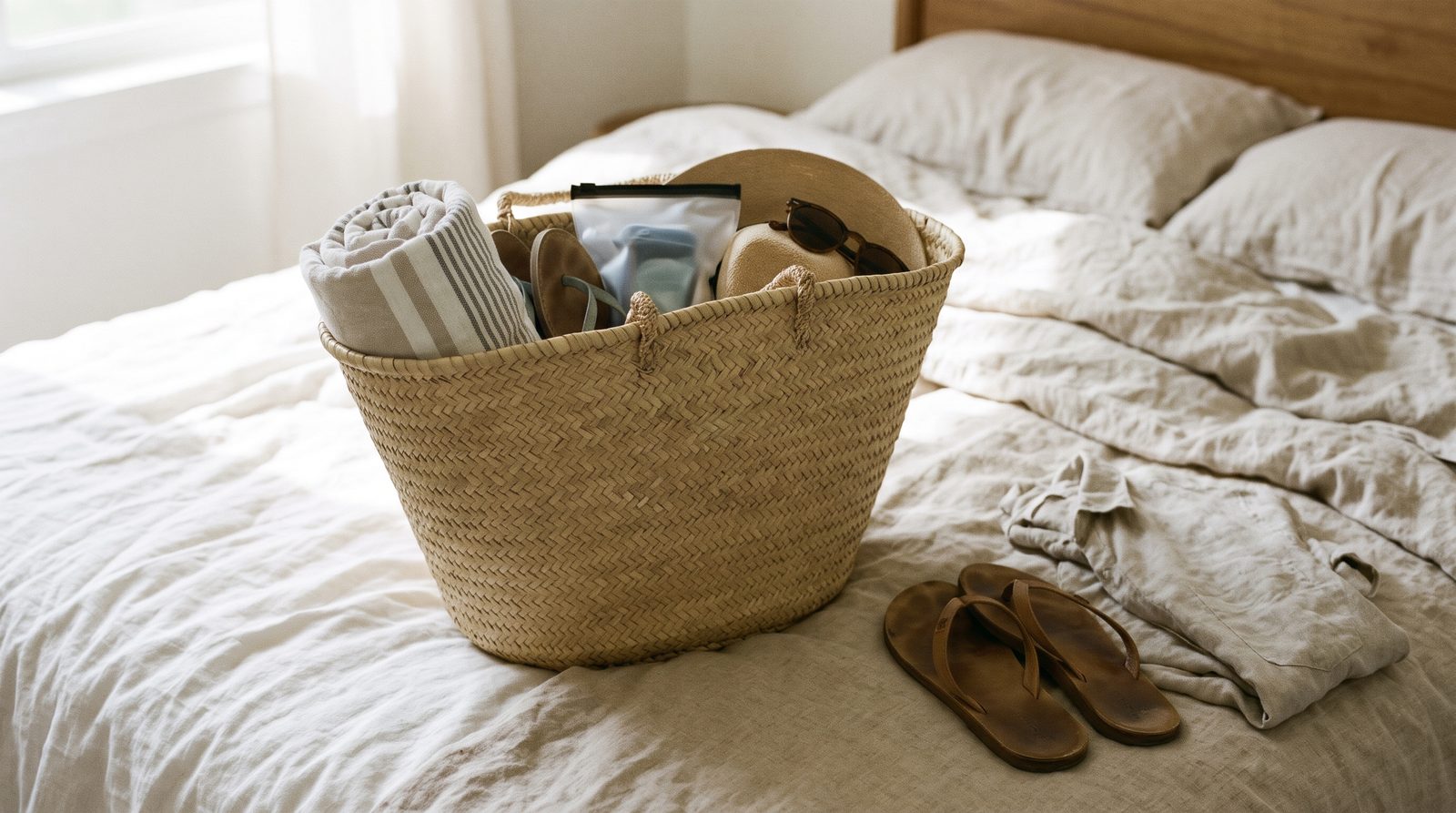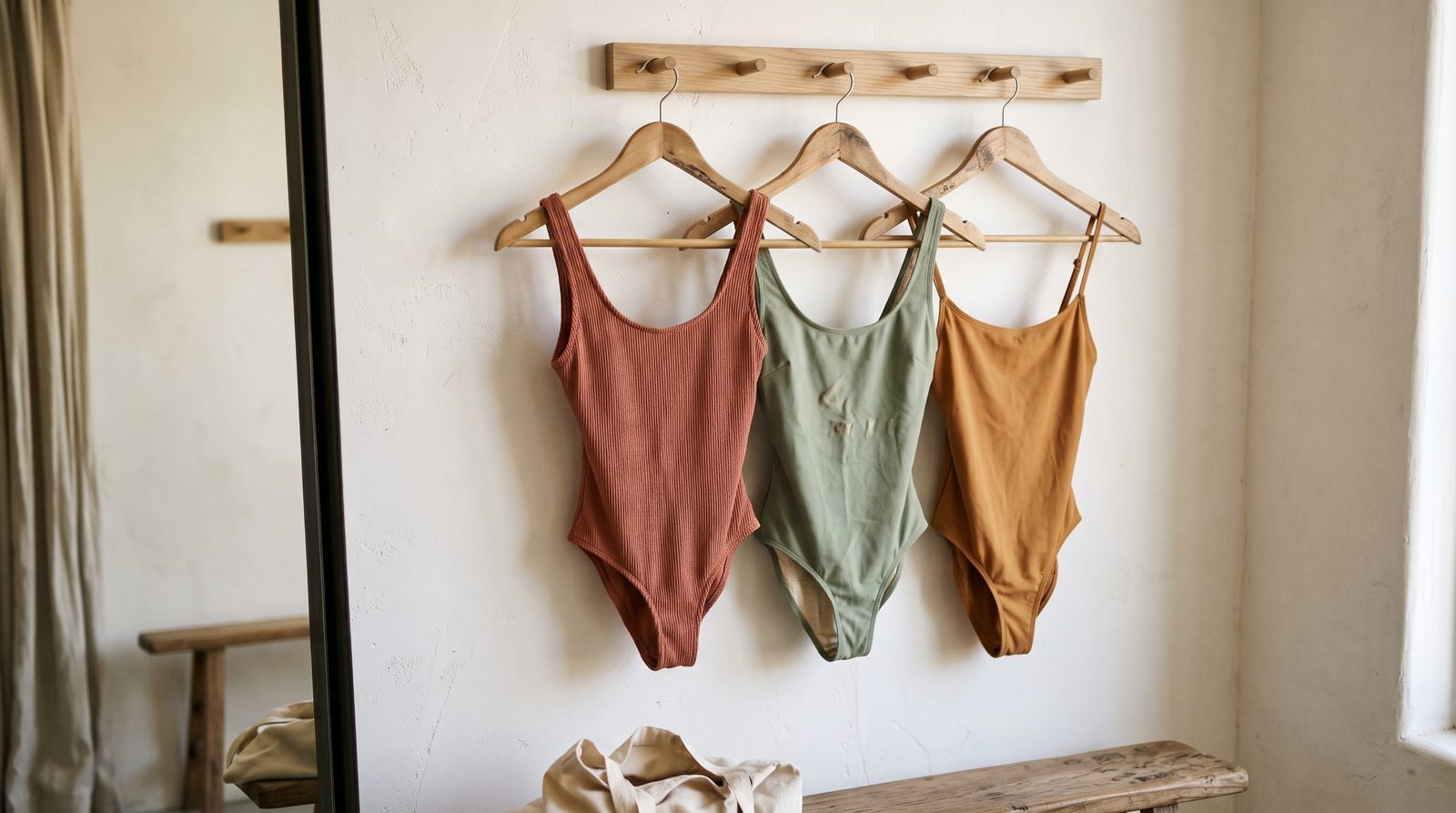
Swimwear for swimming laps and swimwear for lounging are built for different water. A lap suit spends 45 minutes in chlorinated water at 27°C and has to stay on through 1,500 m of freestyle; a lounging suit spends two hours in salt water at 30°C and has to look good doing almost nothing. Buying one suit for both usually means one that does neither well.
The good news is that the split does not cost much more. Two suits at €85–99 each, rotated, last longer than three cheap ones worn into the ground. Here is how the two jobs differ, and where the overlap actually is.
Two jobs, two sets of demands
In the pool, the enemy is chlorine. At 1–3 mg per litre it oxidises elastane, dulls colour and leaves a smell in the lining that survives a normal wash. In the sea or on a sunbed, the enemies are salt crystals, sunscreen and UV; a suit that fades in one Spanish summer is usually being bleached by sun rather than worn out by water.
The movements differ too. Freestyle rotates the shoulders about 180° per stroke and pulls steadily at the straps; lounging asks the suit to stay put while you sit, turn and walk. A cut that is comfortable for one is rarely ideal for the other.
Fabric: chlorine resistance versus hand-feel
Lap swimwear is usually 100% polyester or PBT, sometimes labelled chlorine-resistant. It feels firmer, has less stretch and holds its shape for 40–60 pool sessions. Lounging swimwear is typically 78–82% nylon with 18–20% elastane, which is softer, stretches further and looks better on, but starts to bag after about 15 chlorinated swims.
If you swim twice a week, a nylon-elastane suit will be noticeably looser by month four. If you swim twice a year on holiday, that same fabric will last several seasons and feel far better against the skin. Match the fabric to the frequency, not to the price.
Straps and support in the water
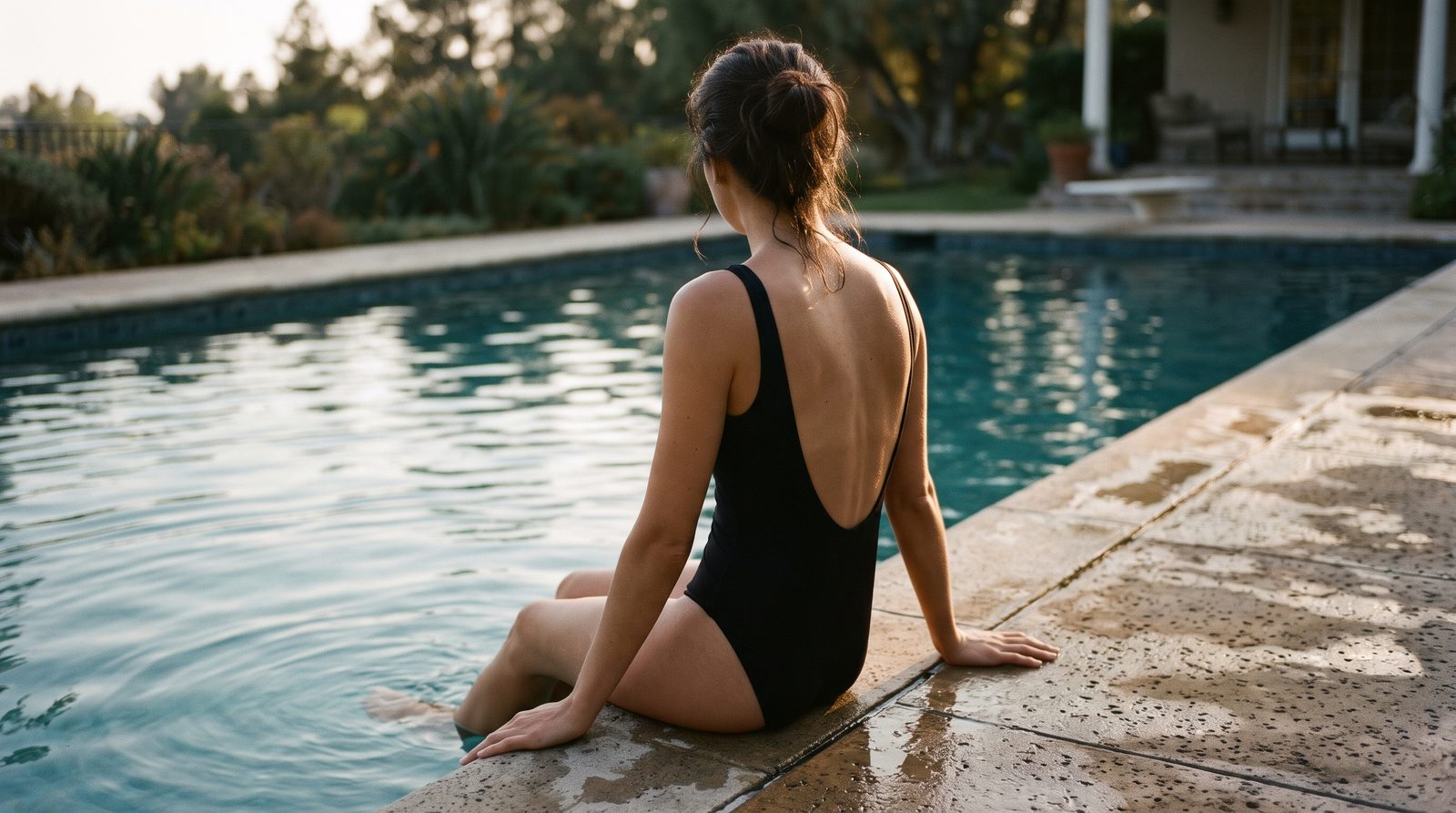
For laps, look for straps of 4–6 cm, a racerback or X-back, and no adjustable ties. Wide straps spread the pull across the shoulder instead of cutting into it, and a fixed back means nothing shifts at the wall. A shelf bra or a firm underband helps if you are swimming more than 1,000 m; a removable padded cup is usually the first thing to move out of place.
For lounging, the priorities reverse: thin adjustable straps, a bandeau or a halter that can be loosened for tan lines, and hardware that looks good rather than performs. The riviera stripe bandeau bikini (€92–95) is a lounging piece by design — it is not the suit to wear for a flip turn.
Drag, leg height and shoulder rotation
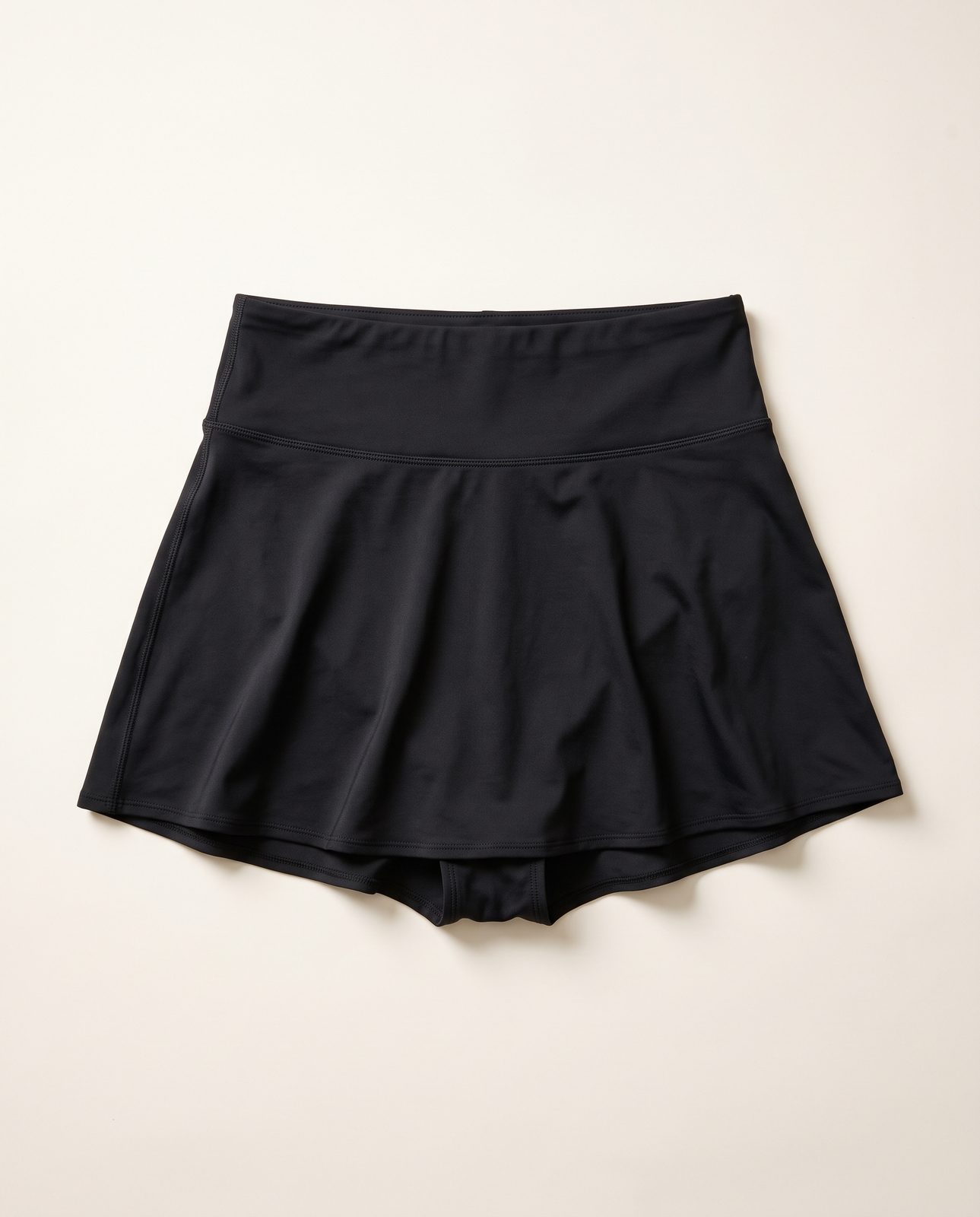
A high leg line and a scooped back reduce drag, but they also reduce coverage when you stand up. For laps, a leg that sits 8–10 cm below the hip bone is the usual compromise: enough freedom for the hip to rotate, enough fabric that the suit does not ride up at the wall. A swim skirt or a boyleg short adds drag and is better kept for the beach.
Necklines matter more than most people expect. A high neck stays put through tumble turns; a deep scoop fills with water on every push-off. If you are buying one suit for a lane session, choose the higher neck even if it feels conservative on the hanger.
If you do both: the rotation that works
Most of our customers do both, just not in the same week. The practical answer is two suits and a rule: the dark, firm, wide-strap suit goes to the pool, and the softer, lighter suit goes to the beach. Rotate them so neither is worn two days in a row, and both will last roughly twice as long.
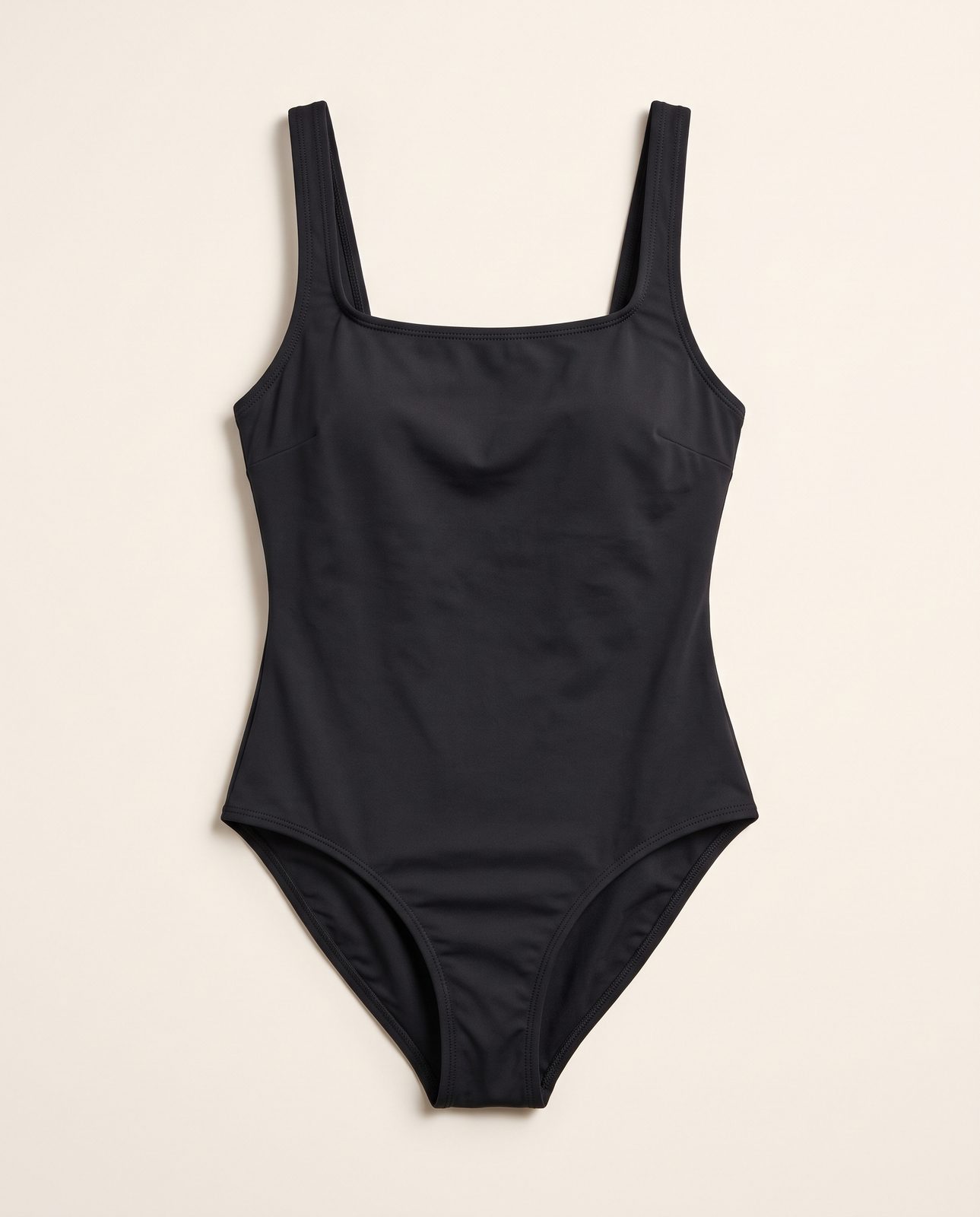
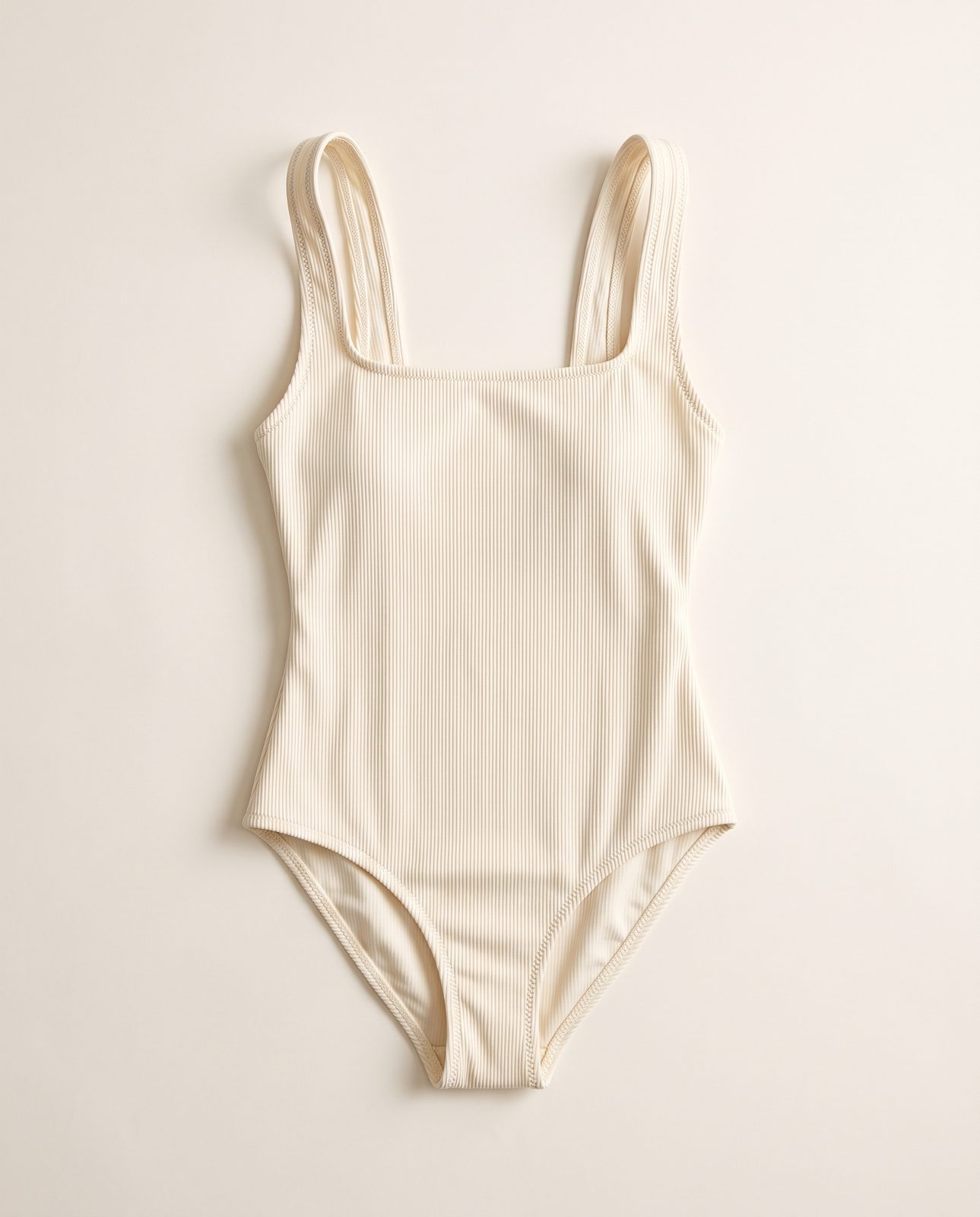
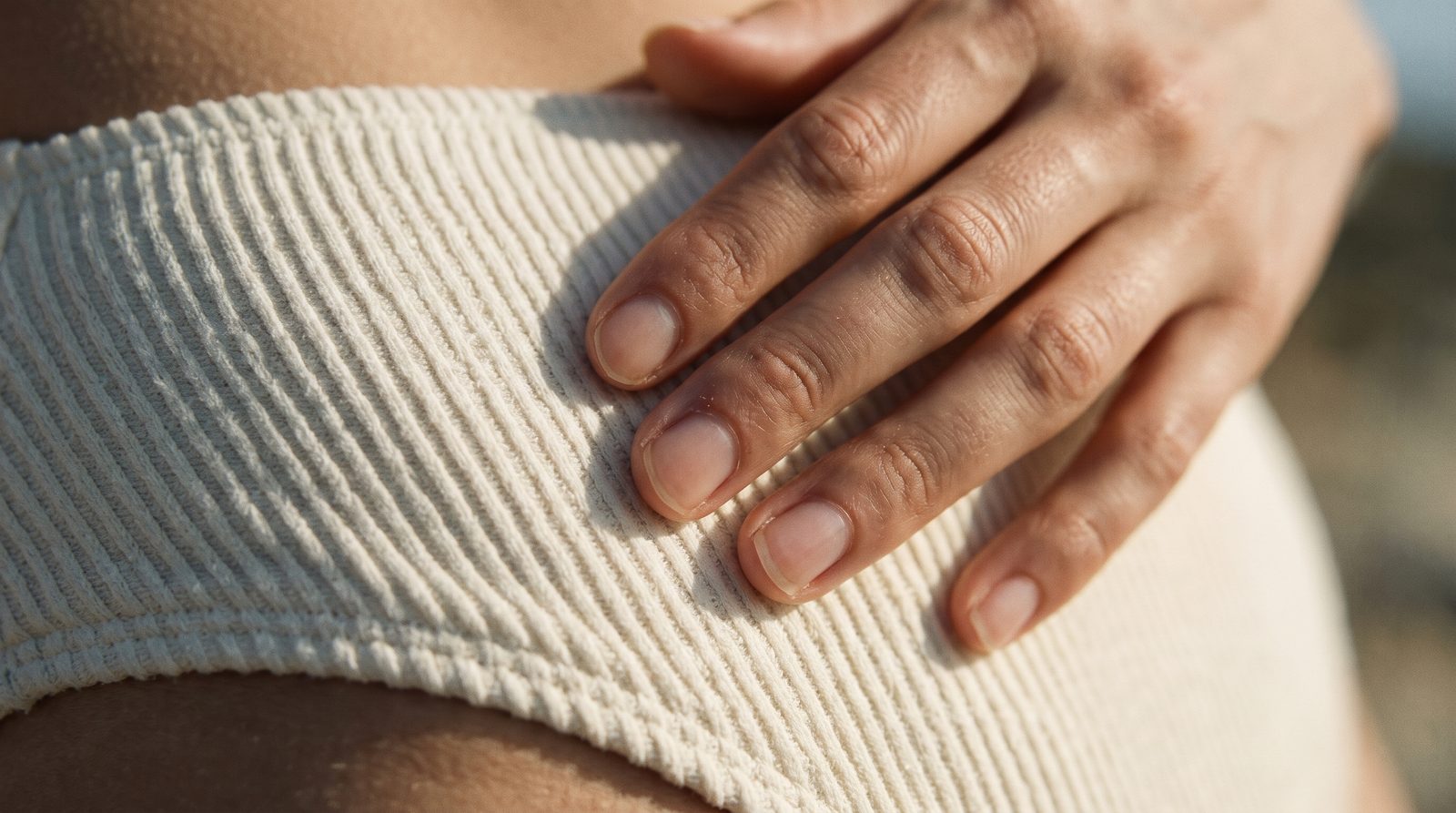
If you want a single suit that covers both, the ivory ribbed onepiece (€85–99) is the closest compromise — dense fabric, 3.5 cm straps, a square neck — but keep it out of the pool for more than one session a week. The black square neck onepiece (€85–99) is the better pool-first choice, and it looks deliberate enough for a resort lunch.
Care: same routine, different enemies
Both suits want cold water, no wringing and shade rather than sun. The difference is timing. A chlorinated suit should be rinsed within the hour and hand washed every second or third swim with a teaspoon of mild detergent; a sea-and-sunscreen suit can wait until the evening but needs the sunscreen rinsed out of the neckline before it stains.
Never leave either in a plastic bag, and never dry a suit on a hot radiator or a metal rail — 60°C is enough to set creases in the elastane that never come out. Flat, shaded, with air on both sides is the whole method.
What to buy first
If you are starting from nothing and swim regularly, buy the pool suit first: it is the one that wears out, and fit is easier to judge in a lane than in a changing room mirror. Add the lounging suit before your next holiday, and keep the two in separate bags so wet chlorine never meets dry nylon.
- Pool: 100% polyester or PBT, 4–6 cm straps, fixed back, high neck.
- Beach: nylon-elastane, adjustable straps, lighter colour, softer hand-feel.
- Both: rinse cold, dry flat in shade, never wring.
- Replace the pool suit when the straps stretch more than 2 cm.
Frequently asked questions
Can I swim laps in a fashion swimsuit?
You can, but a nylon-elastane fashion suit will stretch and fade faster in chlorine, often within 15 sessions. Reserve it for the beach and use a polyester suit for regular lane swimming.
Do chlorine-resistant swimsuits stretch out?
Far less than elastane blends, though they can still loosen at the straps after a year of frequent use. A polyester suit typically holds its shape for 40–60 pool sessions before the fit changes noticeably.
How often should I replace a swimming costume?
Replace it when the straps stretch more than 2 cm, the lining stays damp-smelling after washing, or the fabric turns slightly transparent when wet. For twice-weekly swimmers that is usually every 9–12 months.
Is a bikini suitable for lap swimming?
Only a high-waist, secure-top version, and even then it is a compromise. A one-piece moves less at the shoulder and stays in place through turns, which is why most regular swimmers choose one.